
If your antibody levels are sky-high, your doctor will likely recommend a second step: an endoscopy. Don’t let the fancy name scare you. It sounds intimidating, but it’s really just a tiny camera on a flexible tube that goes down your throat to look at your small intestine. You’re sedated, so you won’t feel a thing.
The doctor will snip a few microscopic samples of your intestinal lining. Under a microscope, celiac damage looks like flattened, smooth pavement instead of healthy, finger-like villi. It’s like comparing a lush lawn to a worn-down dirt path. That visual is the “gold standard” for a diagnosis.
What about false positives or negatives?
Here’s a fun fact: no test is perfect. Sometimes the blood test is positive but the biopsy is normal, or vice versa. That’s why doctors look at the whole picture—your symptoms, your lab results, and your biopsy. It’s like a detective piecing together clues instead of relying on one fingerprint.
Also, some people have a condition called non-celiac gluten sensitivity. You react to gluten, but your immune system doesn’t produce the same antibodies or cause intestinal damage. The celiac test helps rule out the more serious disease so you can figure out the right path for you.
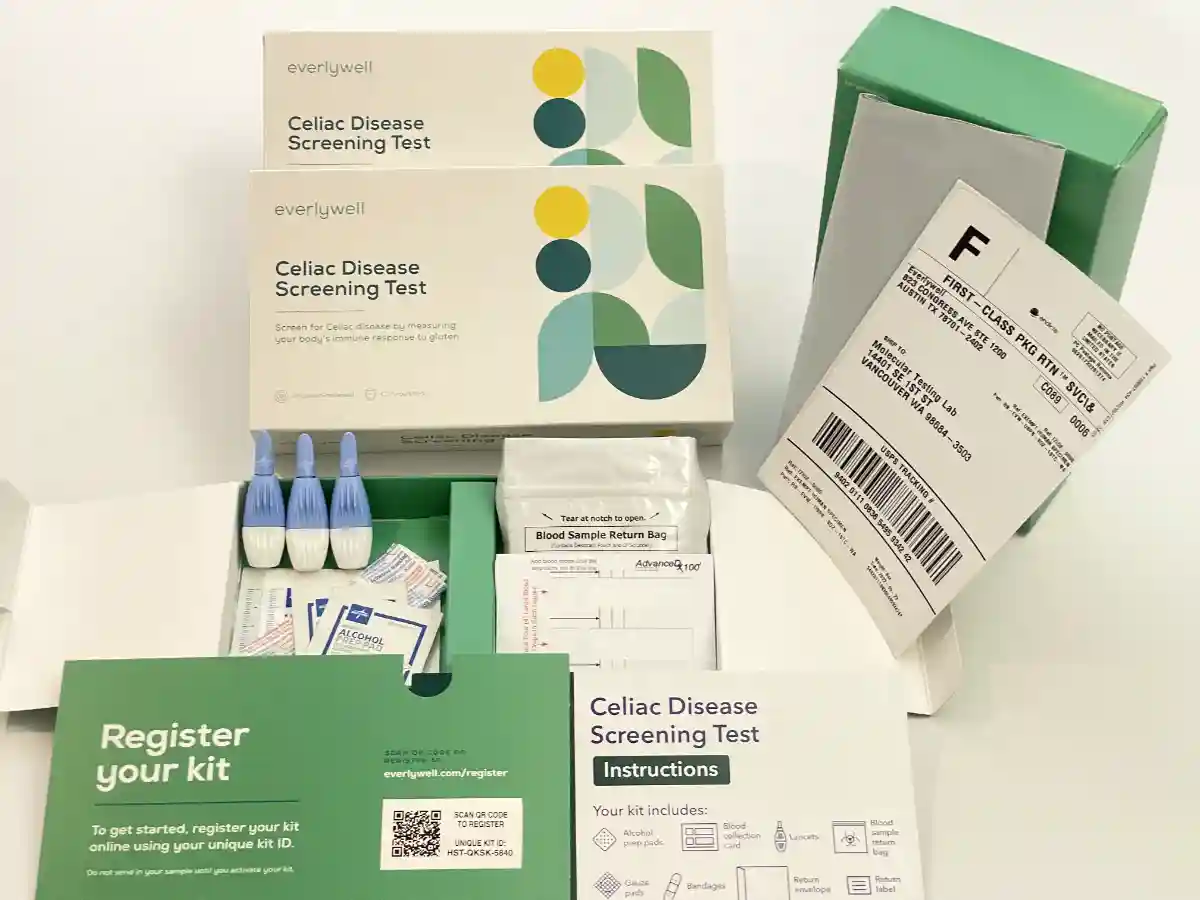 Everlywell Celiac Disease Screening Test Kit Review: Taking Control of

