Prosecco is Italian, through and through. It hails mostly from the Veneto region, near Venice, and uses a grape called Glera.
Cava, on the other hand, is the Spanish champion. While it can be made in a few regions, most comes from Catalonia, and it uses local grapes like Macabeo, Xarel·lo, and Parellada.
Think of it this way: Prosecco is your fashionable Italian cousin who makes everything look effortless. Cava is your hardworking Spanish friend who shows up with a perfect, understated smile.
The Bubbles Are Different—Really
Here’s where it gets cool. The method of making the bubbles is totally different. Prosecco uses the Charmat method, which means the second fermentation happens in large stainless steel tanks.
This gives Prosecco its big, fruity, and playful bubbles—like a friendly, bubbly laugh. It’s designed to be drunk young, fresh, and easy.
Cava, however, uses the traditional method (same as Champagne). The second fermentation happens inside the bottle, aging on its yeast for at least nine months. This creates smaller, more complex, and more persistent bubbles—think of it as a subtle, sophisticated whisper compared to Prosecco’s cheerful shout.
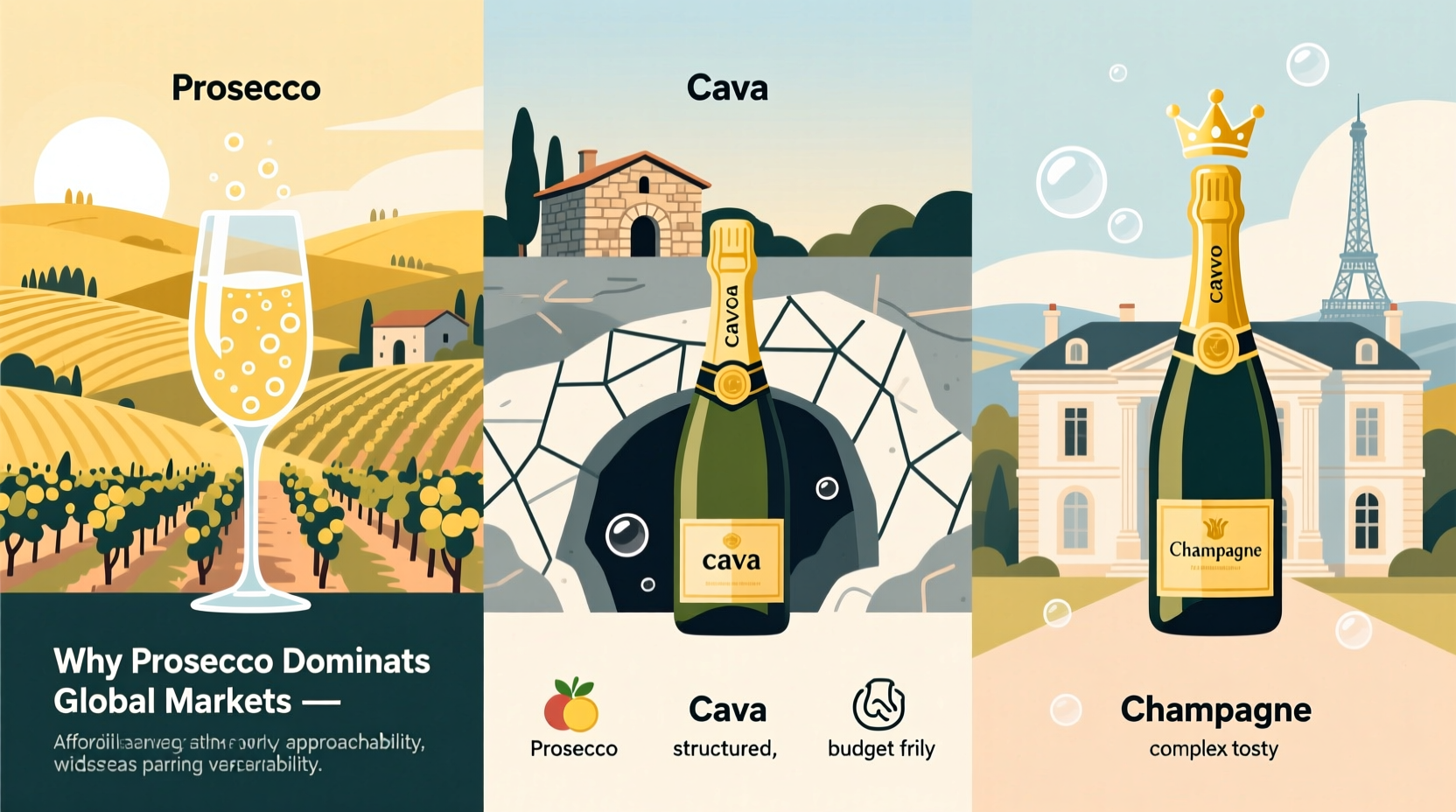 Why Is Prosecco So Popular Compared To Cava And Champagne