
How To Grow A Pine Tree From A Seed
So, you want to grow a pine tree from a seed. You’ve seen those majestic, skyscraper-sized evergreens and thought, “I could do that, but smaller and in my backyard.” Congratul...
So, you want to grow a pine tree from a seed. You’ve seen those majestic, skyscraper-sized evergreens and thought, “I could do that, but smaller and in my backyard.” Congratulations—you have officially signed up for a project that will test your patience more than a DMV line during a snowstorm.
Let’s get one thing straight: this is not a weekend hobby. This is a generational commitment. You are basically planting a time capsule for your great-great-grandchildren. But hey, if you’re okay with watching grass grow for speed, let’s dive in.
First, you need a pine cone. Not just any cone—a closed one. If it’s already open and shedding seeds, those seeds have probably already been eaten by a squirrel who now runs a tiny high-stakes poker game in your attic.
Place that cone in a paper bag and leave it in a warm, dry spot for a few days. It will open like a grumpy fist unclenching after a long nap. When you shake it, the seeds—tiny, brown, and armed with a little wing—will fall out. Congratulations: you are now a pine cone midwife.
Now, here’s the wild part. Most pine seeds are dormant jerks. They refuse to grow unless they think they’ve been through a cold winter. You have to trick them. This is called stratification, which is fancy science-speak for “put them in the fridge and lie to them.”
Pop those seeds into a damp paper towel, seal them in a ziplock bag, and shove them in the back of your fridge for three to six weeks. Not the freezer—that’s for ice cream and frozen pizza. If you forget about them, don’t worry; they’ll just chill out, literally. Surprising fact: some pine seeds can stay viable for years in cold storage. They are the extreme couponers of the plant world.
After the fridge vacation, you’ll notice a tiny root called a radicle (fancy Latin for “baby root”) poking out. Do not throw a party yet. That root is fragile. If you sneeze on it, it might just give up and die a dramatic botanical death.
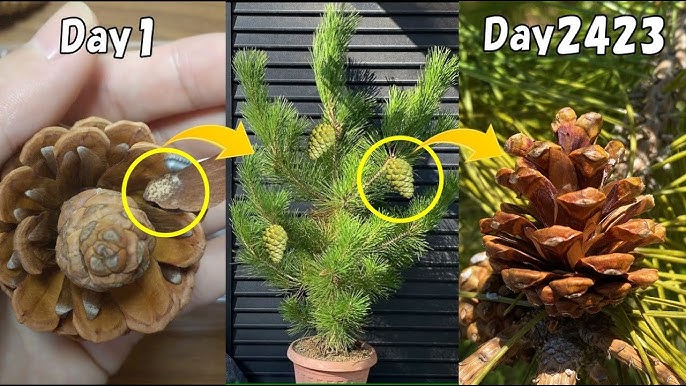 How to Grow a Pine Tree From a Pine Cone: A Step-by-Step Guide From
Plant that seed in a small pot with well-draining soil. Push it just beneath the surface, root side down—like a tiny, terrified diver entering the pool. Keep the soil moist but not soggy. Pine seeds hate swampy conditions. They are the Goldilocks of the conifer world: not too wet, not too dry, just right, and dramatically picky about it.
Now, light is everything. Put your pot in a sunny window. If you don’t have a sunny window, move to a house that does. I don’t make the rules. Your little seedling needs at least six hours of bright, indirect light per day. A grow light works too, but your neighbors will think you’re running a clandestine jungle operation.
In two to four weeks, a tiny green loop will push through the soil. This is the cotyledon—basically the pine tree’s awkward baby phase. It will look like a scraggly blade of grass with a bad haircut. Do not mock it. You were also weird-looking once.
Here’s the surprising fact that will blow your mind at parties: a pine tree’s first set of needles (the “juvenile” leaves) are completely different from its adult needles. They look like fuzz or tiny ferns. Some pines keep these baby needles for years. It’s the botanical equivalent of wearing your middle school clothes well into your thirties.
 How To Grow A Pine Tree From Seeds | Detroit Chinatown
As your tree grows, resist the urge to overwater. Pine roots need to breathe, and waterlogged soil is like a pillow over their face. A good rule: stick your finger an inch into the dirt. If it feels dry, water it. If it feels moist, back away slowly. Overwatering is the number one killer of baby pine trees. It’s basically plant murder by enthusiasm.
After about a year, your seedling will be a few inches tall. Do not transplant it to the great outdoors yet. It’s still a wimp. Keep it in a pot for at least two years, gradually introducing it to stronger light and wind. This is called “hardening off,” which is like sending your tree to boot camp but with less yelling.
When you finally plant it outside, dig a hole twice the size of its root ball. Do not add fertilizer. Pines are born ascetics; they like lean, acidic soil. Too much fertilizer makes them grow floppy and sad, like a teenager on a sugar binge.
And here’s the last kicker: your pine tree will produce its own pine cones in 10 to 30 years. Yes, you read that right. You’ll be older, grayer, and probably still finding last week’s coffee mug in your car. But when that first cone appears, you can stand under your tree—which is now taller than your house—and whisper, “I made this from a fridge seed, you magnificent, slow-moving giant.”
So go ahead. Grab a cone. Embrace the slowness. In a world addicted to instant gratification, growing a pine tree from seed is the ultimate act of rebellious patience. Just don’t forget to water it. Or the squirrels win.

