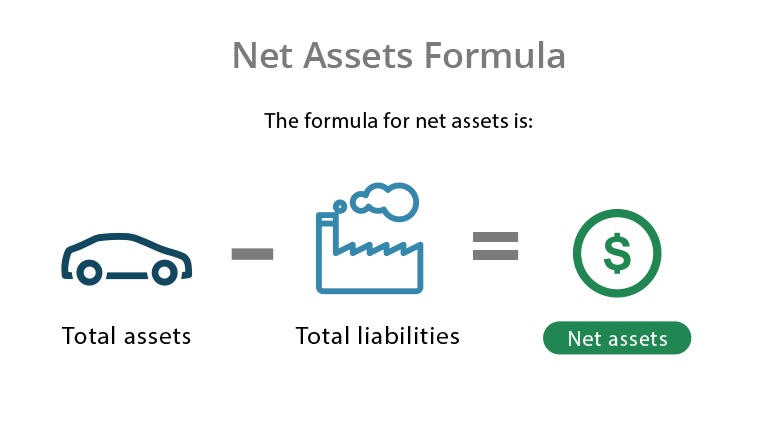
Here’s the magic spell: Net Assets = Total Assets – Total Liabilities. Say it with me now. Total Assets. Minus. Total Liabilities. You’ve just performed financial wizardry.
Total assets include cash, property, equipment, and even that weird patent for a self-wiping toilet. Total liabilities are things like loans, unpaid bills, and that lawsuit you didn’t see coming. Subtract the scary stuff from the nice stuff. The result is net assets.
Easy, right? Too easy? That’s because most finance jargon is just math with a tie on. Don’t let them fool you with big words.
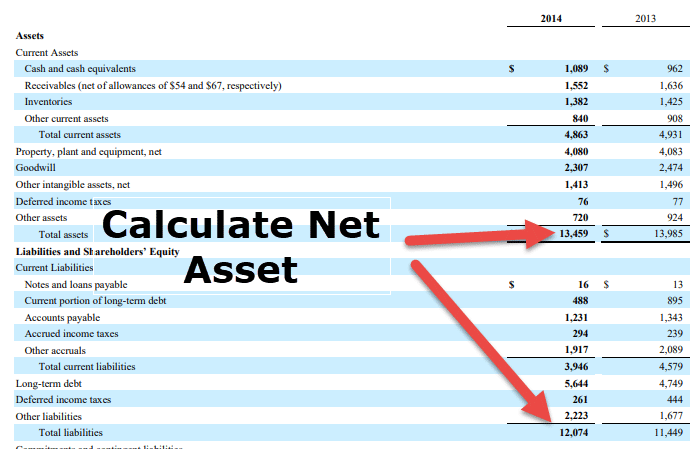 Net Assets (Definition, Examples) | What is Net Assets?
Wait, Is It the Same as Equity?
Ah, great question—you've been paying attention. For a company, net assets is basically the same as shareholders’ equity. They’re twins, just dressed differently. Equity is what’s left for owners after all debts are paid. Net assets is the same number, but from a “what’s really here” perspective.
But here’s the twist: if the company has intangible assets (like goodwill from buying another company), net assets can get fuzzy. It’s like counting a unicorn in your garage—sure, it’s on paper, but can you sell it? Probably not.
So, some financial folks calculate tangible net assets. That’s net assets minus intangible stuff. It’s the “cold, hard reality” version. Like taking off Instagram filters and seeing the real thing.

