
How Does A Reverse Osmosis Water Purification System Operate
Okay, let’s talk about water. Not just any water, but the fancy, squeaky-clean stuff that comes out of a Reverse Osmosis system. You’ve seen the jugs at the grocery store, rig...
Okay, let’s talk about water. Not just any water, but the fancy, squeaky-clean stuff that comes out of a Reverse Osmosis system. You’ve seen the jugs at the grocery store, right? Or maybe you have a little tank under your sink. It feels a bit like magic, but I promise it’s just science being a total show-off. Grab your coffee, and let’s dive in.
First, let’s get one thing straight: regular tap water isn’t bad. It’s mostly H2O, sure. But it’s also a party bus for dissolved minerals, chlorine, and tiny bits of… well, everything. Reverse Osmosis (or RO, if you’re trying to sound cool) is like a super-strict bouncer for that party bus.
So, how does it actually work? It’s not a filter you rinse under the faucet. Oh no, it’s way more dramatic. It uses pressure and a semi-permeable membrane. Think of that membrane as a microscopic colander with very high standards.
Here’s the wild part. “Osmosis” is a natural process where water moves from a diluted area to a concentrated one. It just wants to balance things out, like a good friend. Reverse Osmosis flips that on its head. It forces water backwards through the membrane, leaving all the junk behind. Rude? Maybe. Effective? Absolutely.
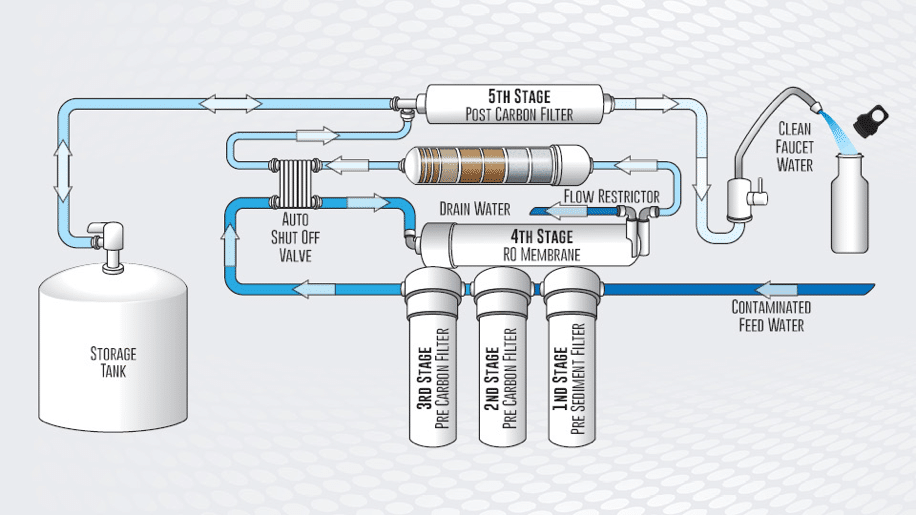
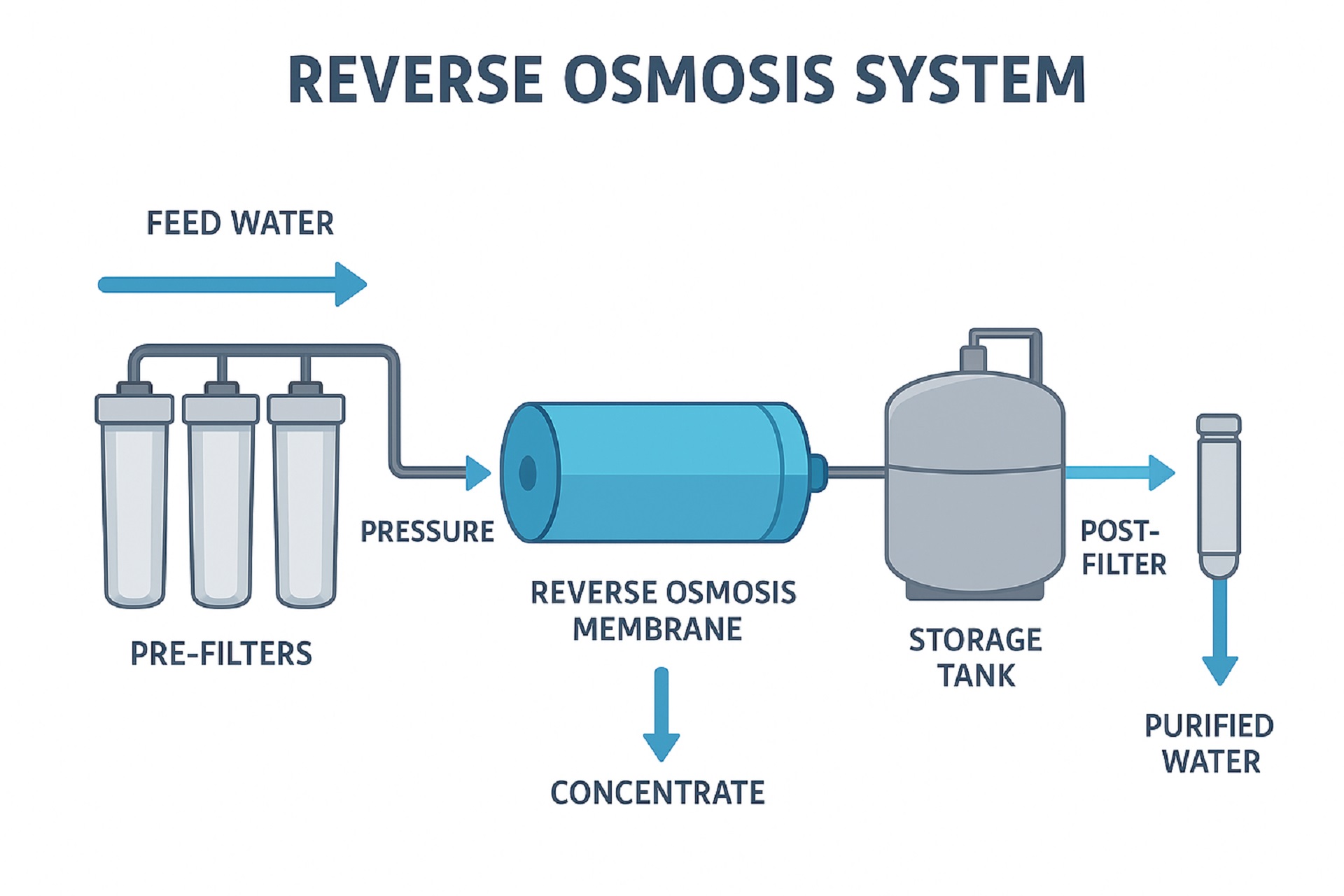
Let’s walk through the journey. Your tap water enters the system. First, it hits a pre-filter. This catches big, dumb particles like sand, rust, or that rogue piece of lettuce. It’s a bouncer for the bouncer, if you will.
Next stop: the carbon filter. This one’s for the bad smells and the chlorine. You know that “pool smell” from tap water? That’s chlorine. The carbon filter gobbles it up like a hungry monster. Now the water is clear, odorless, and ready for the main event.
And the main event is the RO membrane. This is the diva of the operation. It’s a tightly wound sheet of plastic with pores so small, only water molecules can squeeze through. Imagine trying to push a beach ball through a keyhole. That’s what contaminants face here.
But wait—doesn’t that take forever? No, because we use pressure. Your home’s water pressure does the heavy lifting. It shoves the water against the membrane with brute force. The clean water goes one way (into a storage tank), and the dirty, concentrated reject water goes down the drain.
 How Does A Reverse Osmosis Water Purification System Operate at Grant
Yes, it wastes a little water. About 3 to 4 gallons for every 1 gallon of pure water you get. Ouch, right? But modern systems are getting way better at this. Some recirculate the reject water, like recycling leftovers. Don’t let the waste scare you off just yet.
After the membrane, the water hits a final carbon polish filter. This is like a finishing spritz. It removes any leftover weird tastes or odors that snuck through. The result? Water so pure, it’s almost boring. Almost.
Now, the pure water sits in a little tank under your sink, waiting patiently. When you open the faucet, a bladder pushes it out. It’s like a water bottle with a spring. You get crisp, clean water on demand. No fuss, no plastic waste.
Let’s talk about what it removes: Lead, arsenic, nitrates, fluoride, bacteria, viruses, and even microplastics. Yeah, all the scary headlines. It strips them away. It’s the equivalent of giving your water a spa day, a therapy session, and a new identity.
But here’s the catch—it’s not perfect. RO systems remove everything, including good minerals like calcium and magnesium. Some people say the water tastes “flat” because of this. A quick fix? Add a mineral cartridge after the system. Or just drink it and eat a banana. You’ll be fine.
 Water Flow Diagram Of Water Purifier
Another thing: installation. It’s not a plug-and-play situation. You’ll need to drill a hole in your counter or use a special faucet. If you’re not handy, call a plumber. Trust me, water leaks are not a fun Saturday.
So, is a Reverse Osmosis system worth it? For most people, yes. If you live in an area with hard water, old pipes, or just hate the taste of tap, it’s a game changer. You’ll be drinking the cleanest water outside of a lab.
But honestly, even if you don’t care about micron-level purity, the convenience is huge. No more buying plastic jugs. No more lugging them home from the store. Your fridge’s water dispenser will thank you. And so will your wallet (eventually).
Let me leave you with a fun fact: NASA uses Reverse Osmosis to recycle water on the International Space Station. That means astronauts drinking their own processed sweat. Yep, your kitchen tap could be as cool as a spaceship. Take that, tap water.
So, next time you sip that glass of RO water, remember the journey—pressure, drama, a tiny membrane, and a whole lot of science. It’s just water, but it’s extra. And that’s worth a cheers, don’t you think?

