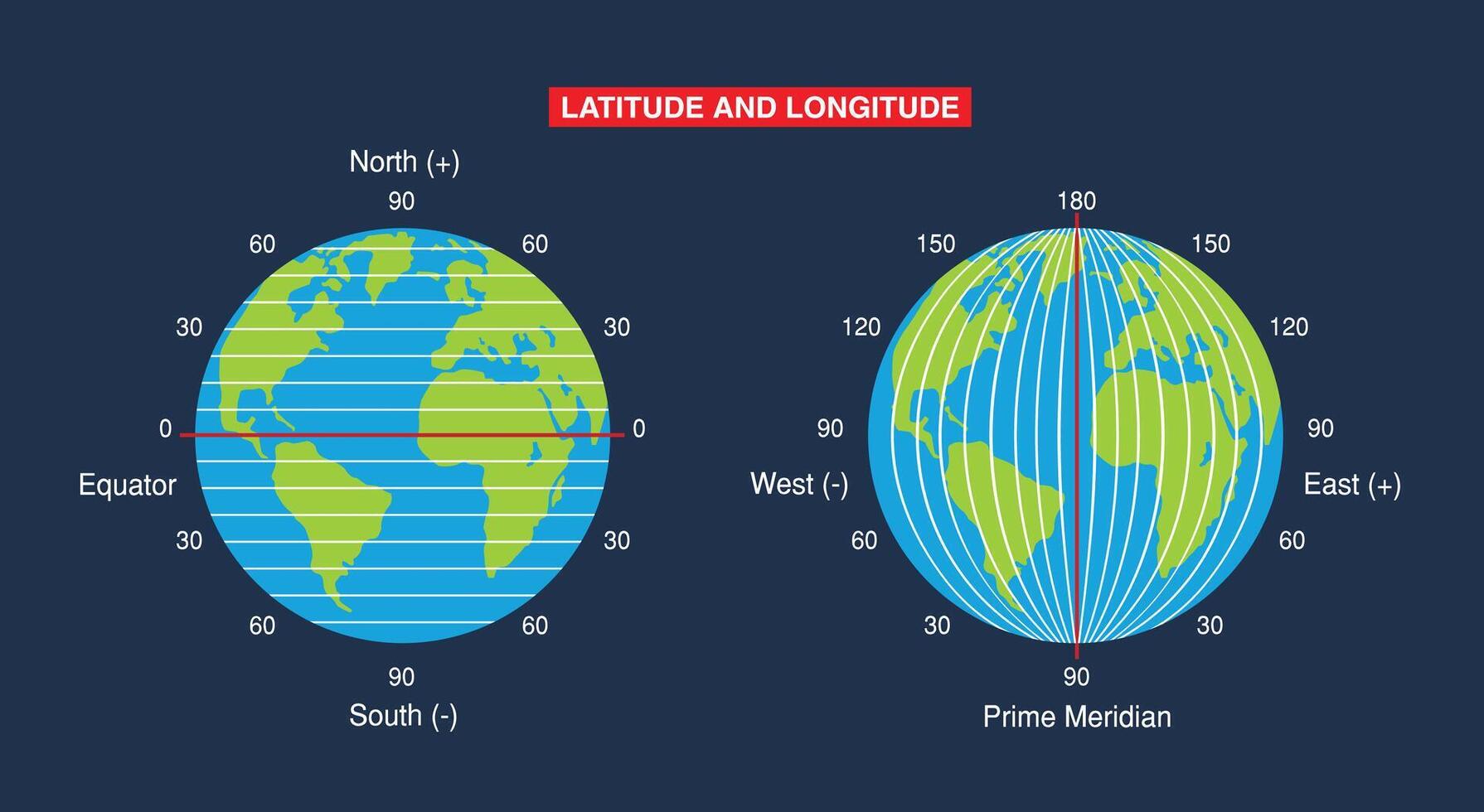
Longitude is the party crasher—it’s trickier to find. The problem is that the Earth spins, so you can’t just look at a star and know where you are east-to-west. You need time.
Here’s the secret: for every 15 degrees of longitude you travel east, the local time moves one hour ahead. Travel west, and it falls one hour behind. So to find your longitude, you need to know what time it is back home versus where you are now.
 How To Enter Latitude And Longitude
Imagine you’re on a boat in the middle of the ocean. You look at your super-accurate clock set to Greenwich Mean Time (GMT). Then you check the local time by looking at the sun (noon is when the sun is highest). If it’s noon locally but 3 PM in Greenwich, you know you’re 3 hours behind, which equals 45° West. Boom—you just found longitude.
Why Was This So Hard for Old Sailors?
Because clocks sucked in the old days. They’d get salty, rusty, and stop working. The whole “Longitude Prize” was a huge deal in the 1700s—a carpenter named John Harrison built a clock that actually worked at sea. He saved thousands of lives and got a fat check. The guy was a legend.
Today, we just use a GPS satellite, which whispers the time from space. But it’s way less romantic. You can’t tell your grandkids, “I used a star and a piece of string to find our way home.” That’s a story for the ages.

