
Let’s be real: not every rind is created equal. If your Parmesan has a waxy, plastic-like coating, do not grate it—that’s inedible armor. Real Parmigiano-Reggiano has a natural, dry rind; fake stuff is wrapped in packaging that belongs in the trash, not your risotto.
Also, if the rind smells like sweaty gym socks or has mold that’s not part of the aging process, chuck it. Your taste buds deserve better than a science experiment. (I’ve been there—regret is real.)
But for the good stuff—the crusty, amber-colored rind from a wedge that cost you a small fortune—grating is pure gold. Just don’t expect it to melt like the interior. It adds crunch, not creaminess.
Three ways to use grated rind (beyond risotto)
1. Pasta topping. Toast those shavings in a dry pan for 2 minutes—they become brittle, nutty, and addictive. Sprinkle over spaghetti aglio e olio and watch everyone fight for the last bits.
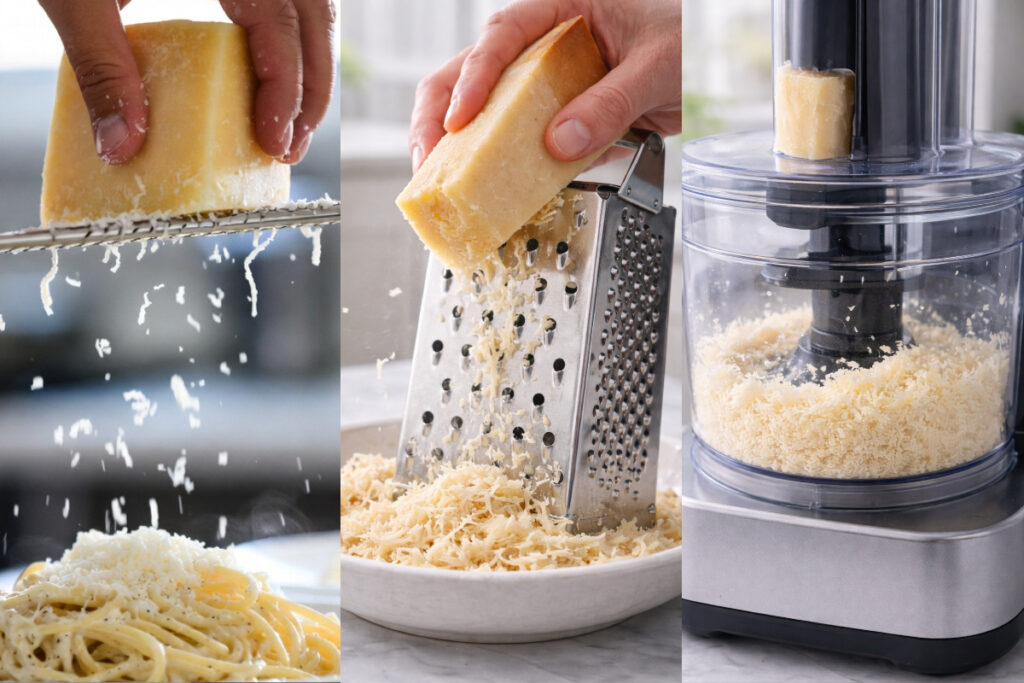 Fresh Grated Parmesan vs Canned: Which Is Better? | The Dude Cooks
2. Broth booster. Toss a palmful of grated rind into your chicken or vegetable stock. It’s like adding a fifth dimension of saltiness—an instant upgrade for soups and stews.
3. Crust for roasted veggies. Mix grated rind with breadcrumbs and olive oil, then press onto potatoes or broccoli. Roast until golden—you’ll get a cheesy, crispy shell that makes you question every previous vegetable decision.
Pro tip: Store leftover rinds in a zip-lock bag in the freezer. They last forever—or at least until you have a craving for cheese crunch at 2 AM. (No judgment here.)

