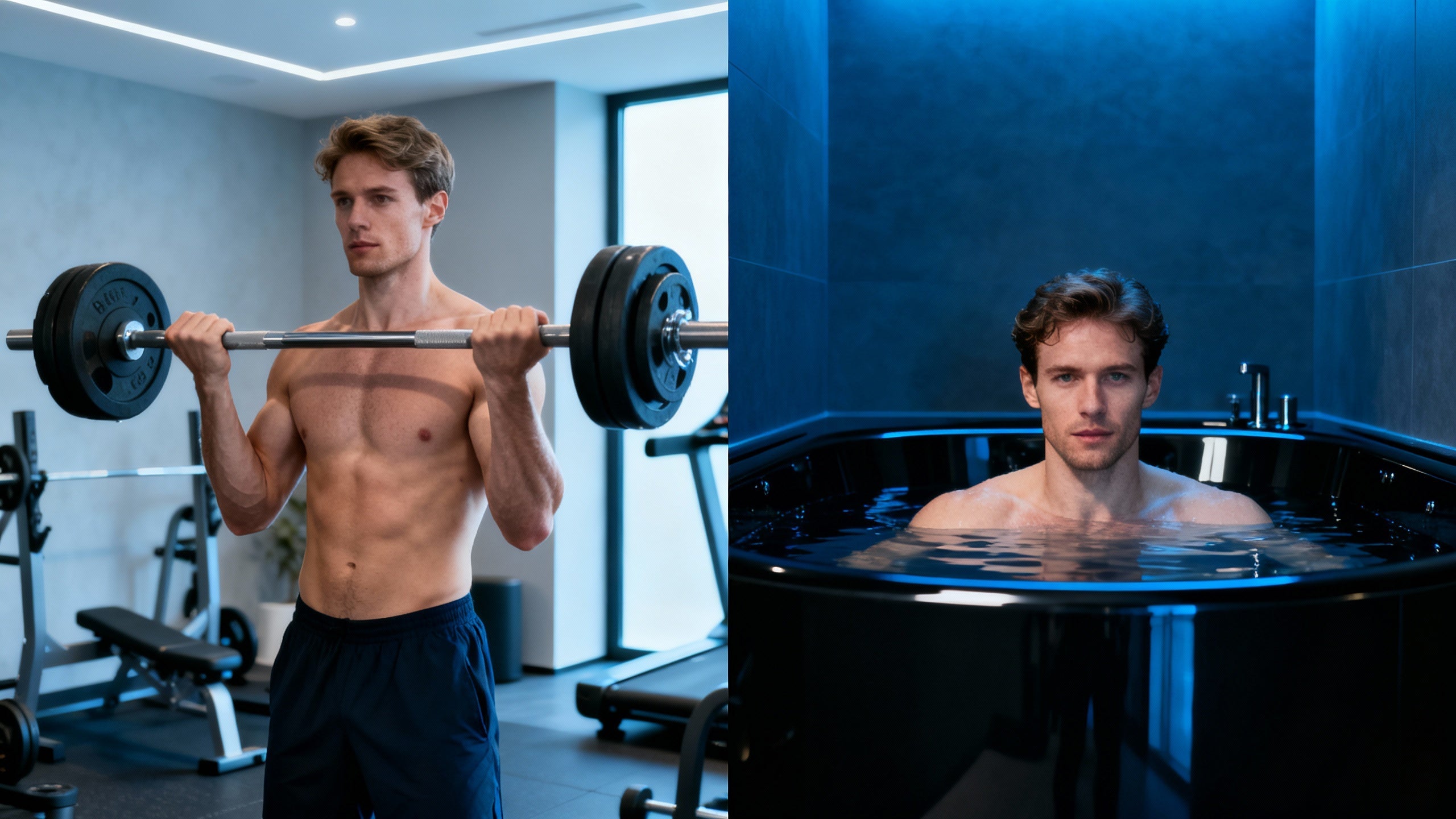
If you’re still on the fence, think of it like choosing between a pre-game pep talk and a post-game ice pack. The pre-workout plunge is for waking up both mind and body—great for cardio, terrible for heavy lifting. The post-workout plunge is for shutting down inflammation—excellent for recovery, but it might slow down muscle adaptation over time.
There is a third option, though: avoid the extreme and try a contrast bath. Alternate three minutes in cold water with one minute in hot water, repeated three times. This method is used by Nordic athletes to boost circulation without delaying muscle repair. It’s the Goldilocks of cold plunges: not too hot, not too cold, just right for most of us.
 Cold Plunge Before Or After Workout?
And a final practical tip: never plunge alone if you’re new to it. Cold shock can cause involuntary gasping and even fainting. Buddy up, use a timer, and always have a warm towel nearby. Safety isn’t just sensible—it’s cool.
A Quick Cultural Nod
Cold plunging has gone mainstream thanks to celebrities like Joe Rogan, Tony Robbins, and even Gwyneth Paltrow, who has a $5,000 ice bath in her backyard. But the practice has deeper roots: Finnish saunas end with a roll in the snow, Japanese shinto rituals involve icy waterfall meditations, and Russian banya-goers plunge into frozen lakes. This isn’t a trend—it’s a global, centuries-old habit that whispers: embrace the discomfort, and you’ll find peace.
The real secret might be in the mindset shift. A 2026 Harvard study noted that regular cold exposure can reduce stress resilience and even lower cortisol levels. So whether you plunge before or after, that three-minute battle with the ice becomes a mini meditation on endurance. It trains your brain to say, “I can handle this,” which is surprisingly useful when your work inbox explodes or traffic tests your patience.

