
Cooking a shallot is where the true personality shines. Sauté a diced onion in butter, and you get a classic, savory sweetness. Sauté a diced shallot in that same butter, and you get something elegant. The shallot melts down into a almost jammy, silky texture with a subtle, complex sweetness that makes you stop and wonder what you did differently.
Chefs love shallots for this exact reason. They use them in delicate pan sauces for fish or chicken. The shallot disintegrates into the liquid, thickening it and adding a layer of flavor you can’t quite name. It’s the secret to making a weeknight dinner feel like a special occasion without anyone figuring out your trick.
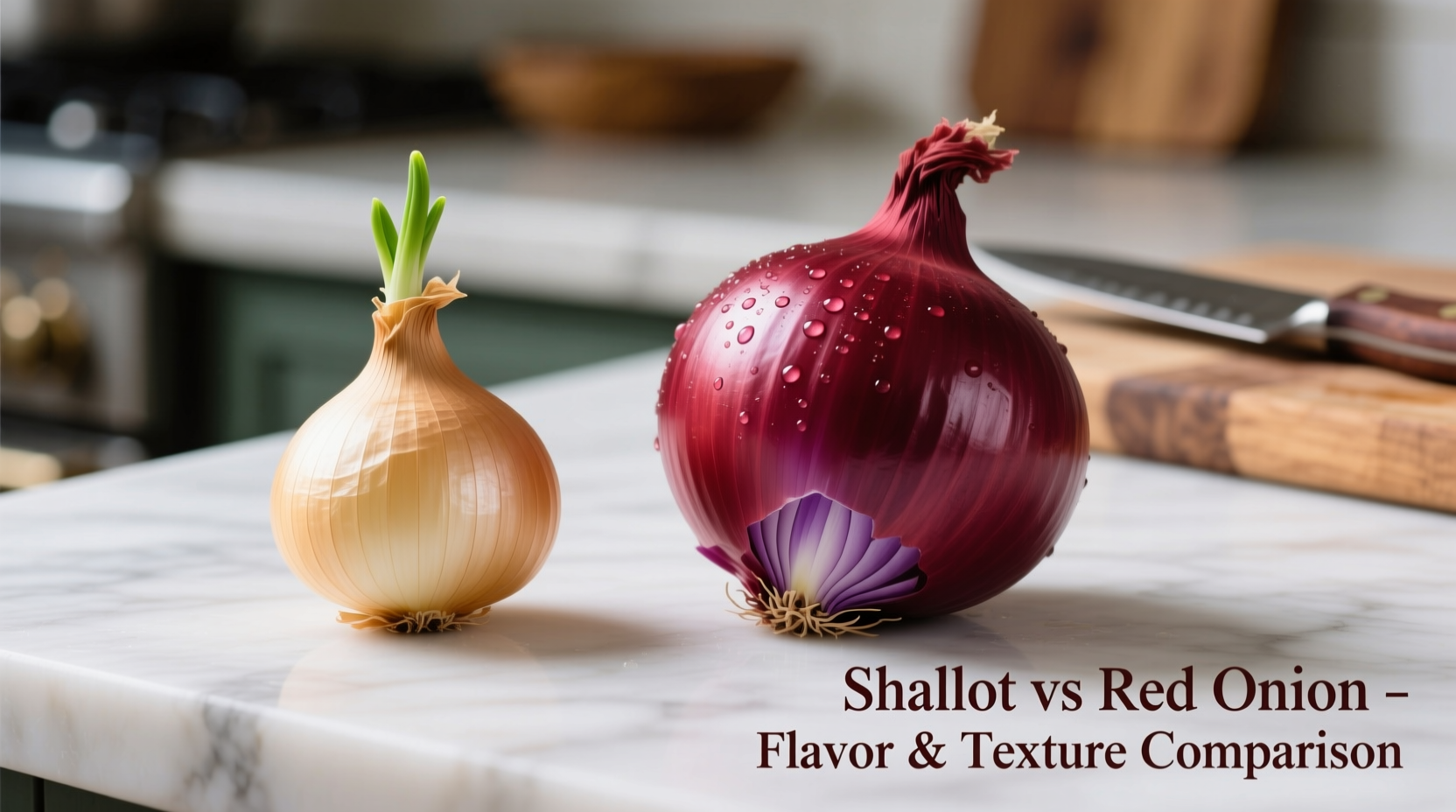 Red Onion vs Shallot: Key Differences and When to Use
Think of your next stir-fry. A big pile of chopped green or white onions will give you a strong, vegetal crunch. But a handful of sliced shallots? They will caramelize at the edges, turning sweet and sticky, offering a velvety richness that changes the whole dish.
The Garlic Factor
Here is the fun part: shallots have a whisper of garlic that onions lack entirely. It’s not a strong garlic taste, but a subtle, background note that makes them incredibly versatile. This is why many French recipes combine shallots with butter and wine. The shallot acts as a bridge, holding the wine’s acidity and the butter’s richness together with a hint of allium magic.
You can taste this best in a simple beurre blanc sauce. The shallot is the star. Without it, you just have butter and wine—which is fine, but not the same. The shallot provides that little “je ne sais quoi” that makes you want to lick the plate.
So, you might ask, “Can I use a red onion instead?” You can, but you’ll miss the subtlety. Red onions are sharper and brighter. A shallot is more like a chameleon: it adapts to whatever dish it’s in, adding depth without shouting. For raw applications, the shallot is the safe, friendly choice.
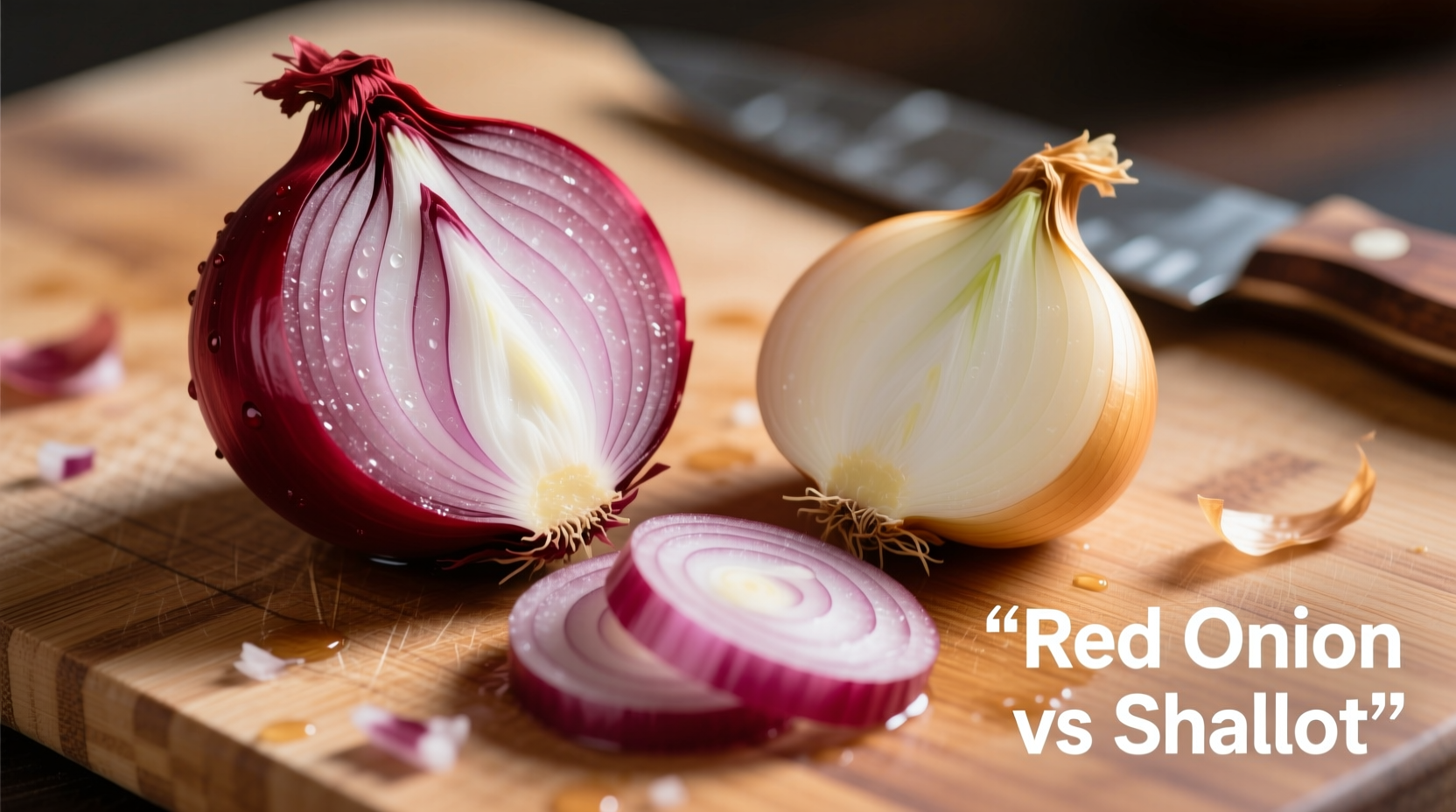 Red Onion vs Shallot: Key Differences & When to Use Each

