You don’t need flash cards or a speech therapist on speed dial. Your best tool is narrating your life. “Mama is chopping the red apple.” “Papa is putting on his big shoes.” Keep it simple, slow, and slightly theatrical—like you’re commentating a nature documentary, but the subject is your grocery run.
Reading is the MVP here. Choose board books with repeated phrases and bright pictures. Leave them around the house like little verbal traps. Your toddler will eventually pick one up and name the cat on the page. Pro tip: let them turn the pages, even if they skip three at a time. The mess is part of the magic.
And please, resist the urge to quiz. “What’s this? What’s that? Say ‘car’!” turns into a pressure cooker. Instead, model the word and wait. If they point to the car, say, “Oh, you see the blue car.” Then shut up and let them process. Silence is golden, especially when it avoids a meltdown over a Wheel of Fortune–style moment.
Cultural References to Make You Smile
Remember the scene in Bridget Jones’s Diary where she counts calories? That’s you counting words. Let it be a loose tally, not a spreadsheet. Or think of Baby Yoda in The Mandalorian—those adorable coos and gestures? Pure communication. No one asked him for a full sentence.
Even Shakespeare’s toddlers—had he kept a diary—probably said “gog” and called it a day. The point is that language is a slow, beautiful bloom. Your child is not competing in a verbal Olympics. They’re learning that sound has power, and that sound comes from you, their favorite audiobook.
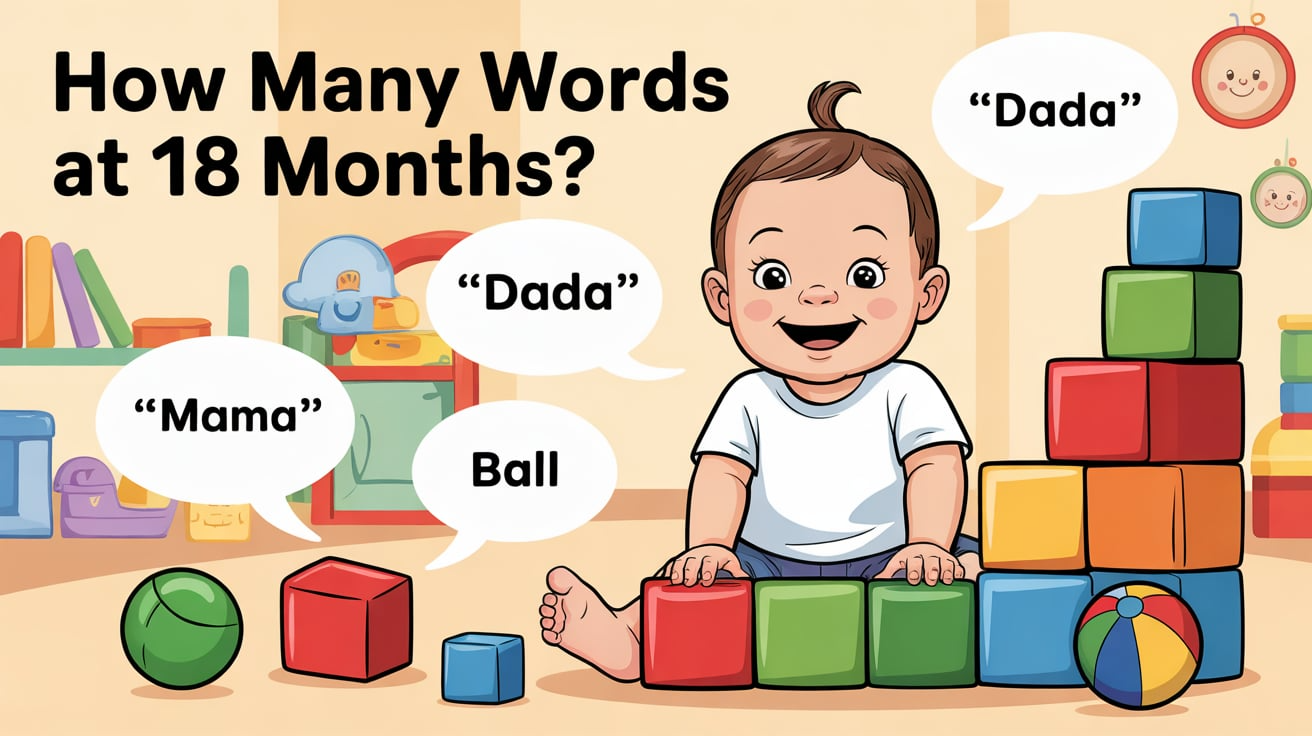 How Many Words at 18 Months? Key Milestones and Tips - Meredith Plays