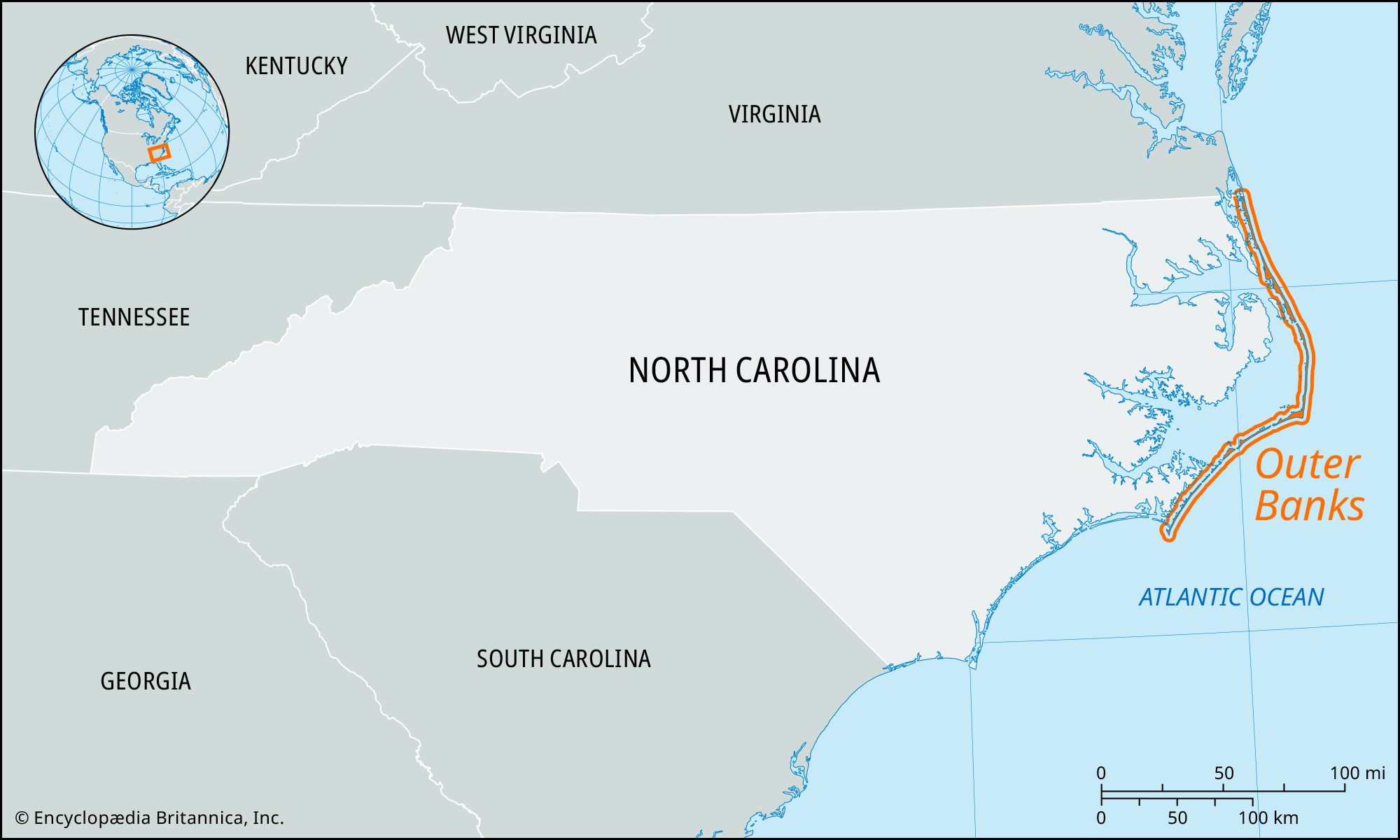
Picture a string of sandbars that look like someone spilled a giant bag of pretzel sticks off the coast of North Carolina. That’s the Outer Banks, or the OBX for short. They’re a skinny, 200-mile-long strip of barrier islands that act like a bouncer for the mainland, taking the brunt of every Atlantic Ocean temper tantrum.
If you look at a map, they’re the fragile little elbow of land that juts out from Virginia Beach down to Cape Lookout. It’s not a city you drive to; it’s a mood you enter after crossing a bridge that feels like it’s held together by good intentions and salt spray.
The Great Geographical Party Trick
The best way to picture it is this: imagine you’re on a normal street, then suddenly the pavement ends and you’re on a sand-covered road with a wild horse looking at your car like you owe it money. That’s the OBX. The islands are so narrow that in some spots, you can see the ocean on one side and the sound on the other just by turning your head.
You’re never more than a few blocks from a body of water that either wants to knock you over or lull you to sleep. It’s the only place where you can get a sunburn, a windburn, and a sandburn in the same afternoon without moving your beach chair.