
Okay, let’s be real for a second. Are there situations where you might want to peel a fig? Sure, but they’re rare. One time is if you’re making an ultra-smooth jam or sauce, like for a fancy dessert or a delicate fig glaze.
Another is if you’re cooking with very tough, thick-skinned varieties like some Boule d’Or or older, slightly dried figs. In those cases, the skin can become a bit chewy or leathery. But honestly, for 99% of fresh figs, eating the skin is the way to go.
If the skin looks wrinkly or has blemishes, just trim that part off. Otherwise, treat it like a natural, edible jacket that holds all the sweet goodness inside.
The Fun Comparison: A Fig is Like... a Tiny Purple Water Balloon
Ever held a perfectly ripe fig in your hand? It feels heavy and soft, right? The skin is the thin, elastic balloon holding all that sweet, seedy juice. Bite through it, and you get that satisfying pop—first the skin’s gentle resistance, then the burst of jammy interior.
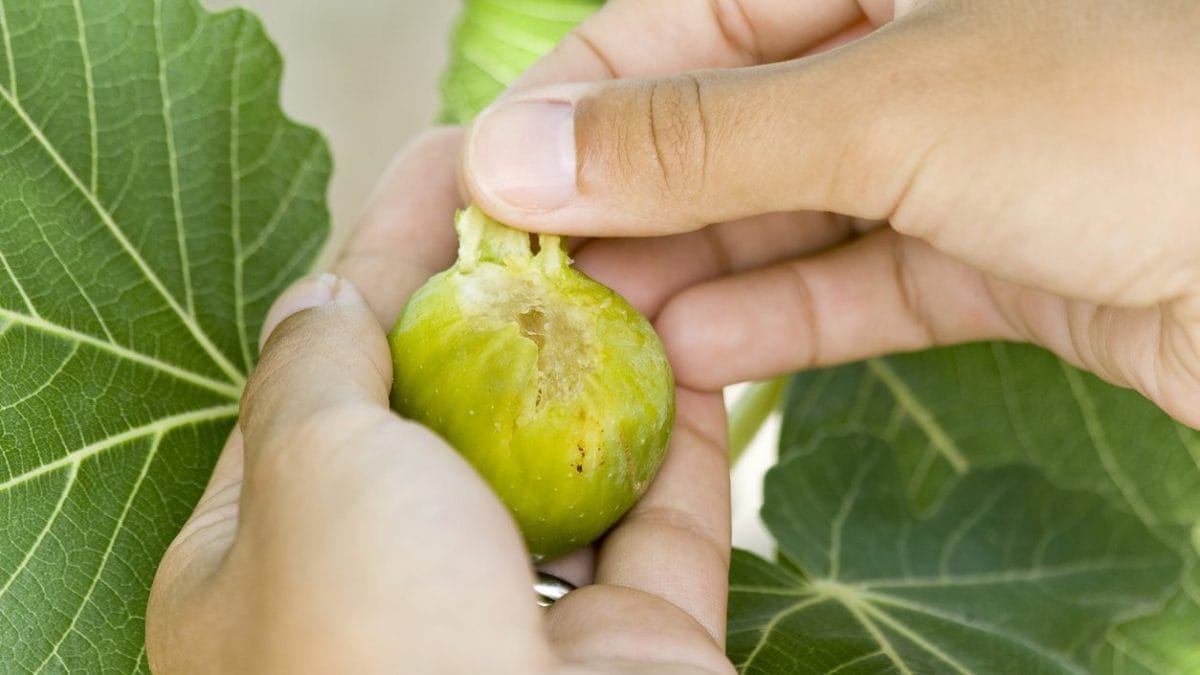 Can You Eat Fig Skin or Is It Inedible?
It’s not like eating an apple skin, which is tough and waxy. It’s more like eating a grape skin, but with more personality. Grape skin is thin and a little tart; fig skin is tender and sweetly complex.
Compare it to a peach skin, which can be fuzzy and sometimes bitter. Fig skin is friendlier. It doesn’t fight back. It just welcomes you in.

