
The thing is, DALYs are not just some boring statistic; they're actually a powerful tool to help us make informed decisions about our healthcare systems. By understanding which health issues have the biggest impact on people's lives, we can allocate resources more effectively and make a real difference. It's like trying to decide which leaky faucet to fix first - you want to prioritize the one that's wasting the most water!
Let's consider a relatable example: imagine you have a friend who's struggling with mental health issues, like anxiety or depression. You might notice that they're not their usual self, and that's because mental health problems can affect people's quality of life in a big way. By using DALYs, healthcare professionals can better understand the impact of these issues and develop more effective treatments.
In everyday life, we make choices that affect our health and wellbeing all the time - like deciding what to eat for breakfast, or whether to take the stairs or the elevator. But when it comes to big-picture decisions about public health, we need tools like DALYs to help us make informed choices. It's like trying to plan a road trip - you need a map to navigate the best route, and DALYs are like the map for healthcare decision-making.
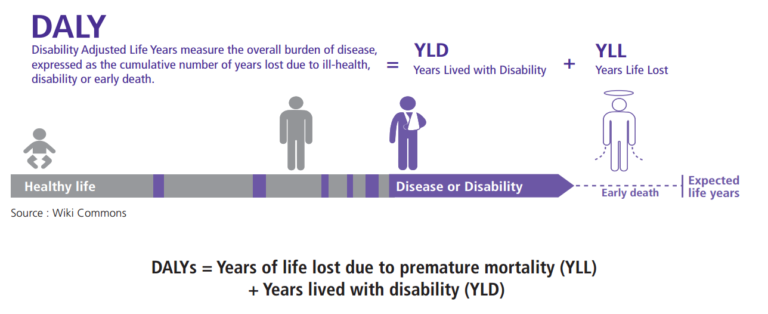 Understanding Summary Measures Used to Estimate the Burden of Disease
Now, you might be wondering how DALYs are actually calculated. It's a bit like baking a cake - you need to combine the right ingredients (like data on mortality rates, disease prevalence, and quality of life) in the right proportions. And just as a delicious cake requires the right balance of ingredients, DALYs require a careful balance of data to give us an accurate picture of the health impact.

