
You’ll meet two main styles of these equations. Don’t worry—they’re just different outfits for the same idea.
Slope-Intercept Form: y = mx + b
This is the rock star of forms. The m is the slope—how steep the line is. A big m means it’s a mountain; a small m means it’s a gentle hill. The b is the y-intercept—where the line crosses the y-axis. It’s like saying, “Start here, then go up m steps for every step to the right.”
Example: y = 2x + 3. So you start at y=3 (the “b”), then for every step right, you climb 2 steps up (the “m”). Easy peasy. If you get negative slope? You’re walking downhill. That’s life.
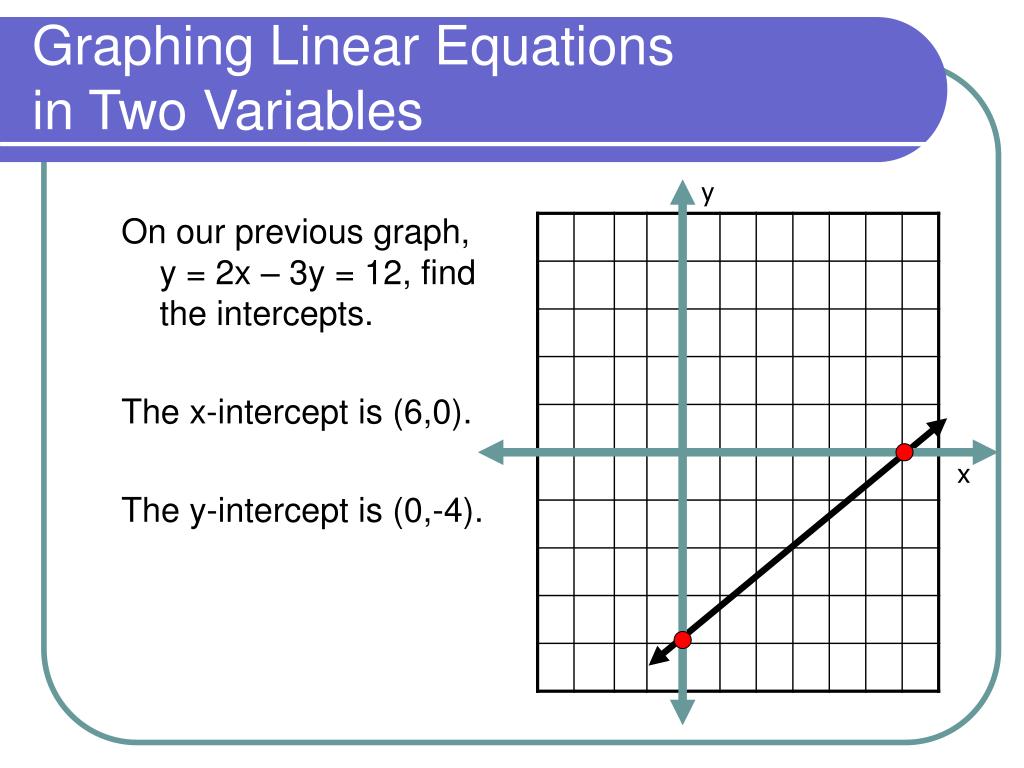 PPT - Linear Equations in Two Variables PowerPoint Presentation, free
Standard Form: Ax + By = C
This one looks like a formal invitation: “A, B, and C are integers, and A is positive, or else the math police will scold you.” (Kidding. They won’t.) It’s just a different way to write the same line.
For example, 2x + 3y = 6. You can always wrestle it into slope-intercept form if it makes you feel better. Think of it like: standard form is the tuxedo, slope-intercept is the hoodie. Both look great on the same data.

