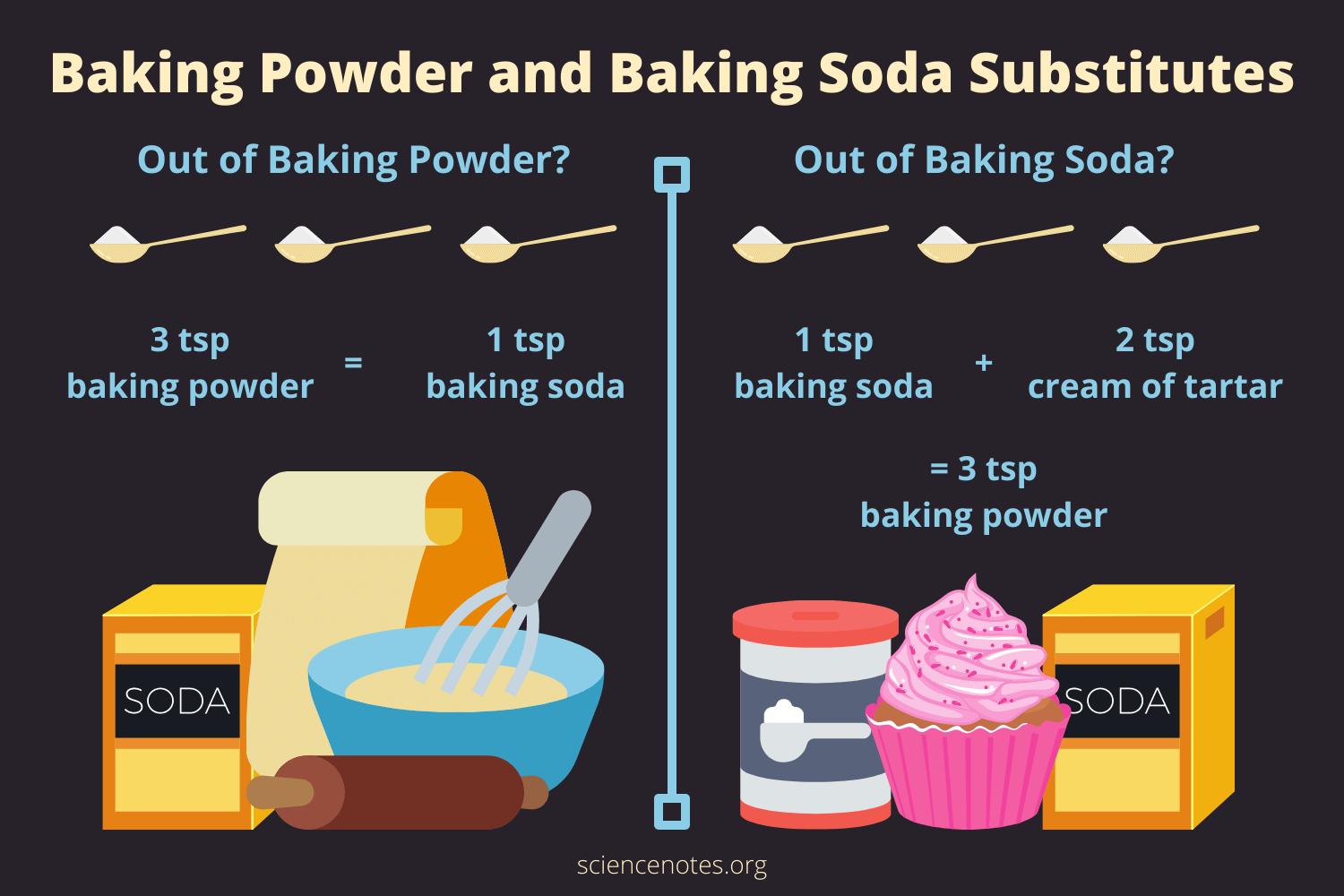
But what's really going on behind the scenes when you use baking powder instead of baking soda? It all comes down to chemistry: baking soda (sodium bicarbonate) is a base that releases carbon dioxide gas when it meets an acid and a liquid. Baking powder, on the other hand, is a mixture that already contains an acid, so it's like a little package of reactants just waiting to happen.
And did you know that baking powder was originally designed to be a more convenient alternative to baking soda? Back in the day, bakers had to mix their own baking soda with cream of tartar and other ingredients to get the right reaction - but with baking powder, they could just whip out a pre-mixed package and voila! Easy peasy, lemon squeezy.
Now, we know what you're thinking: what about the flavor? Will using baking powder as a substitute give your baked goods a weird taste? The answer is... maybe. It really depends on the recipe and the other ingredients you're using. But if you're feeling adventurous, you could try experimenting with different types of baking powder - like double-acting baking powder, which releases gas twice during the baking process.