If you’re unlucky enough to be allergic to tree pollen, your season kicks off as early as March. That’s right—just when the daffodils are peeking out, your sinuses are already throwing a tantrum. I once woke up in April with eyes so puffy I looked like I’d gone three rounds with a boxing champ.
But for most people, the real villain is grass pollen, which dominates from May to July. This is the peak of hay fever hell, when the countryside looks lovely but your face feels like it’s on fire. You step outside for five minutes and suddenly you’re a human sprinkler system.
Weed pollen—think nettles and mugwort—then takes over from June to September. So, basically, if you’re unlucky, you can suffer from a sniffly March all the way to a soggy September. That’s half the year spent pretending you’re not dying in public.
The “Pollen Bomb” Effect
Here’s where it gets really annoying: the UK loves a “pollen bomb.” That’s when a rainy, grey week suddenly gives way to a hot, sunny day, and the pollen levels skyrocket. It’s like the plants all agreed to celebrate at once, and your immune system is the only one not invited to the party.
You know it’s a high-pollen day when you open the window for some “fresh air” and immediately sneeze so hard you scare the cat. Or when you try to mow the lawn and end up sounding like a wounded walrus for the next 48 hours.
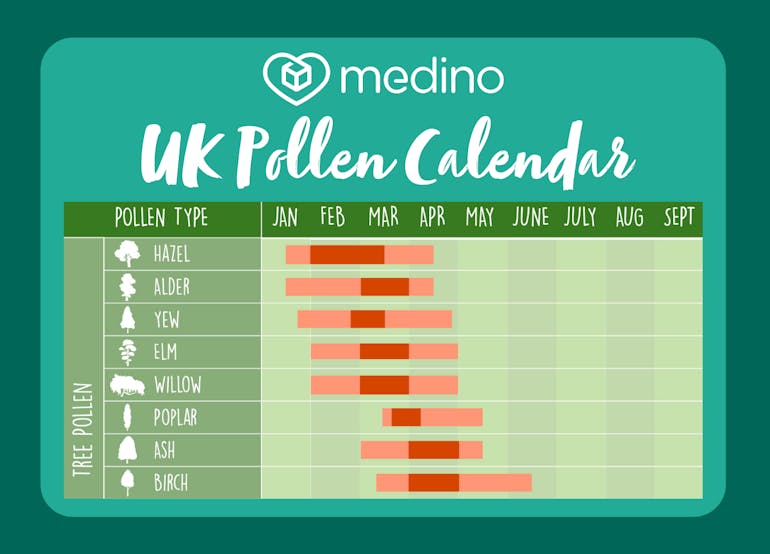 UK pollen calendar for hayfever | medino
I once made the mistake of going for a countryside walk on a “very high” pollen day. Two hours later, I was sitting in a pub, eyes streaming, trying to convince my friends I wasn’t having a breakdown—I just loved the look of the fields too much.