
Technically, the longest day isn’t about the weather—ha, this is Britain, wake up—but about the tilt of the Earth. Our little blue marble leans toward the sun at its maximum, giving us about 16 hours and 38 minutes of daylight down south, and a staggering 19 hours up in Scotland. That’s right, in places like Lerwick, the sun basically says, “I’m going to hover near the horizon for a bit, catch you later… way later.”
This is why, on the 21st of June, your neighbour will be mowing the lawn at 9:15 PM, and nobody will judge him. It’s the one night where a “quick barbecue” can legitimately turn into a full-blown outdoor disco. You’ll eat a slightly burnt sausage at 10 PM, and the light will still feel like a lazy Sunday afternoon. It’s both confusing and wonderful.
What This Does to Your Daily Life
Let’s be honest: the longest day is chaos for your sleep schedule. You’ll find yourself reading a book in the garden at 11 PM, thinking, “I could probably do another chapter,” when you should be dreaming. Your curtains become your sworn enemy, letting in that stubborn, pale glow that whispers, “Stay up, you coward.”
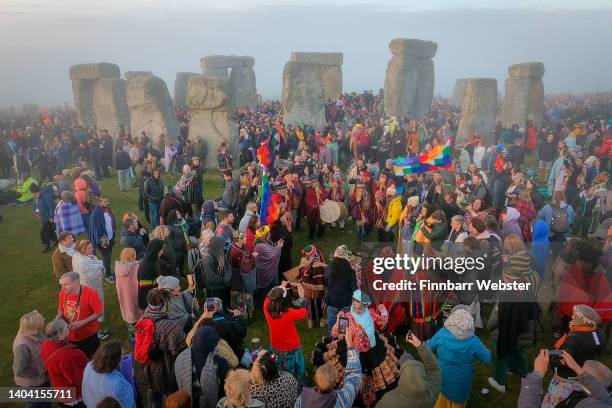 Stonehenge Photos and Premium High Res Pictures - Getty Images
And let’s talk about the false hope. The solstice tricks you into thinking summer has finally arrived for good. You’ll buy a paddling pool. You’ll optimistically leave your umbrella at home. Then, inevitably, the next day will be grey and drizzly, and you’ll realise the longest day is a bit like a friend who throws you a brilliant party and then disappears for a month. Classic Britain.

