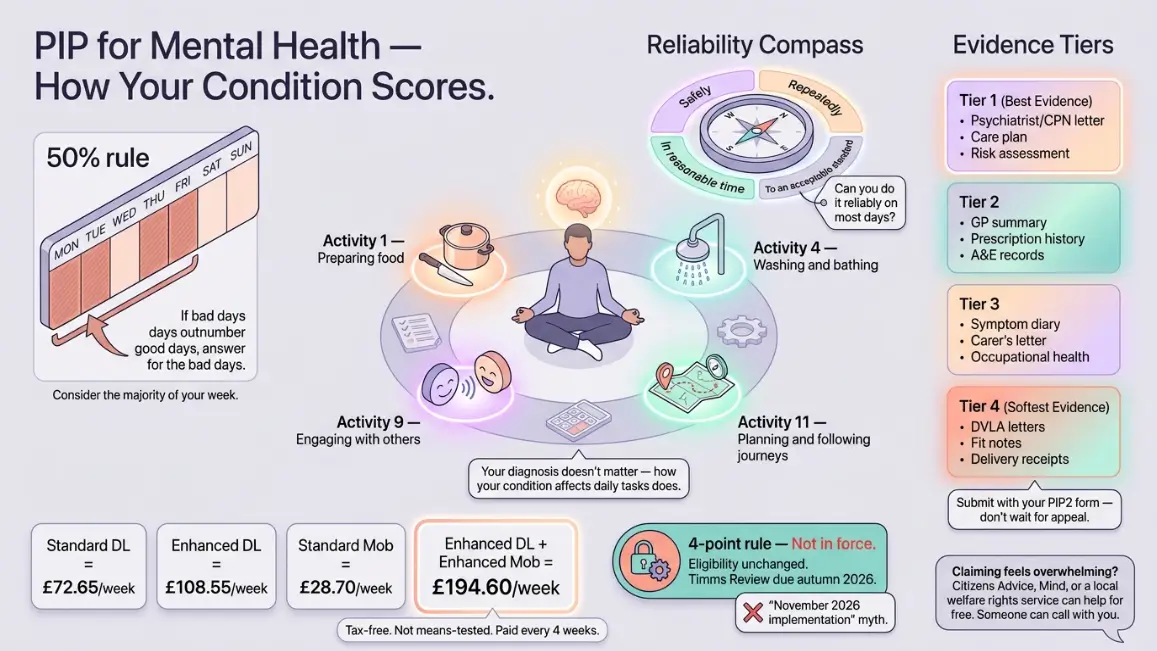
PIP splits into two components: Daily Living and Mobility. Depression mostly hits the Daily Living part—things like washing, dressing, preparing food, and managing your emotions.
For example, if your depression makes it impossible to plan a meal or remember to eat until you’re dizzy, that’s a big deal for PIP. They’re looking for reliable, repeated difficulties, not just a bad Tuesday.
Surprisingly, depression can also affect Mobility if your anxiety means you can’t leave the house alone. Yes, even though it’s a “mental health” thing, it counts as a physical limitation to the assessors. Go figure!
The “Fun” Part: The Assessment
To get PIP, you’ll have to fill out a gigantic form and probably chat with an assessor. Imagine a job interview, but instead of talking about your skills, you’re describing how you can’t stop crying over spilled milk—and I mean that literally.
The trick is to talk about your worst days, not your average ones. If you have one good day a week but four terrible ones, describe the terrible ones. The system asks if you can do something “safely, repeatedly, and in a timely manner,” and if depression messes that up, you say “no” loudly and clearly.
Try to get a supporting letter from your GP or therapist. It’s like a character reference, but for your struggling brain. They can back up your story with medical jargon, which the assessors love for some reason.
 How to claim PIP if you have stress, anxiety or depression and get up

