
What Is The Highest Temperature Allowed For Cold Holding Fresh Salsa
Okay, let’s talk salsa. Specifically, that gorgeous, chunky, fresh salsa sitting in your fridge. You know, the one you made with ripe tomatoes, fiery jalapeños, and a mountain...
Okay, let’s talk salsa. Specifically, that gorgeous, chunky, fresh salsa sitting in your fridge. You know, the one you made with ripe tomatoes, fiery jalapeños, and a mountain of cilantro?
We all dream of that perfect scoop with a crispy chip. But a dark cloud of worry can float in. Is that salsa still safe to eat? How warm can it get before it becomes a science experiment?
Let’s rip the band-aid off, friend. The official, boring-but-important answer is 41°F (5°C). That’s the highest temperature allowed for cold holding fresh salsa. Yes, for real.
Anything above that, and you’re entering the Danger Zone. That’s the fancy term for the temperature range where bacteria throw a rave in your food. And you are not invited to that party.
Why is this rule so strict? Fresh salsa is a perfect storm. It’s acidic from the tomatoes and lime, but it’s also full of moisture. Plus, you chopped up onions and peppers. You basically created a swimming pool for germs.
Think about it. You wouldn’t leave a steak out for hours. Why would you leave your salsa out? It’s a little hypocritical, isn’t it? We get so protective of meat but treat salsa like it’s invincible armor.
But here’s the twist: cold holding isn’t just about your fridge. It’s about a buffet. A picnic. A tailgate. Anywhere the salsa sits out for more than two hours.
If you’re at a party and that salsa bowl is sitting on the counter for three hours, it’s probably above 41°F. Time for a sad goodbye. Your stomach will thank you later.
What about a potluck? You made a massive batch of pico de gallo. It’s beautiful. But the bowl is on a table with no ice. The temperature climbs. Danger. High voltage (of bacteria).
I know, I know. You’re thinking, “But my grandma left salsa out all day and we’re fine!” Well, Grandma was lucky. Or you built up an immunity that would impress a lab technician. Don’t test your luck on purpose.
 Cold Hands Warm Earth: Recipe for Canning Salsa
Let’s get a bit more nerdy for a second. The 41°F (5°C) rule isn’t random. It’s the magic line. Below that, bacteria like Listeria and Salmonella basically take a nap. They stop multiplying.
Above 41°F? They wake up hungry. Really hungry. And they start partying. Your salsa becomes a petri dish with a nice aroma. That’s not a good trade-off.
So how do you keep that fresh salsa actually fresh? Use a shallow pan or bowl. Put it on a bed of ice. Check it with a thermometer. Don’t just trust your hand.
Your hand is a liar. You think it feels cool, but it’s actually 98.6°F. That “cool” salsa could be 50°F. A cheap instant-read thermometer is your best friend. Buy one. Use it.
What if you’re serving salsa for a long event? Refill the bowl often. Don’t just add new salsa on top of old, warm salsa. That’s a recipe for disaster. It’s like putting clean socks over dirty feet. It doesn’t fix the problem.
And please, please, don’t double-dip with warm chips. The chip brings heat and saliva into the cold salsa. It’s a double whammy of gross. Your friends will thank you for your restraint.
Okay, but wait. What about restaurant rules? They’re even stricter. Most health codes say salsa must be held at 41°F or lower. No exceptions. No “but my salsa is spicy.” Spice doesn’t kill bacteria. It just makes your mouth feel alive while the bacteria laugh at you.
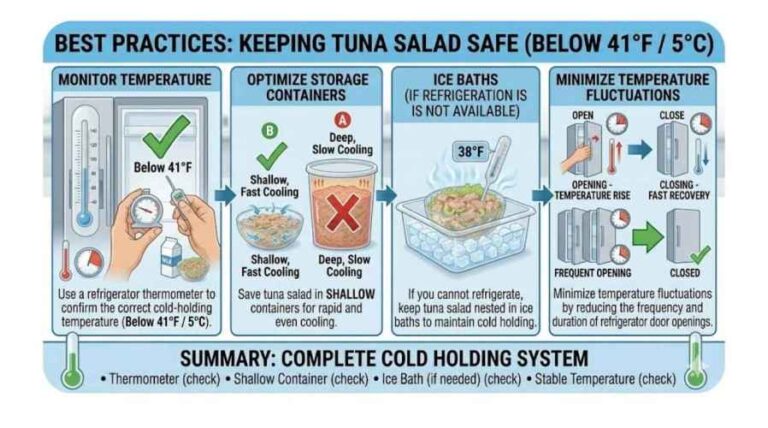 What Is the Highest Temperature Allowed for Cold Holding Tuna Salad
Does the acidity of lime juice help? A little. But not enough. It’s like putting a tiny fence around a cow pasture. It slows things down, but it doesn’t stop the stampede.
What about high-altitude potlucks? Or a hot summer day? The rule doesn’t change. In fact, you need to be more careful. The hotter the room, the faster the salsa warms up. It’s science, not a suggestion.
Let’s talk about the fridge itself. Is your fridge actually at 38°F? Check it. Many older fridges run warm. If your fridge is at 45°F, your salsa is already in the Danger Zone. You are playing with fire, my friend.
And what about those cute little salsa cups at grocery stores? They’re kept on a refrigerated shelf. The store checks that temperature religiously. They don’t want a lawsuit. You shouldn’t want a bellyache.
I know this feels like a lot of rules for a little bowl of chopped veggies. But think about it. You made that salsa with love. You chopped the cilantro just right. Don’t let bacteria ruin your masterpiece.
So, here’s your takeaway: 41°F (5°C) is the highest temperature allowed for cold holding fresh salsa. Full stop. End of story. No debate.
When in doubt, throw it out. When in doubt, chill it down. When in doubt, use a thermometer. I promise, your future self (sitting on the toilet) will be very grateful for your caution.
Now go enjoy that salsa. With a cold chip. From a cold bowl. And maybe a little extra lime. Salud, you safe salsa genius.

