:max_bytes(150000):strip_icc()/Meningococcal-vaccine-5215620_final_05-063b0877ce5c401ca3a0545a27ca6e3c.jpg)
If you have a condition called complement component deficiency (fancy doctor talk for a specific immune system flaw), you’re eligible for the vaccine too. Same goes for anyone taking eculizumab, a medication that affects your immune response. It sounds complicated, but really it just means your body needs extra armor.
Also, if you’re an outbreak contact—like, say, a meningitis case popped up in your school or office—health officials will say, “Come get the shot, stat!” That’s your cue to roll up your sleeve, even if you’ve been vaccinated before.
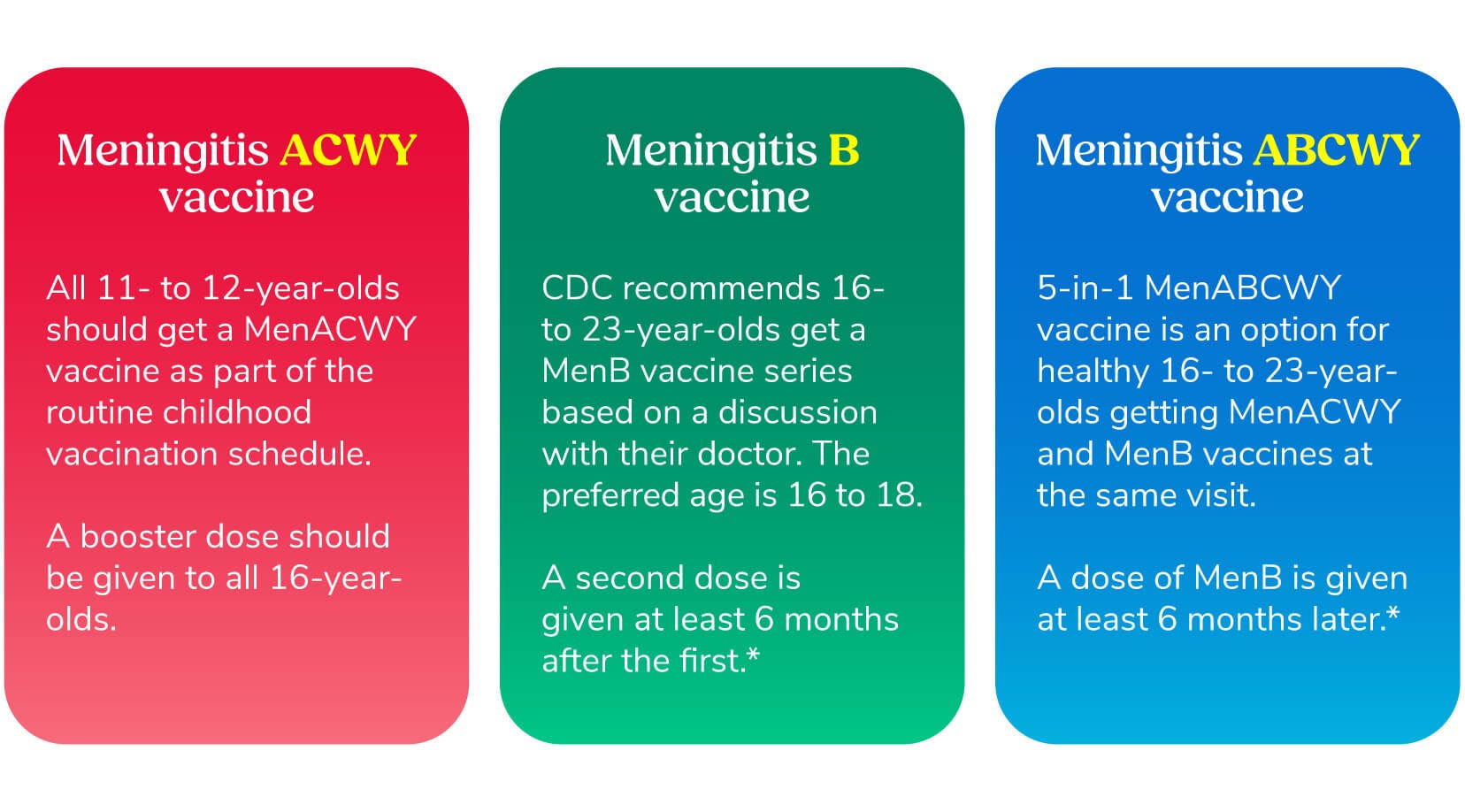
For everyone else? Babies get the MenB vaccine starting at 10 years old, but there’s also a routine childhood shot called MenACWY that kicks off at 11. Yes, kids have their own version, because meningitis doesn’t care if you’re still collecting Pokémon cards.
But Wait, What About the “Other” Meningitis?
There’s actually two main types of meningitis vaccine: one for MenACWY and one for MenB. The MenB vaccine is the newer kid on the block, often given to teens and young adults (16 to 23) who want the broadest protection. It’s not required by most schools, but doctors often suggest it like a good friend saying, “Hey, you might want this just in case.”
Your age and risk factors decide which shot you get. Your doc will help you figure out the difference—no need to memorize a textbook.
 Find More Information About Meningitis | Meningitis.com