
Here’s the surprising truth: Easter’s date is not about the weather or chocolate eggs. It is entirely, obsessively, about the moon. Specifically, a made-up moon called the “ecclesiastical moon” that follows rules, not actual astronomy. The First Council of Nicaea in 325 A.D. decided that Easter must fall on the first Sunday after the first full moon after the vernal equinox. That’s a lot of “afters” for a single holiday.
Think of it as a celestial scavenger hunt with very confusing instructions. First, you find the spring equinox (around March 20th), then you wait for a full moon, then you wait for the next Sunday. If the full moon lands on a Sunday, sorry, you still jump to the next Sunday. It’s the only time you’ll hear someone say, “Oh no, a full moon on Sunday—that means more waiting!”
The Equinox Is a Liar
Now, the vernal equinox sounds fancy, but it’s just the day when day and night are almost equal. Simple enough, right? Nope. The Church decided way back that the equinox is always on March 21st, even though it actually wiggles around March 19th, 20th, or 21st. They didn’t care about the real sky. They created their own lunar calendar, one that’s only concerned with keeping Passover and Easter in the right vibe.
This means Easter is a movable feast dictated by an imaginary moon tied to a fixed date. It’s like trying to plan a party based on a clock that tells you the time in a parallel universe. Result? Easter can land anywhere from March 22nd to April 25th. That’s a 35-day window of panic for candy manufacturers.
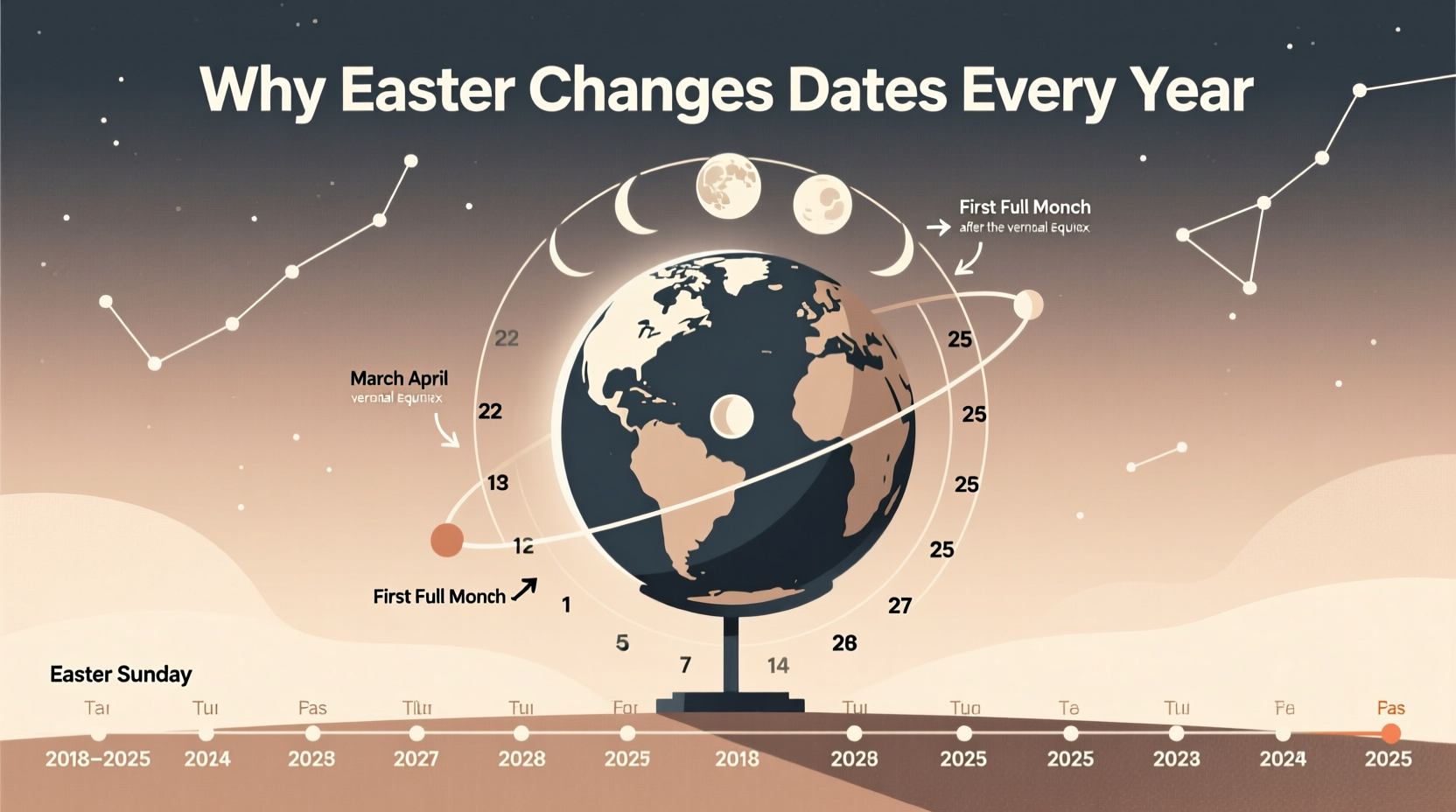 Why Easter Changes Dates Every Year

