
Where Is Chowder From
Let’s be honest—chowder is the weirdo of the soup world. It’s chunky, creamy, and sometimes has saltine crackers floating in it like tiny life rafts. But when you dig into a b...
Let’s be honest—chowder is the weirdo of the soup world. It’s chunky, creamy, and sometimes has saltine crackers floating in it like tiny life rafts. But when you dig into a bowl of clam chowder, do you ever pause and wonder: Where in the world did this glorious, gloppy mess come from? The answer is not as simple as pointing at Boston and shrugging. Oh no, my friend, we’re going on a boat ride through history—and it’s about to get a little fishy.
First, let’s clear up a big myth: chowder is not purely American. The word “chowder” itself is a thieving little traveler. It likely comes from the French word chaudière, which is a big ol’ iron pot used for cooking stews. Imagine a French fisherman in the 1500s, tossing fish and scraps into a pot, and—voilà!—the ancestor of your Friday night soup.
But the story really kicks off along the coast of Brittany, a region in northwestern France. Breton fishermen would sail out, catch whatever was flopping, and boil it with salted pork, onions, and ship’s biscuits. Yes, ship’s biscuits—the rock-hard crackers that could double as a doorstop. They crumbled those into the pot to thicken it, and boom: you’ve got a rudimentary chowder that would break your teeth and warm your heart.
Now, here’s where it gets gloriously confusing. The French brought this chowder concept to Canada—specifically to Nova Scotia and Newfoundland. The Acadians, French colonists, adopted and adapted it. They swapped the ship’s biscuits for potatoes (once those arrived from the New World), and they dumped in local clams because fish were getting too expensive. This is the true birthplace of what we’d call North American chowder—not Boston, but Canada. Surprise!
But hold your lobster roll—chowder didn’t stay put. It migrated like a hungover sailor down the Atlantic coast. When it hit New England, particularly Boston, the Puritans got their hands on it and said, “Let’s make this more… proper.” No tomatoes, no nonsense. Just clams, potatoes, onions, and a cream-based broth so thick you could stand a spoon in it. That’s the Boston or New England clam chowder you know and love—the one that makes Manhattan-style chowder look like a communist plot.
Speaking of Manhattan clam chowder—if you’re a Bostonian, you might want to cover your ears. Manhattan chowder was invented by Portuguese and Italian immigrants in New York who said, “Hey, where’s the tomatoes?” They threw in tomatoes, celery, and carrots, and kept it brothy and red. New Englanders despise it. There are actual letters from the 1930s where a Maine senator tried to outlaw tomato-based chowder. I’m not kidding—he called it an “abomination.” That’s how serious soup gets.
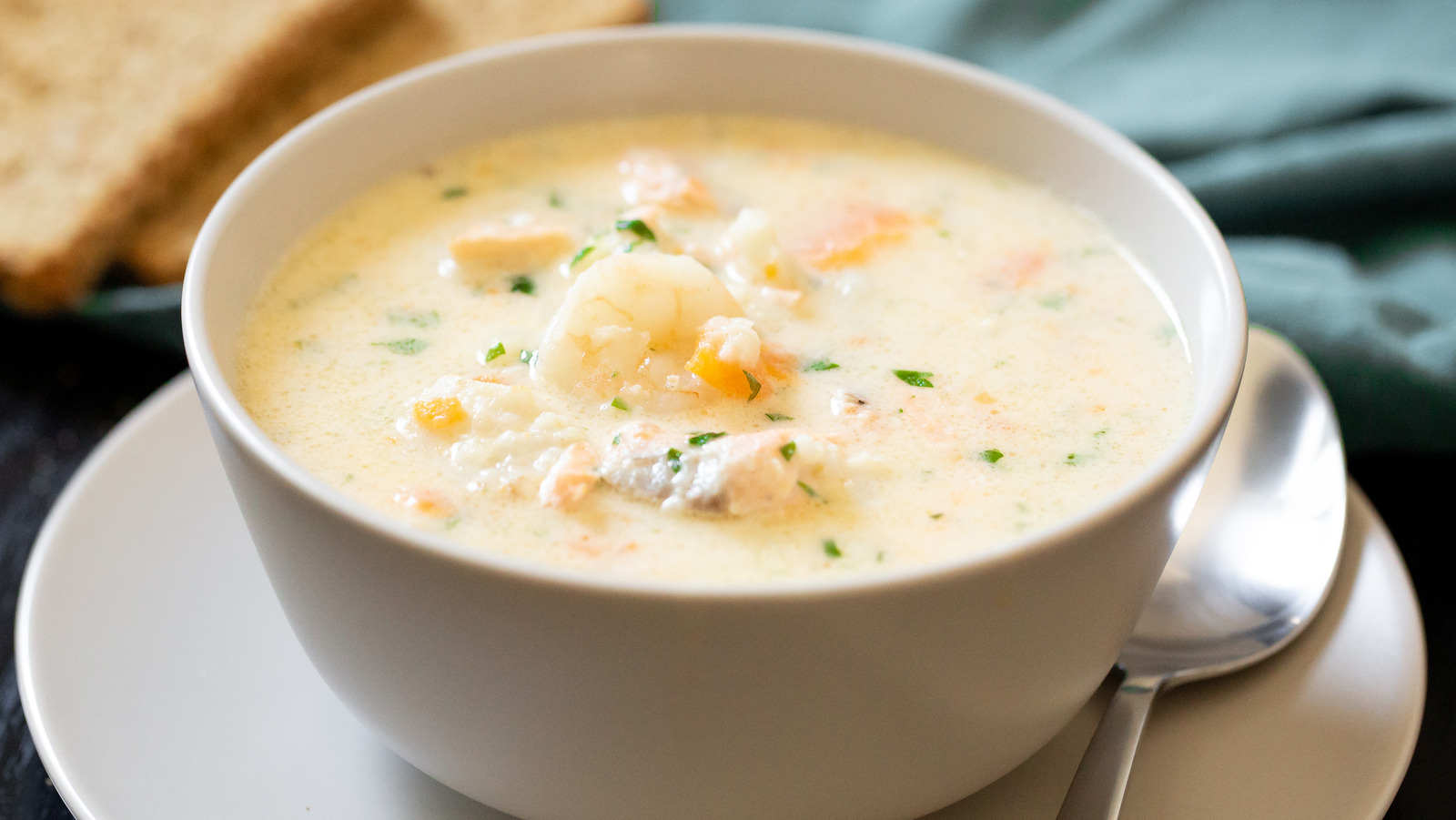 Images of チャウダー - JapaneseClass.jp
But wait—there’s more regional chaos! Rhode Island clam chowder is served clear, with no cream or tomatoes at all. It’s basically clam broth with some clams and potatoes, like the soup equivalent of a minimalist hipster. Meanwhile, Hatteras-style chowder from North Carolina is also clear, but they throw in bacon grease and call it a day. The entire East Coast has been arguing about chowder since before the Revolutionary War, and I’m pretty sure it’s the real reason for the Civil War. (Okay, that’s a joke, but is it?)
Now, let’s talk corn chowder, because obviously. That’s the Midwestern rug rat of the chowder family. It trades clams for corn, keeps the cream, and adds in bacon or ham because obviously. Corn chowder has no coastal origins—it’s the landlocked rebel child. It’s popular in Iowa and Illinois, where people look at the ocean on a map and say, “Nope, give me a cob.”
But here’s the surprising fact that’ll blow your clam cakes off: the oldest written recipe for a “chowder” comes from a 1751 cookbook by Hannah Glasse, an Englishwoman. Her recipe calls for fish, white wine, and a bunch of “forcemeat balls” (gross, don’t Google that). And it wasn’t even thick—it was more like a fish stew. So really, every chowder you’ve ever eaten is a descendant of an English lady’s dinner-party experiment. That’s right—you can thank 18th-century British culinary weirdness for your lunch.
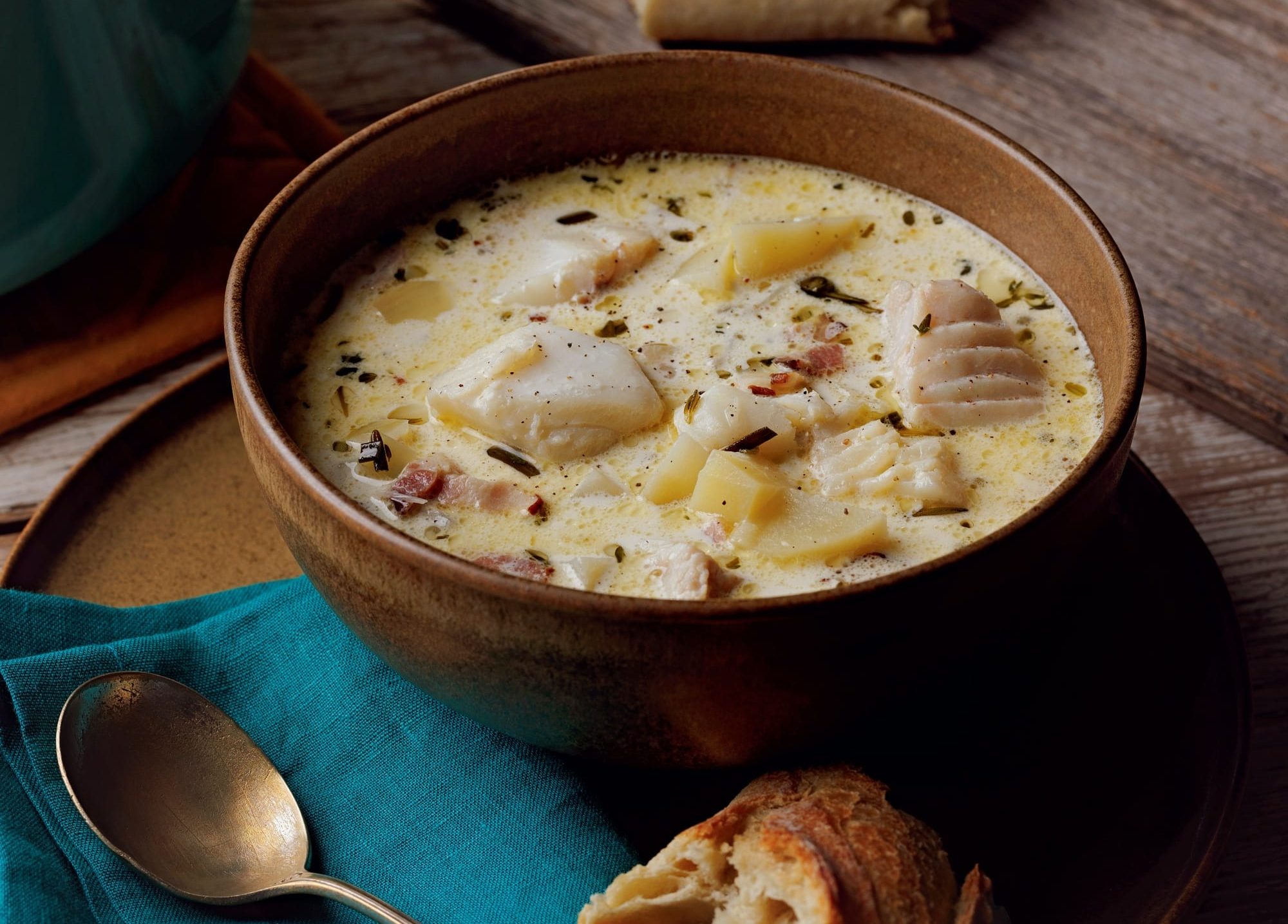 Soups, Stews & Chowders Archives - New England
What about seafood chowder on the West Coast? Those Californians threw in Dungeness crab and shrimp like they own the universe. It’s decadent, overpriced, and served in a sourdough bread bowl that costs more than your rent. But let’s be real—a sourdough bread bowl is basically a giant crouton you eat with a spoon. And we love it.
So, where is chowder from? It’s from everywhere and nowhere. It’s a French pot that landed in Canada, got awkward with American colonists, fought a war with tomatoes, married a cob of corn, and ended up in a bread bowl in San Francisco. The real answer is: chowder is from the imagination of hungry people near water—and also from your local diner at 2 a.m. after a bad day. And that, my friends, is the ugly, beautiful truth.
Now go enjoy a bowl. Just don’t tell a Bostonian you put tomatoes in it—they might make you walk the plank.

