
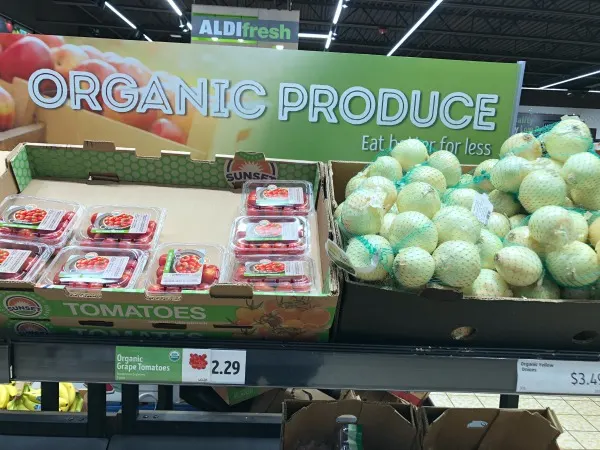
Walk into any Aldi, and you’ll find organic items scattered like Easter eggs. They don’t have a dedicated “Organic Zone” like some snooty grocery stores. Instead, you’ll spot the Simply Nature label next to the regular jars of salsa, looking all smug and healthy.
They stock organic milk, eggs, chicken, and even grass-fed beef. Yes, you can buy a steak that had a better life than you, for the price of a movie ticket. It’s like a moral victory wrapped in a plastic tray.
Fruit lovers, rejoice! Aldi offers organic apples, bananas, and even berries. Just be prepared to sing a tiny song of gratitude when you find them, because the stock rotates faster than a politician’s promises. One week it’s organic blueberries, the next week it’s a sad bin of grapes.
 All I Really Need to Know I Learned in ALDI
The Not-So-Organic Truth
Now, here’s the honest bit: Aldi doesn’t have a massive organic section. You won’t find twenty kinds of organic almond flour or spirulina powder. If you’re a hardcore locavore with a kombucha habit, you might feel a little underwhelmed.
But for the rest of us—the people who just want to avoid eating pesticides in our cereal—it’s a goldmine. Their organic peanut butter is creamy, cheap, and delicious. I once watched a man buy six jars of it, whispering “for the apocalypse” to himself. No judgment.
And here’s a fun fact: Aldi is the ninth-largest grocery retailer in the world. They have serious buying power, which means they can bully suppliers into giving them organic stuff at a discount. That’s why you can snag organic pasta for $1.50 while your friend pays $4 at some boutique market.

