Think of your home freezer as a dedicated, but limited, worker. It usually keeps things around 0°F (-18°C). That’s plenty cold for ice cubes and frozen pizza, but it’s a balmy tropical beach compared to what liquor needs. For most bottles, your freezer is simply not cold enough to trigger a freeze.
It’s a bit like trying to freeze a saltwater ocean. Just as salt lowers the freezing point of seawater, alcohol lowers the freezing point of your drink. The more alcohol a bottle has, the harder it is to freeze. Pure ethanol, the hard stuff in labs, won’t freeze until a frosty -173°F (-114°C). That’s colder than the South Pole!
So, when you reach for your favorite tequila on a hot summer day, you’re actually holding a bottle of antifreeze—the tasty, celebratory kind. This little factoid makes every sip feel a bit more like a science experiment you can enjoy.
The Exceptions: Be Careful with Your Favorites
Now, not every boozy bottle gets a freezer pass. Liqueurs and dessert wines with lower alcohol content—think Baileys, Kahlúa, or a sweet sherry—can and will freeze. I learned this the hard way when I left a bottle of Irish cream in the freezer overnight. The next morning, it looked like a sad, lumpy milkshake.
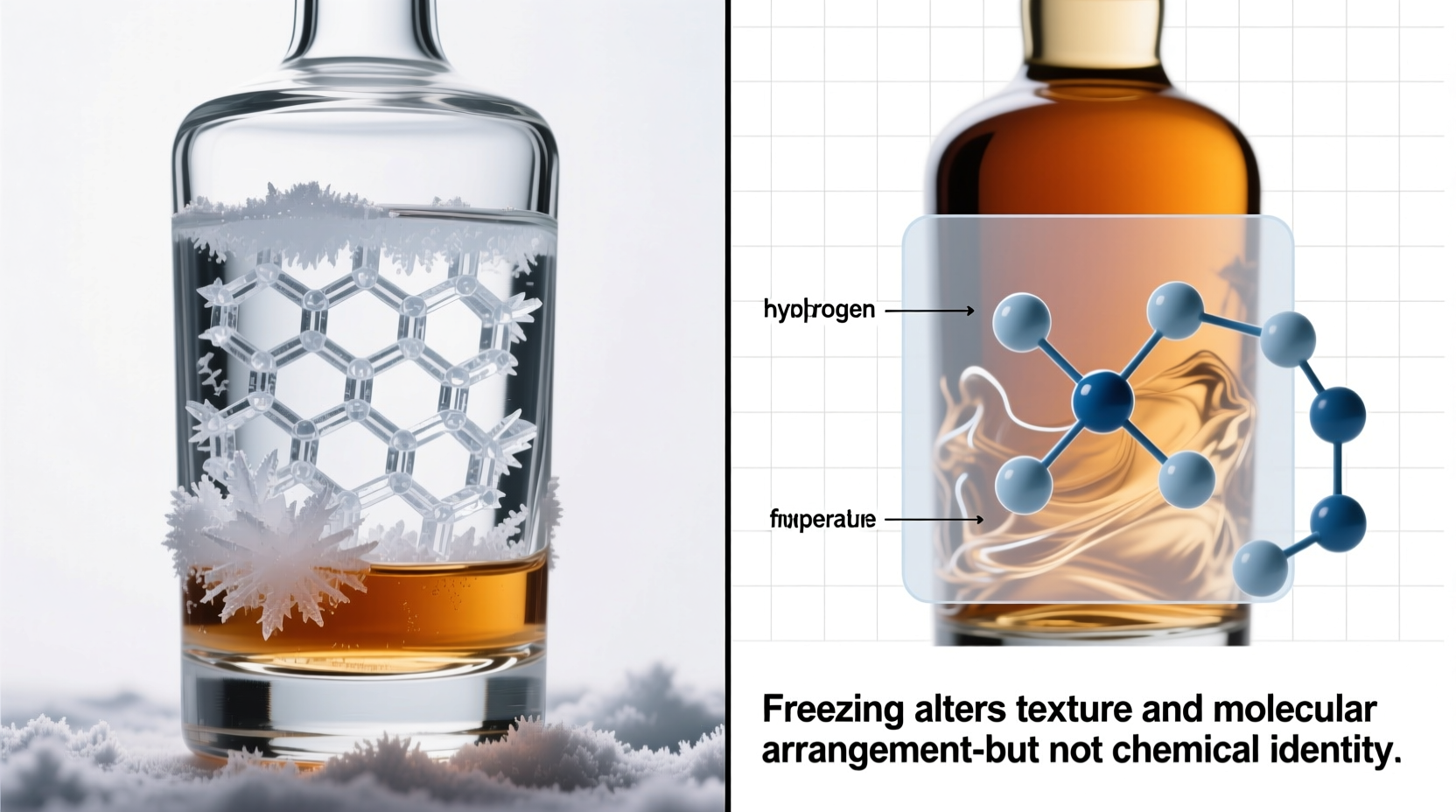 Does Freezing Liquor Change Its Chemical Structure Or Just Texture
Beer and wine are the biggest troublemakers in this story. They usually hang around 5% to 14% alcohol, which freezes around 27°F (-3°C). Your freezer is a nightmare for them. If you forget a cold beer in there, the water inside expands, pops the can, and you get a sludgy, flat mess. Always set a timer for your beer—your future self will thank you.
This is also why your freezer door might feel sticky after a party. A low-alcohol punch or a half-empty bottle of wine can leak, freeze, and turn your ice tray into a sticky science experiment. The takeaway? High-proof spirits are freezer-safe; everything else needs a watchful eye.