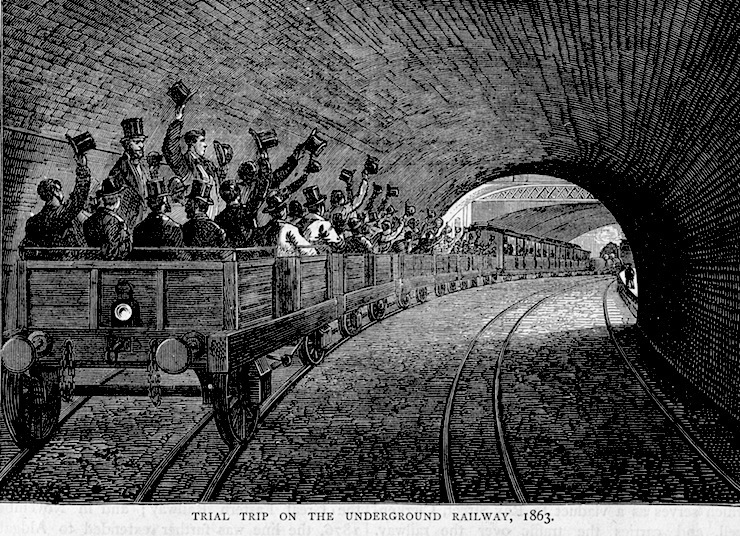
It was a chilly Saturday morning when the Metropolitan Railway threw open its doors. The very first stretch ran from Paddington to Farringdon, and it was a roaring success. On that debut day, an astonishing 30,000 people bought tickets to ride beneath the city.
Imagine the scene: steam engines pulling gas-lit carriages through smoky tunnels. It must have felt like stepping into a Jules Verne novel. People were genuinely excited to go underground, a novelty we can barely fathom today.
The Technology That Shocked a City
We take electric trains for granted, but the original Underground was steam-powered. Think about that for a second—hot, sooty engines roaring through a confined brick tube. The Victorians had to design special “blow-holes” at stations to let the smoke escape.
It wasn’t exactly the height of comfort. Passengers often disembarked with smudged faces and soot on their collars. Yet they kept coming, proving that convenience trumps a little grit—a lesson Londoners still know well.
The first carriages were called “carriages” for a reason: they were basically upholstered boxes on wheels. First-class passengers got padded seats and gas lamps; second-class got wooden benches. Forget air conditioning—you were lucky if a window opened.

