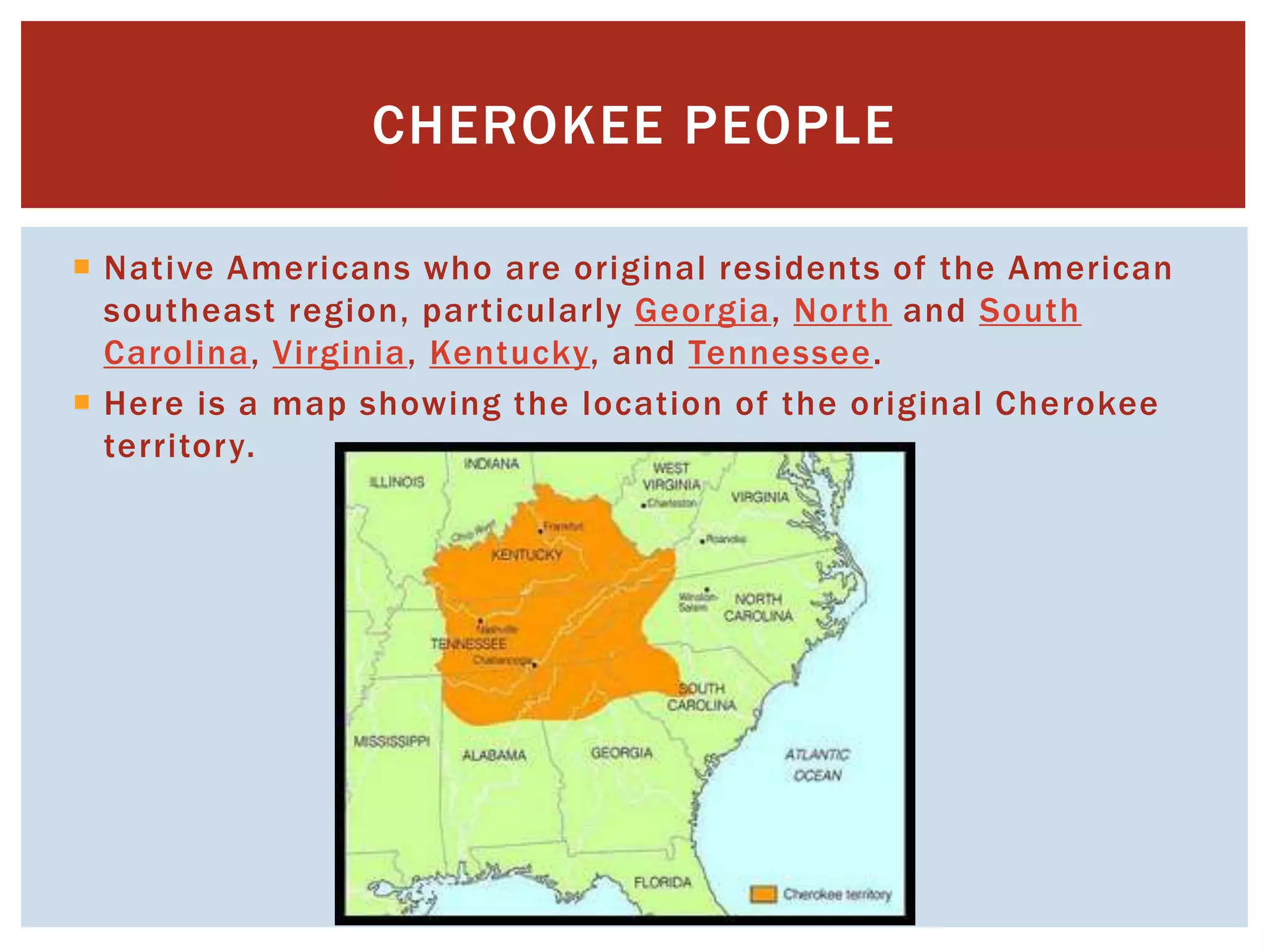
So, why didn’t they just live on the flat plains or the coast? Because the mountains were perfect. The climate was mild, the soil was rich for growing their “Three Sisters”—corn, beans, and squash—and the game was abundant. Deer, bear, and turkey were basically their delivery menu.
Also, the mountains gave them protection. You could see enemies coming from miles away, and the winding valleys made it easy to defend. It was like living in a natural fortress with a view—talk about a good life.
But here’s the ironic part: their home was so beautiful that everyone else wanted it. The Spanish, the French, the British—they all looked at those green hills and thought, “Ours now.” The Cherokee had to fight, move, and negotiate just to keep a piece of their own land.
The Big Shove: Trail of Tears
You can’t talk about where they lived without mentioning where they ended up being forced to go. In the 1830s, the U.S. government decided that gold in Georgia was more important than treaties. So, they pushed the Cherokee out of those beautiful mountains onto a brutal walk to Oklahoma.
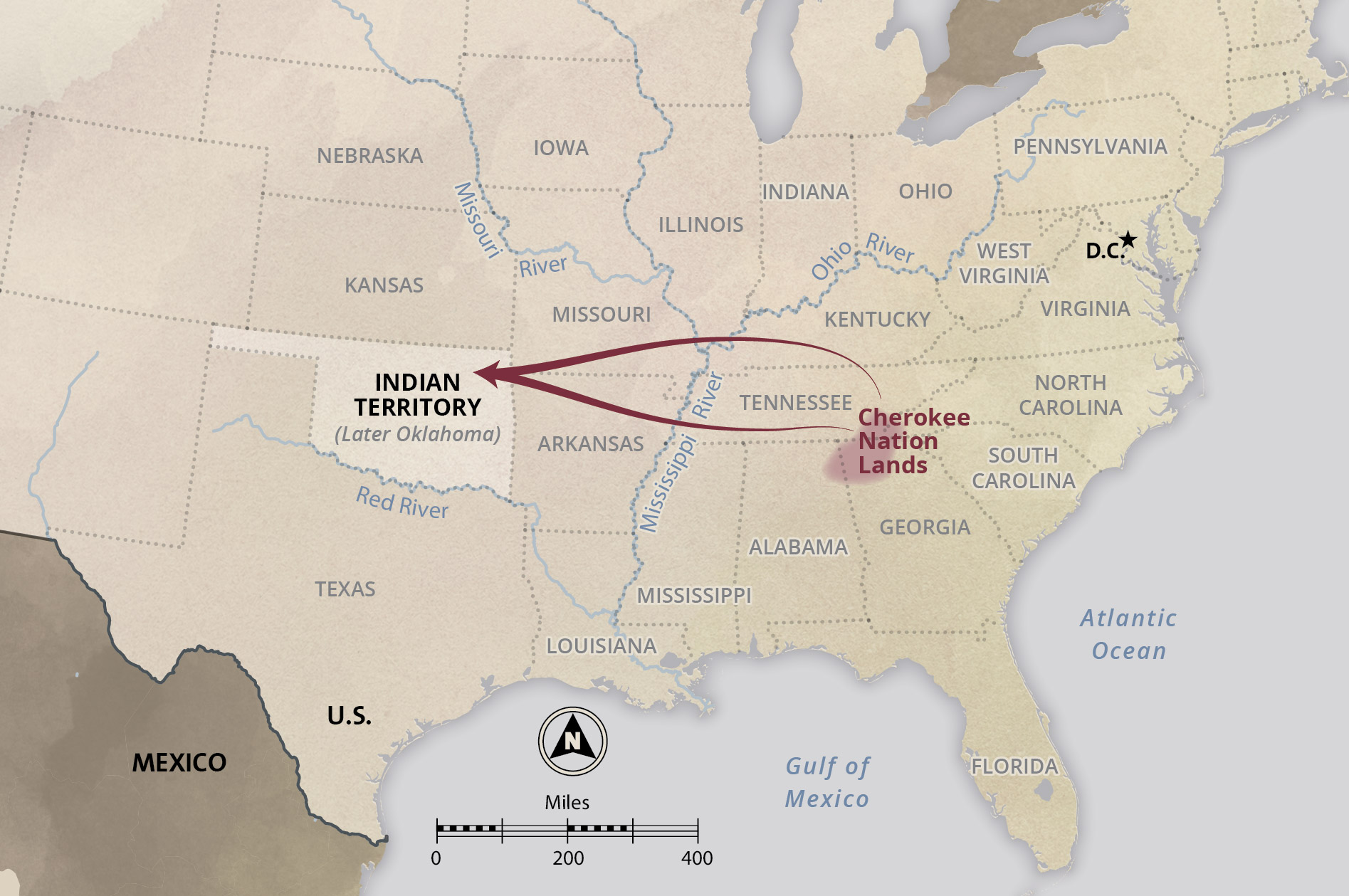 Cherokee Nation history of removal - Indian Reservations
This was the Trail of Tears, and it literally ripped them from their homes. They went from the lush, rainy forests of the East to the dry, flat prairies of the West. It’s like moving from a spa resort to a parking lot—a massive, tragic downgrade.
Today, the Eastern Band of Cherokee Indians still lives in North Carolina, on the Qualla Boundary. It’s a small slice of that original homeland, right next to the Great Smoky Mountains National Park. They survived, stubborn as ever.

