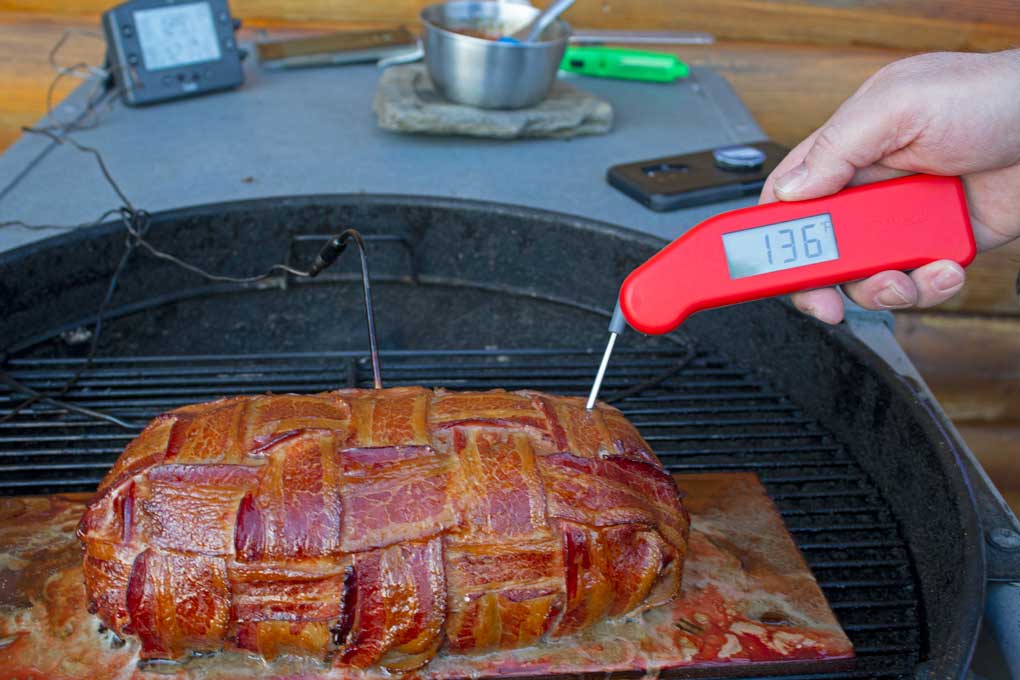
I used to treat meatloaf like a game of Russian roulette. I’d poke it, prod it, and check the clock like a detective on a stakeout. “One hour at 350 degrees,” the recipe would say, but my oven has a personal vendetta against truth. One time, I pulled out a loaf so dry it could have been used as a brick for a miniature house. Another time, I served a loaf that was essentially a bowl of meat soup with a crispy crust.
Then, a friend—a real kitchen wizard—showed up with a meat thermometer. I scoffed, “Oh, that fancy toy? I’m a feel-it cook.” She just laughed and handed it over. Let me tell you, that little gadget is the only kitchen tool that has ever truly saved my dinner. It’s like having a tiny, honest firefighter in your oven, one who will yell, “Too hot, boss! Pull it out now!”
No More Guessing Games
The magic is simple: you jam the probe into the thickest part of the meatloaf, and you wait for a number. That’s it. No more cutting it open to check, which lets all the juices run out like tears of regret. The USDA says 160°F is the safe zone, and for ground beef, that’s non-negotiable. But honestly, I pull mine at 158°F and let it rest to 160°F—it’s like a gentle tax on the last two degrees.
Think of it as the difference between watching your phone battery drain and just letting it die. You know exactly when to act. Without a thermometer, you’re just guessing, hoping that the “thump” sound it makes is good. Spoiler: it never is. A thermometer gives you power, the power of knowledge. You become the master of your meat domain.
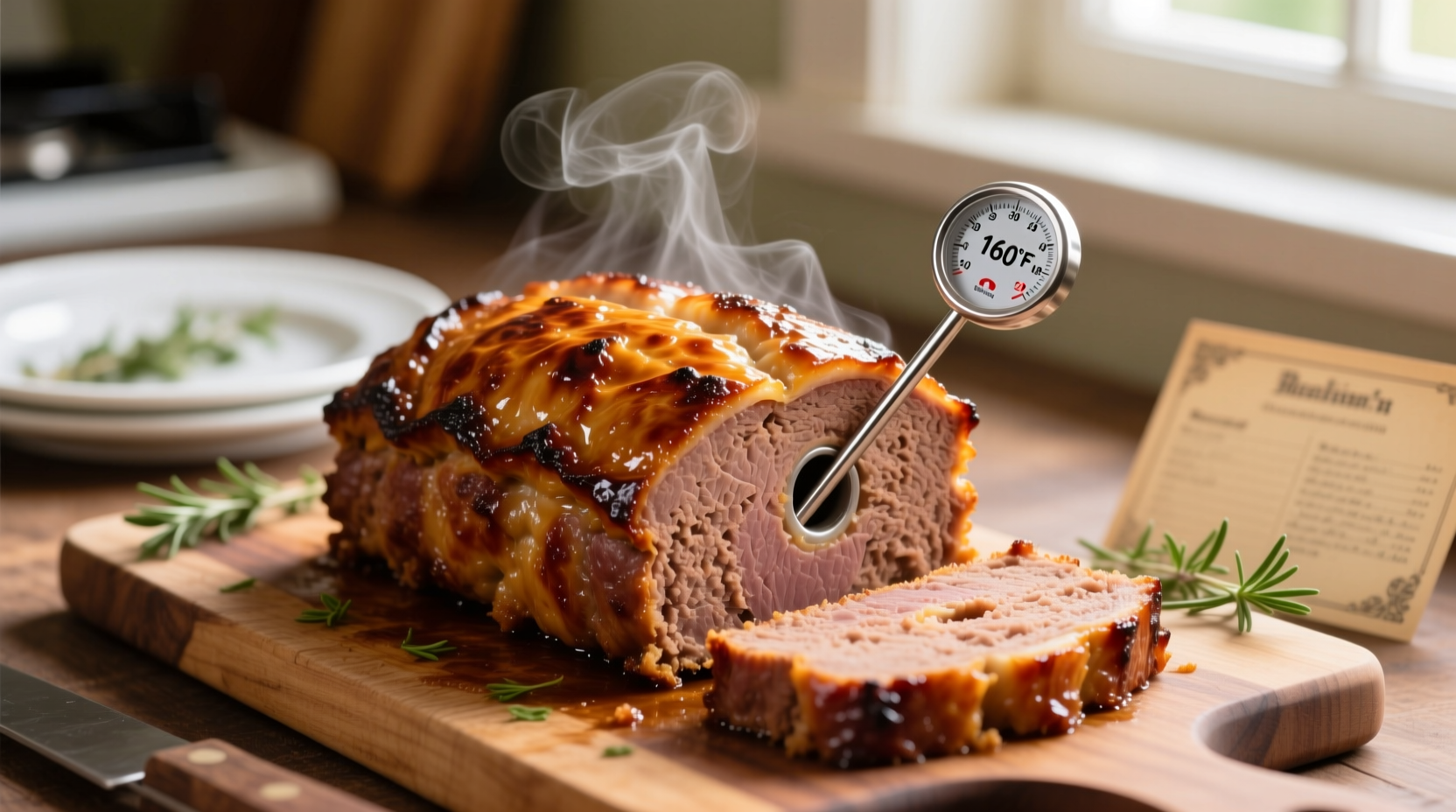 Meatloaf Temperature Guide: Cook Safely to 160°F

