
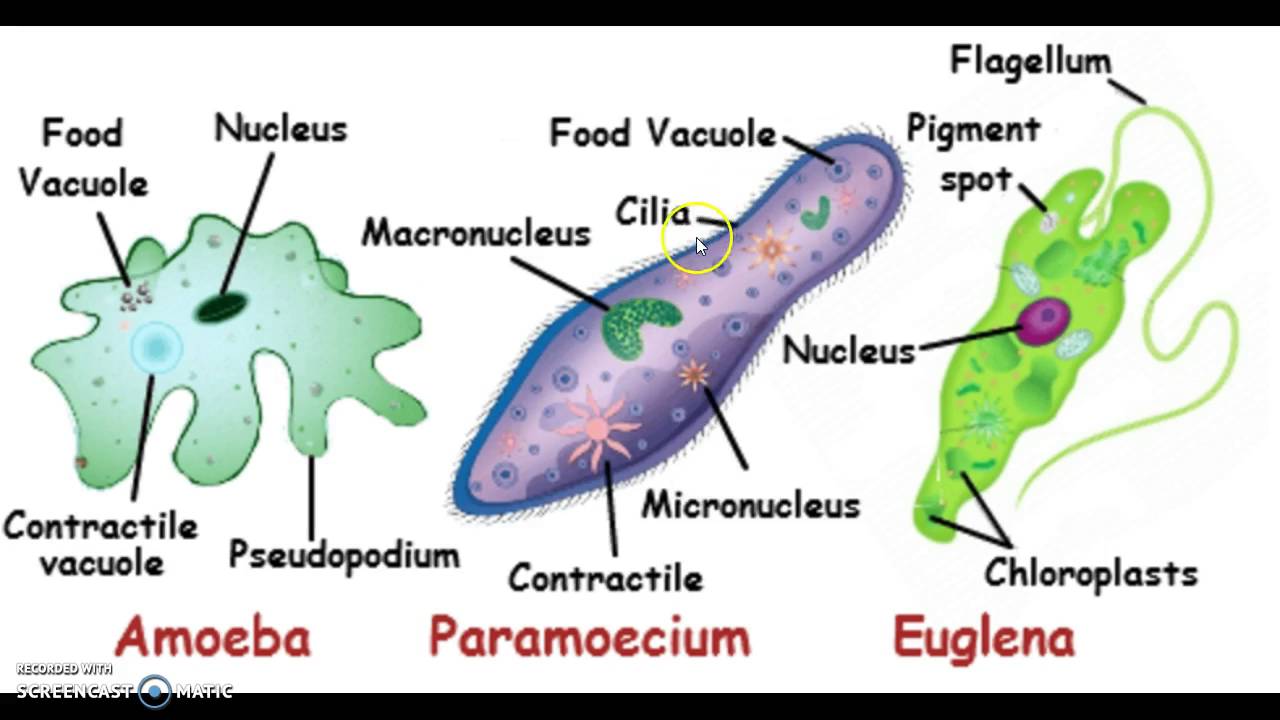
One of my favorite examples is the Euglena. This little guy is a unicellular organism that just can’t decide if it’s a plant or an animal. It has chloroplasts to photosynthesize like a plant, but it also has a flagellum—a tiny whip-like tail—to swim around like a mini-whale.
Imagine being a single cell but having to eat your lunch and bask in the sun at the same time. That’s the Euglena’s life. It’s a perfect example of how unicellular organisms aren’t "simple"—they’re just incredibly efficient.
The Amoeba: The Shape-Shifting Diva
Then there’s the Amoeba, the original shape-shifter. This unicellular organism oozes around like a blob of jelly, changing its form just to chase down a snack. It literally wraps itself around a bacteria and engulfs it—dinner is served, no utensils required.
Watching an Amoeba under a microscope is like watching a slow-motion horror movie, but for the bacteria. It’s a powerful reminder that "simple" doesn’t mean "passive." This single cell has a strategy, and it’s hungry.
 Unicellular Organisms

