
If you ask a random Nigerian on the street, you’ll get a mix. In the north, you might hear Hausa with a splash of Arabic; in the southwest, Yoruba with English loanwords; in the east, Igbo with a musical lilt. But everywhere, you’ll hear Pidgin threading it all together. The reality is that language in Nigeria is a survival skill. If you’re a trader from the Igbo region selling in a Hausa market, you’ll learn basic Hausa. If you’re a Yoruba student at a university in the north, you’ll pick up Pidgin. The result? A beautiful, chaotic symphony where code-switching is as natural as breathing. One minute you’re discussing politics in English, the next you’re scolding a child in your mother tongue, and then you’re laughing at a joke in Pidgin—all in the space of one conversation.
The Quiet Crisis: Languages Dying in the Shadows
But not all is joyful. With over 500 languages, many are endangered. Smaller tongues like Nupe, Ibibio, or Bassa are losing speakers every day as younger generations shift to English or major languages. There’s a sad irony in Nigeria’s linguistic wealth: the very diversity that makes it unique is also threatening its survival. (Think of it as a library where the rarest books are falling apart because everyone reads the bestsellers.) Parents often choose to teach their kids English or Hausa for “practical” reasons, leaving ancestral languages to fade. It’s a loss that feels like a song being forgotten.
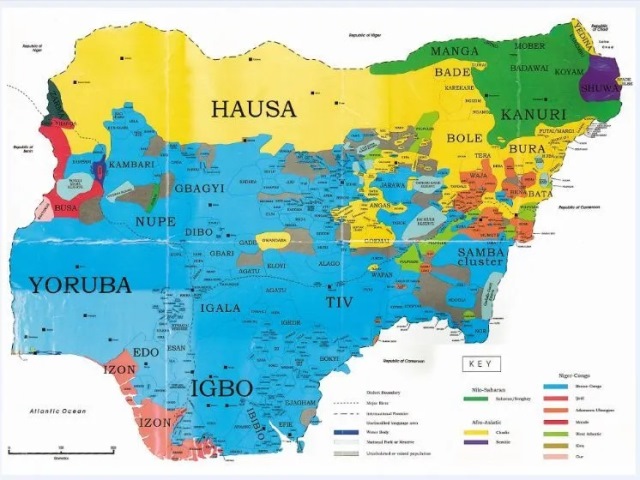 Exploring the Diverse Languages of Nigeria
So, What Did That Market Woman Actually Say?
Back to my jollof rice adventure. After that initial baffling exchange, a kind bystander whispered in my ear: “She asked if you want dodo—fried plantain—to go with it.” I nodded enthusiastically, and the woman smiled, handing me a feast. That moment taught me that language in Nigeria isn’t just about words—it’s about connection, humor, and a willingness to be lost and found in translation. So, if you ever ask “What language is spoken in Nigeria?” brace yourself for a long, wonderful answer. The short one? All of them—and then some. And maybe, just maybe, you’ll leave with extra plantain.


