The axis of symmetry also connects to the quadratic formula. Remember x = [-b ± √(b² - 4ac)] / 2a? The axis is smack-dab in the middle of those two solutions, the ± part. It’s the average of where the parabola hits the x-axis.
If the equation has no real solutions (the graph floats above the x-axis), the axis still exists. It’s like a ghost line, invisible but structurally essential. The parabola still has a spine, even if it never touches the ground.
Think of a bridge’s suspension cables. They form a perfect parabola, and the axis of symmetry ensures the load is balanced. Without it, the bridge would sag or snap. Math keeps you safe, even when you’re not looking.
Modern Life: The Digital Mirror
Open your phone’s calculator app. Graph y = x² - 2x - 3. The axis at x = 1 will split the curve right down the middle. It’s satisfying to see the algorithm prove what your eyes already know.
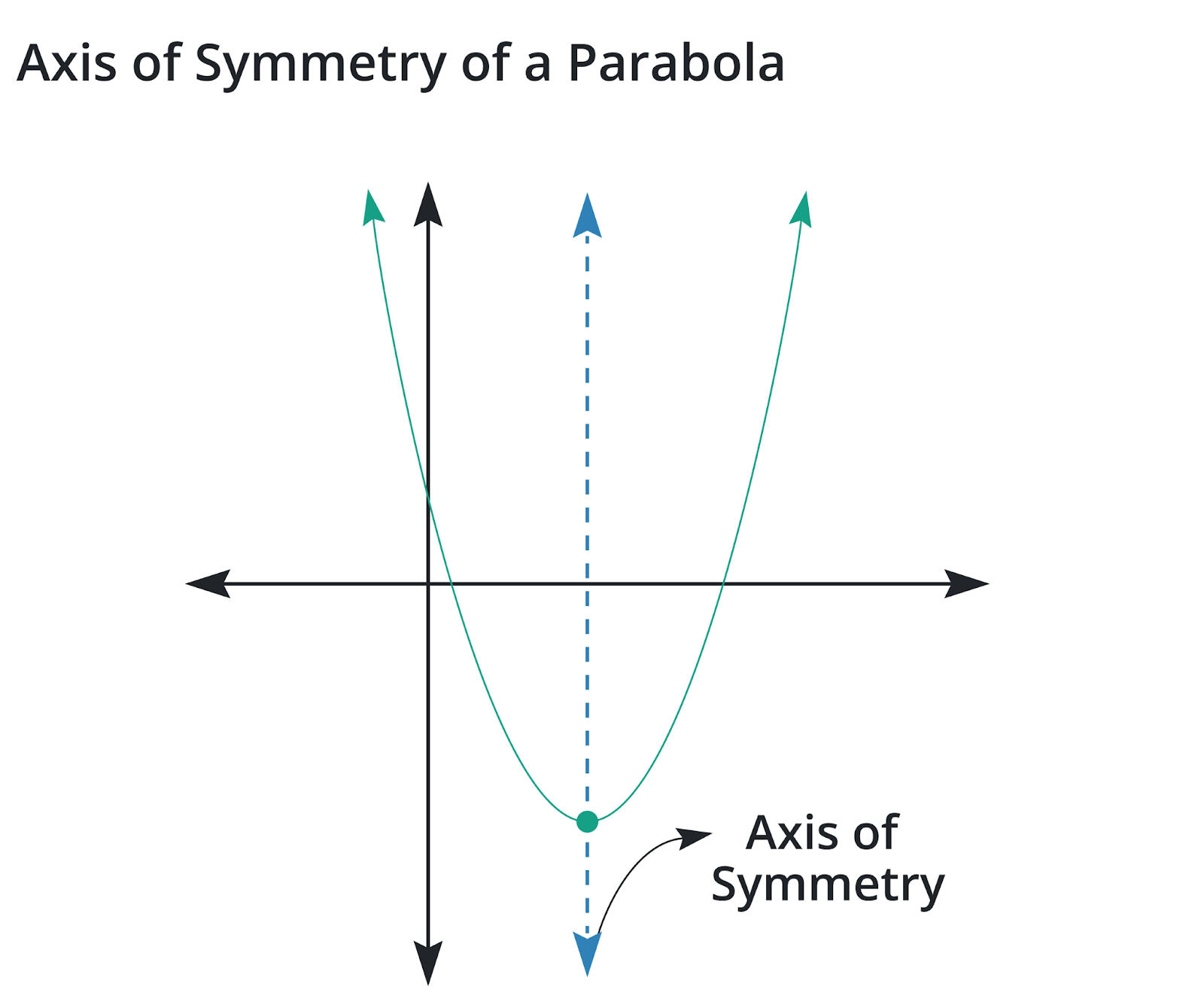 Axis Of Symmetry
You can also find symmetry in your daily routine. The perfect flat white latte art? Symmetry. A well-designed logo? Symmetry. Even your morning commute, if you do the same thing in reverse on the way home, has a personal axis of symmetry. It’s the point of balance between your two halves of the day.