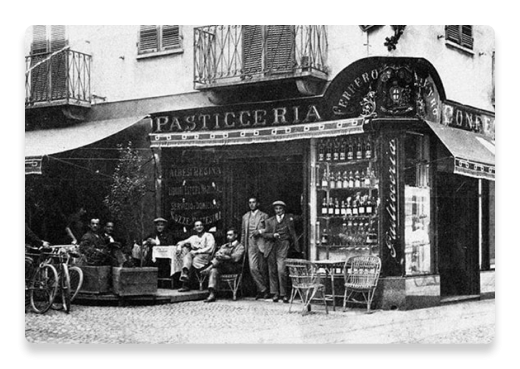
Let’s rewind to post-World War II Italy, specifically the 1940s in the Piedmont region. Cocoa was crazy expensive—the kind of price that would make you cry into your espresso. But hazelnuts? The hills of Piedmont were bursting with them, like a squirrel’s dream vacation.
Enter a pastry maker named Pietro Ferrero. He was a genius with a sweet tooth and a problem. People loved chocolate, but they couldn’t afford it. So Pietro did what any rational dessert wizard would do: he mixed hazelnuts with a tiny bit of cocoa, sugar, and fat to stretch it. The result? A solid block called Giandujot, named after a local carnival character.
Imagine a giant, hard chunk of Nutella that you had to slice with a knife. Weird, right? But locals went nuts for it (pun intended). It was chocolate that actually fit the budget, like finding a designer jacket at a thrift store.
From Block to Jar: The Accidental Innovation
Here’s where the story gets sticky—literally. In 1951, a hot summer hit Piedmont, and those solid blocks of Giandujot started melting into a soft, spreadable mess. The Ferrero family panicked. But then, they had a lightbulb moment.
Why not sell it as a spread instead of a block? Pietro’s son, Michele, tweaked the recipe, adding more hazelnuts and less cocoa to make it creamier. He called it Supercrema, and it flew off shelves. It was the peanut butter of Italy, except you didn’t need a glass of milk to choke it down—you just needed a spoon, a baguette, or, let’s be honest, your finger.
The name “Nutella” didn’t come until 1964. Michele wanted something universal, so he combined “nut” (for hazelnut) with the Latin suffix “-ella,” meaning sweet. And just like that, the world’s most addictive breakfast condiment was official.
 Ferrero sempre più gelato: arriva anche Nutella Ice Cream

