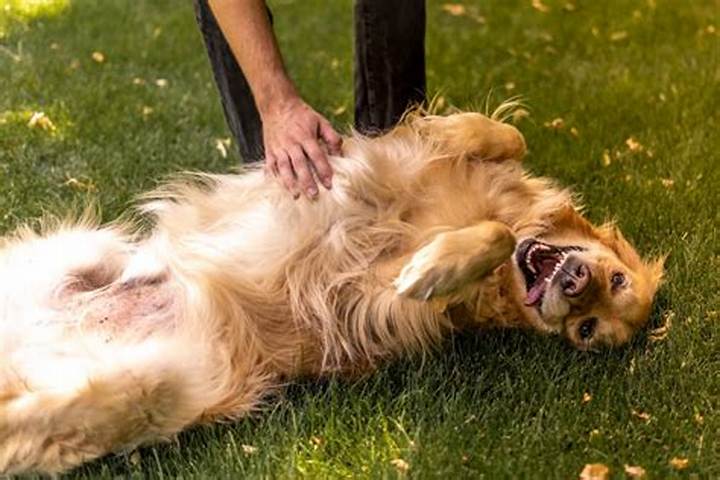
The goal isn’t to force the famous golden retriever belly rub. It’s to communicate clearly: this touch is gentle, predictable, and optional. Start with a brief pause after the dog rolls over. Let them settle their posture. If they’re panting hard, twitching, or immediately turning away, skip it.
Begin with light contact using the flat of your hand rather than fingers. Short rubs—two to five seconds—are usually better than long sessions. If your dog leans into the touch, keeps its mouth loose, and continues to relax, you can continue. If they tense, flinch, or suddenly stop enjoying it, pull your hand away and try a different kind of affection.
Also consider where the dog’s belly is sensitive. Many dogs enjoy rubbing around the lower belly but may dislike pressure near the sternum or under the ribs. Move slowly and adjust based on the dog’s response, not your guess.
Quick body-language checklist before you rub
Use these cues as a quick screen. Look for clusters of “relaxed” signals rather than relying on one sign.
- Likely comfortable: loose posture, soft eyes, relaxed mouth, neutral ears, and a tail that’s wagging in a smooth, non-stiff way.
- Proceed with care: dog looks unsure but doesn’t pull away; ears are mostly neutral; tail is active but not clearly relaxed.
- Stop immediately: freezing, hard staring, pinned ears, lip licking that seems tense, repeated attempts to leave, or sudden growling.
If you’re unsure, err on the side of gentler touch—or skip it. Dogs often forgive a missed opportunity. They rarely forgive repeated discomfort.