Let’s nerd out for a second. Cake flour isn’t just low-protein; it’s also bleached—chlorine gas treated. This isn’t scary; it’s what makes the starch absorb liquid and fat differently. The result? A brighter, more stable crumb that holds moisture like a sponge.
This is why your favorite bakery cake is so impossibly light. They’re using cake flour. It’s the difference between a dense, fudgy brownie and a cloud-soft sheet cake. If you want to channel that bakery magic at home, keep a box of cake flour for anything where tenderness is non-negotiable.
Fun fact: In Japan and Korea, soft flour (similar to cake flour) is standard for sponge cakes and chiffons. It’s part of why their pastries feel like a whisper rather than a shout. You can borrow that philosophy next time you’re making a classic Tres Leches.
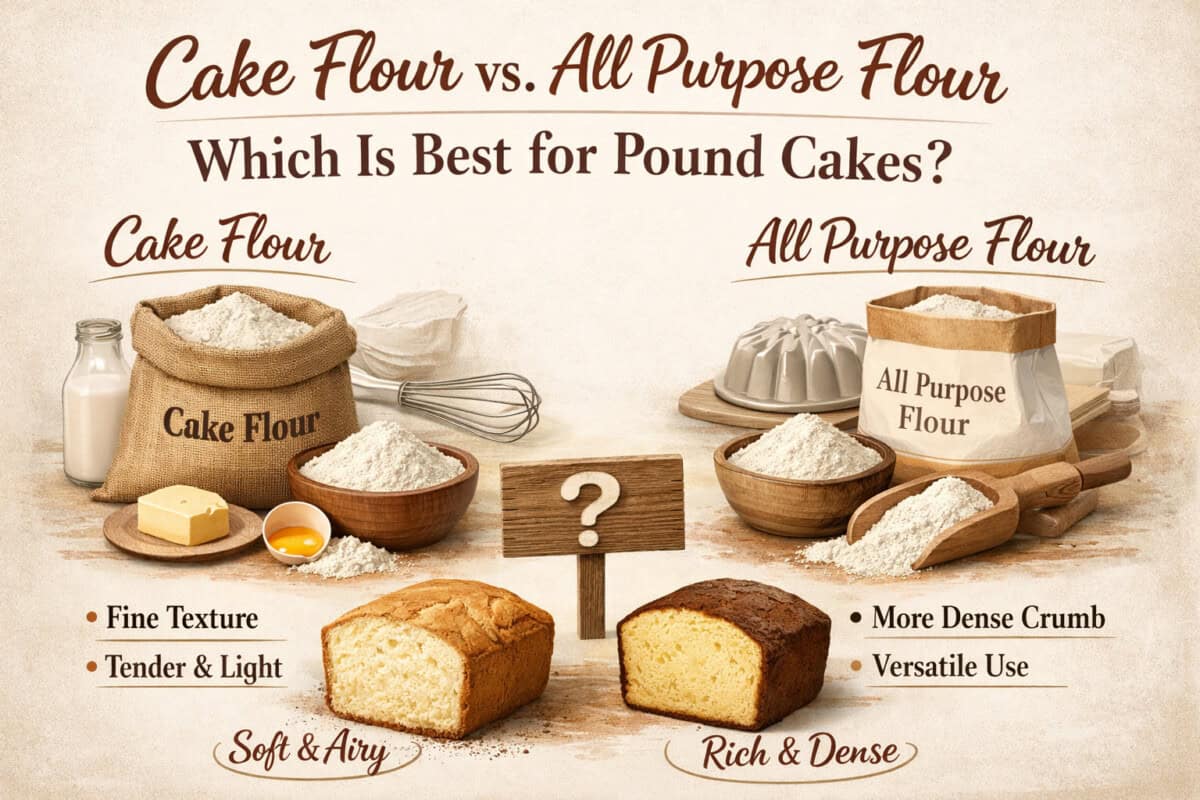 Cake Flour vs. All Purpose Flour: Which Is Best for Pound Cakes? - Whip
Savory Swaps? Think Again
Now, a reality check. Do not use cake flour for thickening sauces, dredging chicken, or making pasta. It will break down too fast, leaving you with a gummy, thin result. Save it for the sweet stuff—that’s its home.
For dumplings and gnocchi, all-purpose or even bread flour is your best bet. Cake flour lacks the tensile strength to hold a dumpling’s shape during a long simmer. You wouldn’t build a brick wall with balsa wood; same logic applies to your roux.
However, if you’re making a light, fluffy pie crust—like for a strawberry chiffon pie—cake flour can be a genius move. It makes the crust tender and almost cookie-like. Just be prepared for a bit more breakage. It’s a trade-off between structure and softness.