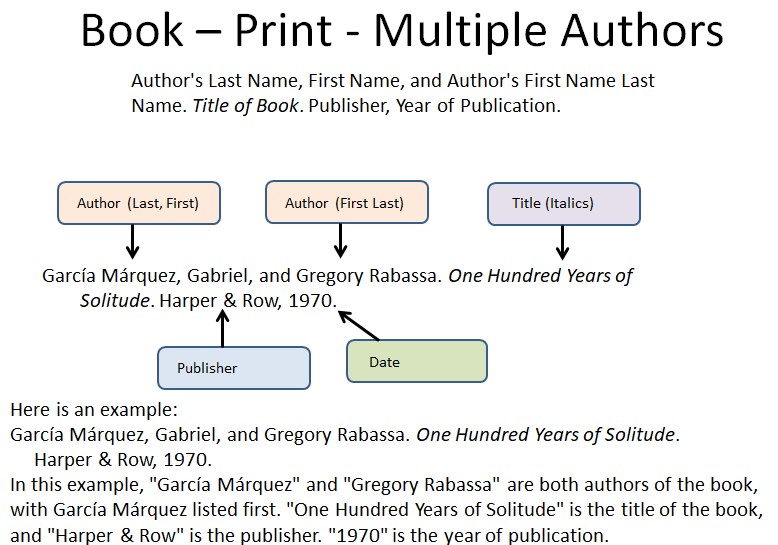
When you have two authors, it’s like you and your friend riding a tandem bike—you’re both pedaling, but one person is slightly more in charge. In your citation, you write the last name of the first author, then a comma, then the first name of the first author. Then you type the word “and” (no fancy ampersand, just plain English), followed by the second author’s first and last name in normal order.
For example: Smith, John, and Jane Doe. Title of Textbook. Publisher, year. See? You’re basically just introducing your two friends to a librarian. It’s polite. It’s clear. It’s totally doable while you’re still half-asleep at 2 a.m.
Three Authors: The Road Trip Car
Now, three authors is like packing into a car for a road trip. You’ve got the driver, the navigator, and the person who controls the playlist. In MLA, you list all three, separating them with commas, but you still use the word “and” before the last author’s name. It looks like this: Smith, John, Jane Doe, and Bob Johnson.
I once forgot the “and” in a citation and turned my bibliography into a confusing list of hostages. Don’t be me. Always use “and”—it’s the grammatical seatbelt that keeps everything from flying out the window.

