Honestly, it’s why you’re reading this on a screen right now. Wait, really? Yep. The metals inside your computer, your phone, and even the wires in your house often come from igneous rocks. Those rocks formed deep underground, carrying copper, gold, and other treasures with them.
Oh, and the black sand on some beaches? That’s often crushed basalt, another igneous rock from lava cooling in the ocean. So next time you’re at a volcanic beach, you’re literally standing on ancient, frozen fire. Pretty wild, right?
![5 Examples Of Igneous Rocks And Their Uses [2026]](https://assets.workybooks.com/INTERACTIVE/media/1752230006552-737975115-igneous-rocks-3.webp) 5 Examples Of Igneous Rocks And Their Uses [2026]
5 Examples Of Igneous Rocks And Their Uses [2026]
Two Main Types: Intrusive vs. Extrusive
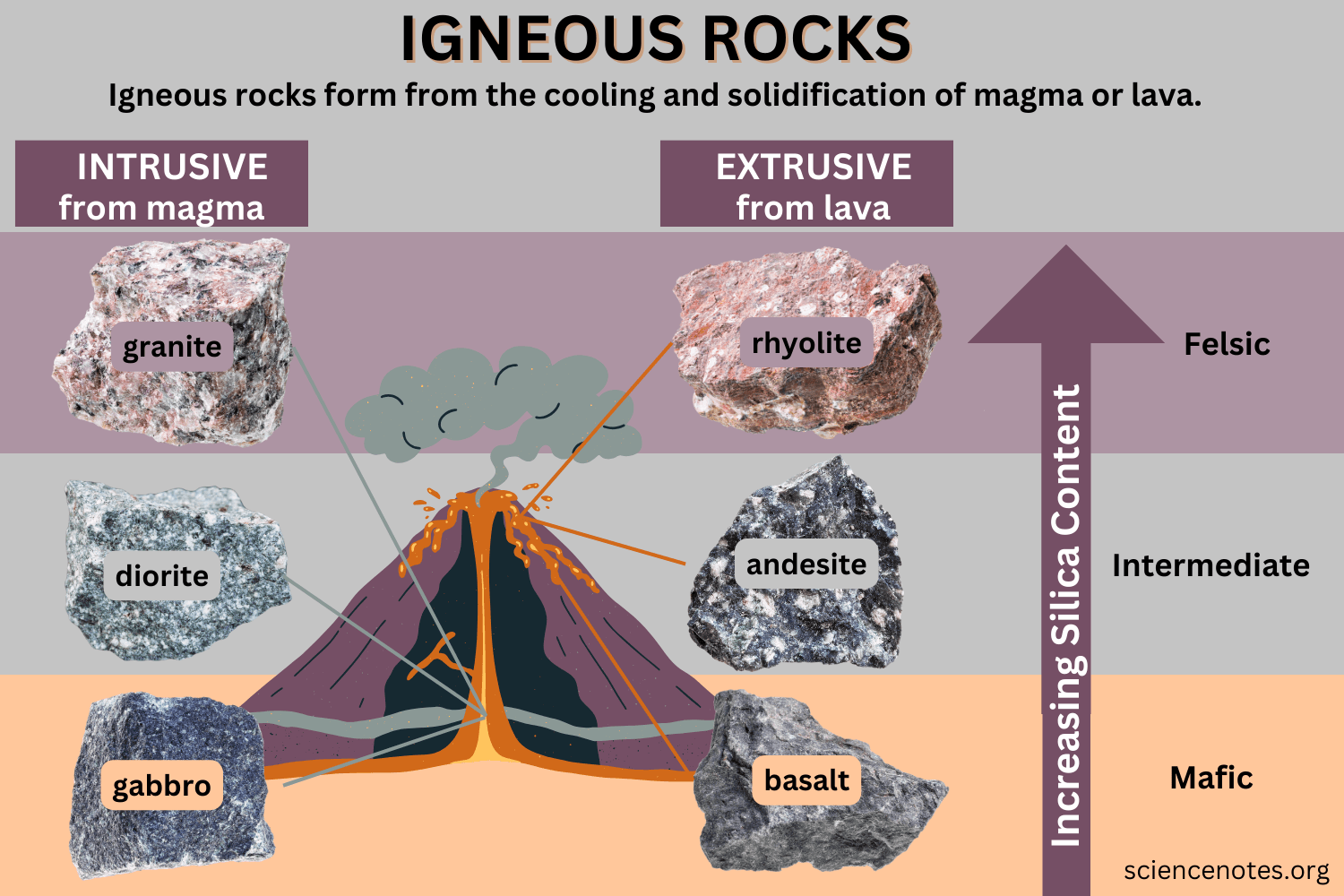
Scientists love fancy words, but here’s the simple breakdown: intrusive igneous rocks cool slowly inside the Earth. They get big, obvious crystals—like coarse-grained gabbro or granite. They’re the “slow and steady” rocks.
Extrusive igneous rocks cool quickly outside the Earth—like lava solidifying in air or water. They form fine-grained or glassy rocks—like pumice (the one that floats on water) or obsidian. These are the “fast and furious” rocks.
Ask yourself: have you ever held a rock that was lighter than water? That’s pumice—an extrusive rock filled with gas bubbles from explosive eruptions. It’s like frozen foam from a volcanic soda can.

