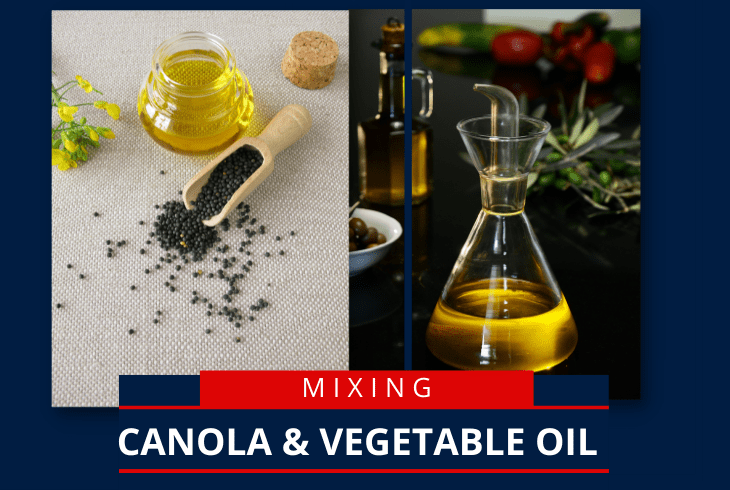
Let’s get one thing straight: “vegetable oil” is a vague term. It’s usually a blend of different oils like soybean, corn, or sunflower. Canola oil is just a specific type of rapeseed oil. So, when you mix them, you’re really just creating your own custom vegetable oil blend. You are, in fact, an oil alchemist now. Go ahead, put that on your resume.
People worry about smoke points, but here’s the hilarious truth: canola’s smoke point is around 400°F, and standard vegetable oil is about the same. When you mix them, you get a smoke point that’s somewhere in the middle. Unless you’re trying to deep-fry a meteorite, you’ll be totally fine. Your stir-fry will not become a smoke signal.
And flavor? Both oils are remarkably boring in the best way possible. They don’t taste like themselves, so they won’t change how your brownies or fried chicken taste. It’s like mixing two different brands of water—you’re not going to notice a difference. Unless you have the superpower of “oil tastebuds,” in which case, I’m jealous.
When NOT To Mix (Because Life Has Rules)
Alright, don’t get too wild. There are a few times when mixing is a bad idea. Never, ever mix canola or vegetable oil with extra virgin olive oil for high-heat cooking. Olive oil has a much lower smoke point and a strong flavor. That’s like putting a fancy ballerina and a clumsy hippo in the same ballet—it just doesn’t work.
Also, don’t mix them with unrefined oils like sesame or walnut oil. Those are divas with distinct personalities. They’ll ruin the neutral party you’re trying to throw. Save those for salad dressings where they can shine alone, like the dramatic queens they are.
One more no-no: don’t mix old oil with new oil for deep frying. Old oil has already broken down and absorbed flavors from whatever you fried last week. That leftover fish oil mixed with fresh canola? That’s a recipe for disaster. Unless you want “surprise-flavored doughnuts.” And nobody wants that.
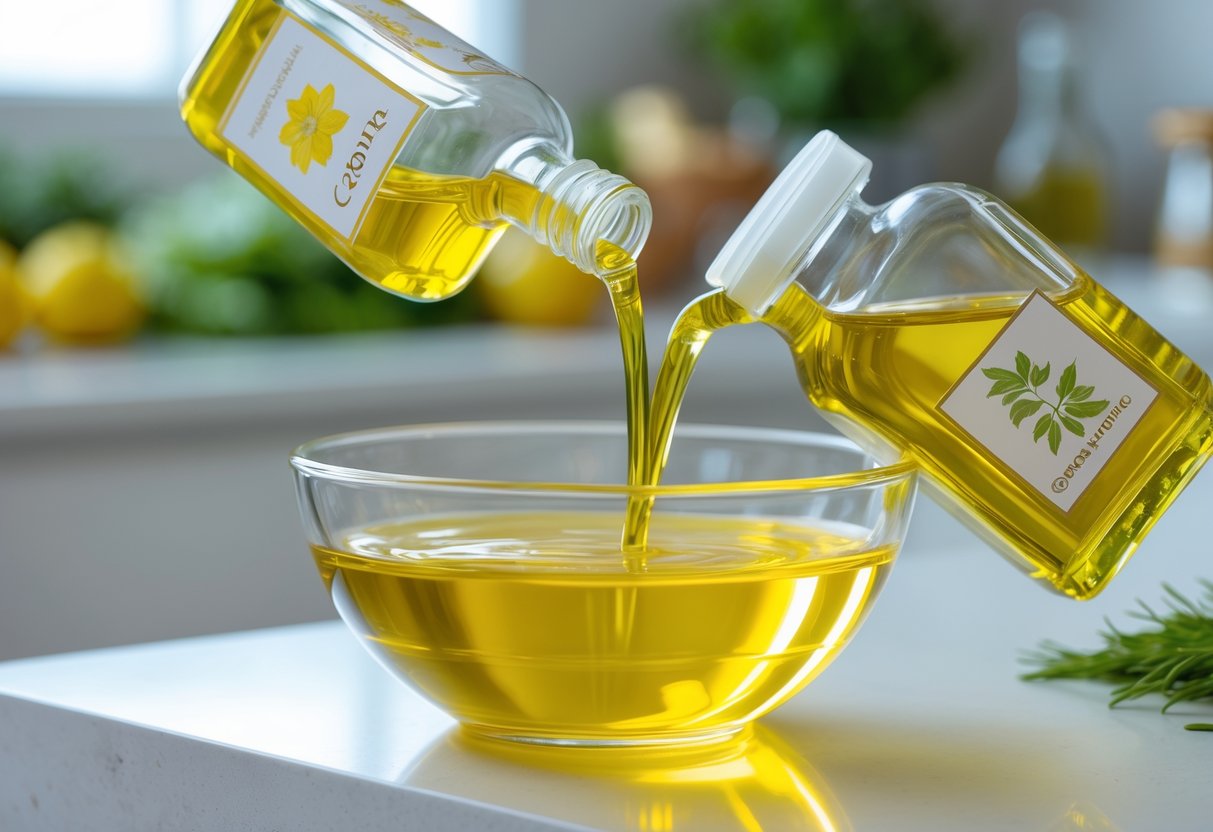 Can You Mix Canola Oil and Vegetable Oil? Tips for Baking & Frying