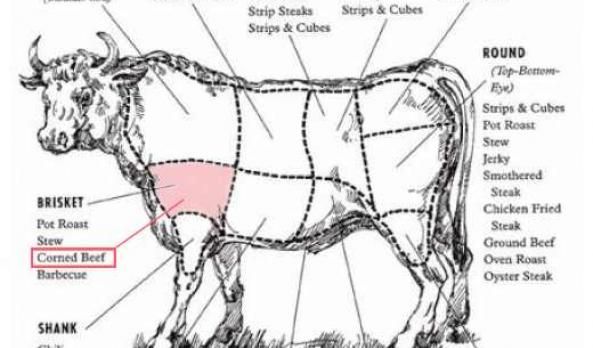
Brisket isn’t a “nice” cut of beef. It’s not a tenderloin or a ribeye. But that’s precisely why it works for corned beef. The long brining time—usually 5 to 10 days—breaks down the tough collagen, while the slow simmer softens every fiber until it’s fork-tender.
Think of it as the cow’s version of a tough day at the gym, followed by a relaxing spa treatment. You don’t rush brisket. You respect it with time, salt, and patience. And in return, it gives you the most flavorful, silky slices of meat you’ll ever sink a tooth into.
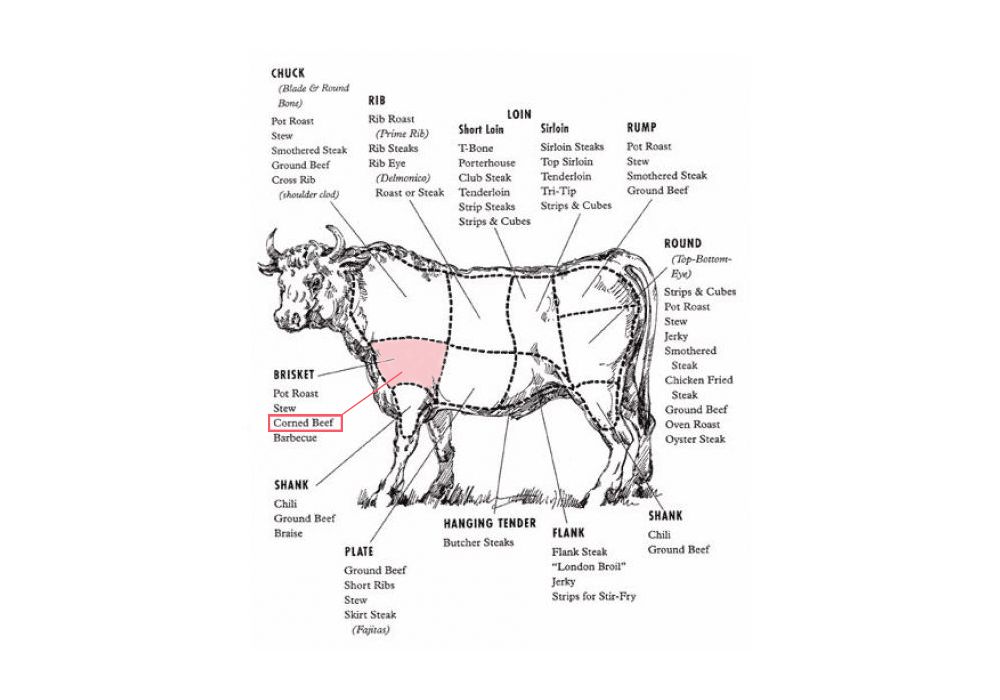 What part of the cow does corned beef come from - Out of Ambit
That’s also why corned beef from the brisket is so forgiving. You can overcook a steak and ruin a dinner. But a brisket? It practically begs for a long bath in a pot of water with cabbage and carrots.
Cultural Roots and Irish Connections
Here’s the twist: corned beef isn’t actually a traditional Irish dish in the way you think. In Ireland, beef was a luxury, so they cured pork belly and called it bacon. When Irish immigrants arrived in 19th-century New York, they found Jewish delis offering kosher corned beef made from brisket—cheap, abundant, and perfect for their own stews.
Thus, the Irish-American classic was born: corned beef and cabbage, with a side of mustard. It’s a beautiful collision of cultures: Irish nostalgia meets Jewish deli tradition, all wrapped in a can or a butcher’s paper.
A quick pro tip: don’t boil your corned beef to death. Simmer it gently—you want the liquid barely bubbling. This keeps the meat tender and prevents it from turning into shoe leather. Your taste buds will thank you.

