Here’s where it gets ironic: your brain might think red is sweeter because of fruitiness and ripeness. A jammy Shiraz from Australia or a Zinfandel from California tastes like blackberry pie, but it has zero sugar. That’s just the magic of ripe grape flavors.
 Is Red Table Wine Sweet Or Dry at Patricia Evelyn blog
So when you sip a red and think “this is sweet,” you’re actually tasting perceived sweetness. It’s the same psychological trick that makes a banana taste sugary even though it has no refined sugar. Your brain gets high on the flavor.
White wines can also be tricksy. A crisp, dry Sauvignon Blanc tastes like green bell peppers—not sweet at all. But a Chardonnay aged in oak can smell like vanilla and caramel, making you think it’s sweet when it’s actually bone-dry.
The Real Culprit: Tannins and Acidity
If you want a cheat code, look at tannins and acidity. High tannin (grippy, astringent) reds like Cabernet Sauvignon feel dry because tannins scrape your mouth. Low tannin reds like Pinot Noir feel softer, maybe even “sweeter” by comparison.
For whites, acid is the enemy of sweetness. A high-acid white like Riesling can have loads of sugar and still taste balanced (that’s the German “off-dry” magic). A low-acid white like an oaky Chardonnay can have zero sugar but feel lush and sweet-ish.
(My rule of thumb: If a wine makes you pucker like a lemon, it’s probably dry. If it coats your tongue like maple syrup, brace yourself.)
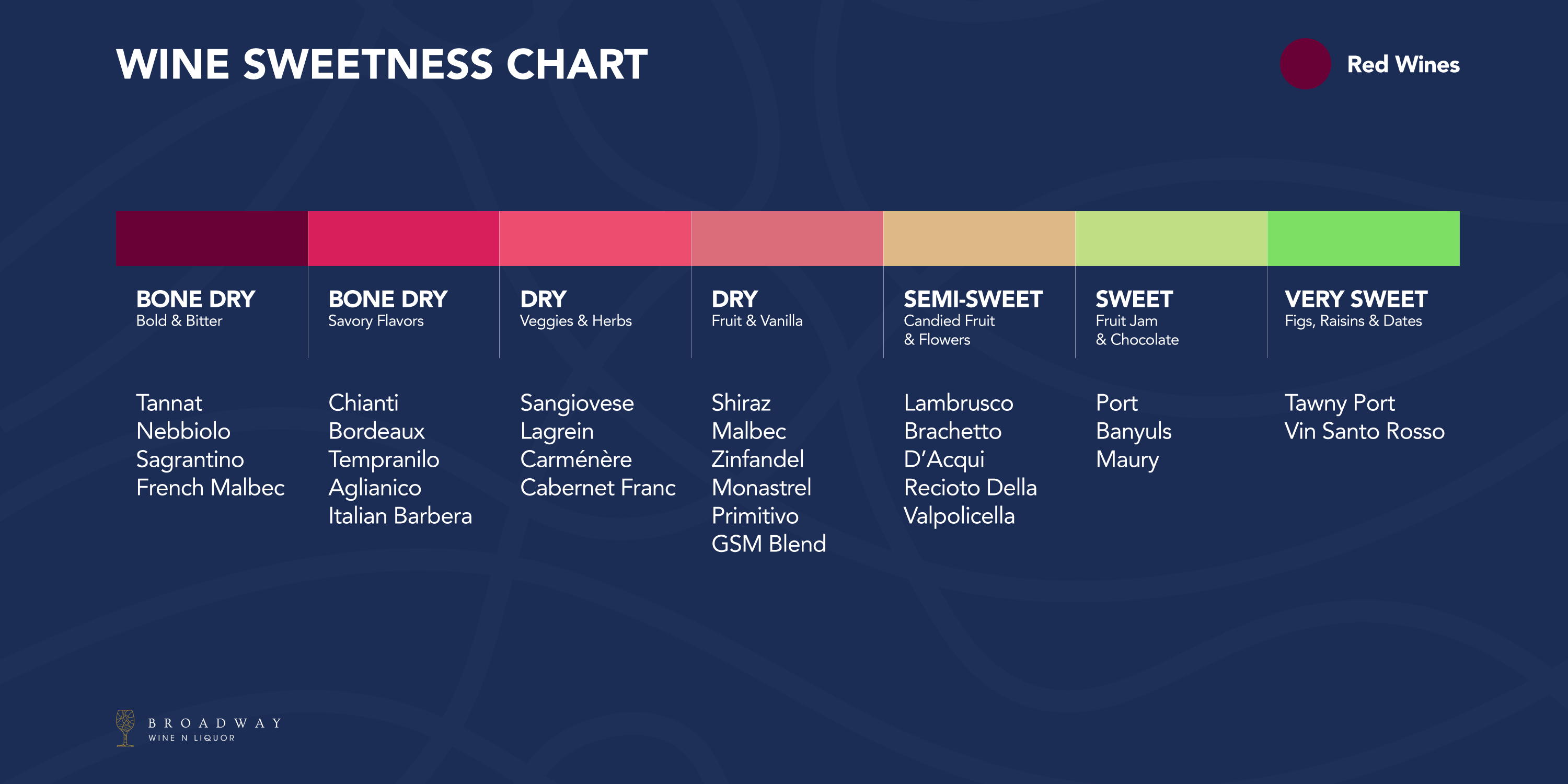 Wine Sweetness Chart: How to find that sweet spot | Wine N Liquor
How to Actually Tell (Without a Sugar Meter)
Look at the alcohol percentage. Sweeter wines usually have lower alcohol (10-11%) because the yeast didn’t turn all the sugar into booze. Higher alcohol (14-15%) usually means bone-dry reds. Not a perfect rule, but it’s a good starting point.
Also, read the label for code words: “Late Harvest,” “Demi-Sec,” “Moscato,” or “Riesling Kabinett” scream sweet. Words like “Brut,” “Sec,” “Estate,” or “Old Vine” lean dry. And if someone hands you a “Port” or “Banyuls”—that’s fortified wine, which is basically dessert in a glass.
(Pro tip: If you ask a waiter for a “sweet red wine,” don’t be surprised if they bring you a Lambrusco. It’s fizzy, fruity, and has some sugar. It’s also the secret weapon of wine snobs who secretly hate tannins.)