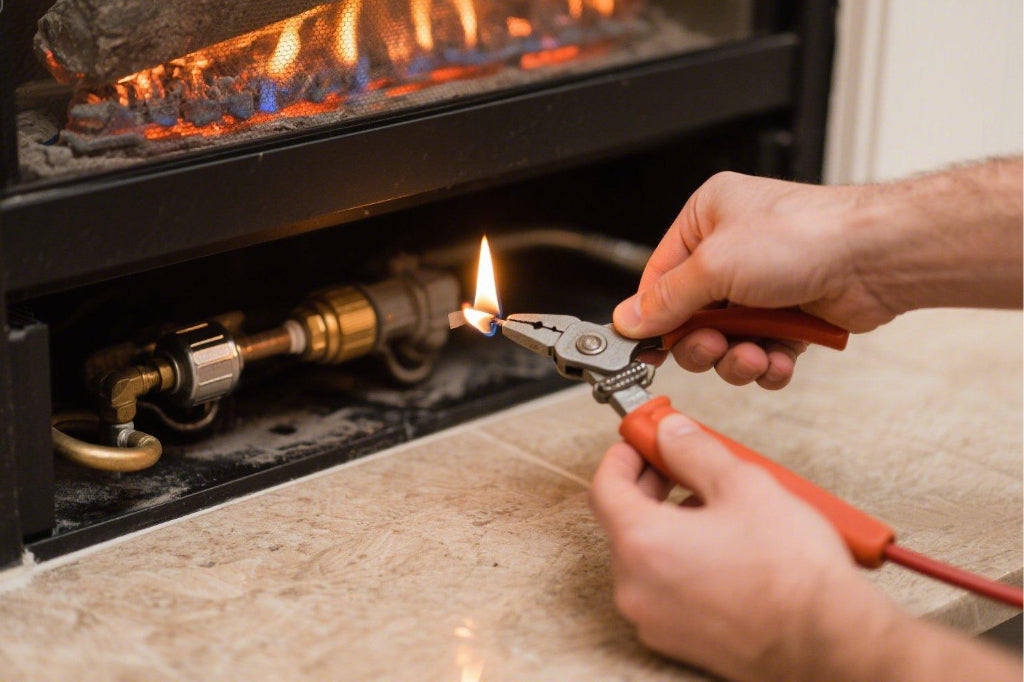
First, let’s talk safety—but in a friendly, not scary, way. Remember this: you are working with gas. If you smell something strong and rotten, stop. Open a window, get outside, and call your gas company. That’s not the pilot; that’s a leak, and we don’t mess with those. Assuming you only smell a tiny whiff (which is normal right after a flame goes out), you're good to go.
You’ll need three things: a lighter (a long barbecue lighter works best, or a match), a flashlight, and a calm mindset. Your fireplace has a small knob or panel, usually behind the front screen or a little door near the bottom. Pop that open, and you’ll see a small tube and a tiny gas port.
Now, here’s the crucial dance. Turn the gas knob from “Off” to the “Pilot” setting. You’ll probably need to push it in and hold it. This sends gas flowing to that tiny port. While you’re pressing down, bring your lighter or match to the pilot opening.
The “Patience Button” Move
It’s not a magic trick; it’s a waiting game. You’ll see a small blue flame catch. Hooray! But don’t let go just yet. Keep holding that knob down for a full 30 to 60 seconds. I usually count silently, or sing the chorus of my favorite song. This lets the thermocouple (a heat-sensing safety device) get hot enough to tell the gas valve, “Hey, we’re all good here, keep the gas flowing.”
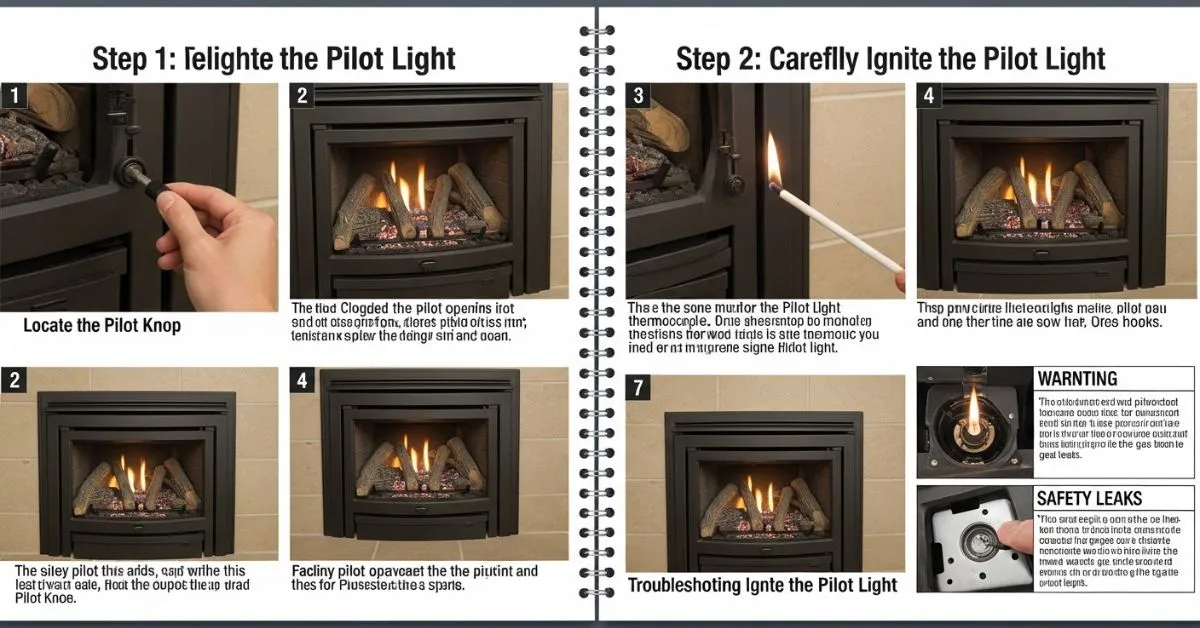 Pilot Light on a Gas Fireplace: Complete Guide to Relighting
Letting go too early is the number one mistake. It’s like taking your hand off a scared cat—the moment you release, everything shuts down. If the flame dies when you let go, try again. And again. Be patient. The fireplace is just being picky, like a toddler who only wants their juice in the right cup.
Once the pilot stays lit on its own, turn the knob from “Pilot” to “On.” Now, you can use your remote or wall switch to call forth the main flames. Feel that heat? That’s your success warming the room.