What Is The Temperature For Freezing Outside
So, you’re standing at the window, shivering, and you ask that age-old question: “What is the temperature for freezing outside?” Well, grab your hot cocoa and a ridiculous hat...
So, you’re standing at the window, shivering, and you ask that age-old question: “What is the temperature for freezing outside?” Well, grab your hot cocoa and a ridiculous hat, because the answer is way more complicated than you think. Spoiler alert: It’s not always 32°F (0°C). That’s just the temperature for pure, perfect water to turn into a skating rink. Your car's windshield, your dog’s water bowl, and especially your toes all have different ideas about what “freezing” means.
Let’s start with the official science. At sea level, under standard conditions, liquid water freezes at exactly 32°F (0°C). That’s the number meteorologists throw at you like a snowball. But here’s the kicker: water is a drama queen. It needs a little nudge—a speck of dust, a crack in the glass, or a tiny vibration—to actually bother forming ice. You can supercool pure water to minus 40 degrees in a lab, and it’ll still be liquid, just sulking about it. So, “freezing” is more of a suggestion than a rule, like a cat who doesn’t want to get off your lap.
Now, what about you? Your body thinks 50°F is a balmy tropical getaway until the wind hits. The “freezing” temperature for human skin is actually way higher than 32°F if it’s windy. That’s the “wind chill” factor, which is just nature’s way of saying, “I’m going to slap you with invisible ice knives.” When windchill hits 20°F, you have about 30 minutes before your exposed skin starts cursing your ancestors. And if it drops to -30°F? You get frostbite in 10 minutes flat. That’s not a threat; that’s a promise, like your mother-in-law’s holiday dinner.
Let’s talk about your car—the true victim of winter. Your engine’s oil doesn’t freeze at 32°F; it just gets grumpy and thick like cold maple syrup. But diesel fuel? That stuff turns into a waxy sludge at around 15°F, clogging your fuel lines faster than you can say “tow truck.” And your battery? It loses about 30% of its cranking power at 32°F, and a whopping 60% at 0°F. So if your car doesn’t start on a frigid morning, it’s not being lazy—it’s having a chemical tantrum.
Did you know that salt is the universe’s anti-freeze for sidewalks? When you sprinkle salt on ice, it lowers the freezing point of water to about 20°F (or even lower, depending on the concentration). That’s why cities dump tons of it on roads—not to melt the snow, but to confuse the water into staying liquid. And raccoons? They don't care about any of this. They’ll dig through your trash at -10°F like it’s a warm spring picnic, because their paws have a special anti-freeze system. Rude.
What about your pipes? That’s where the real drama happens. Water pipes inside your walls don’t freeze until the temperature outside drops to around 20°F for several hours. But if you leave your heat off and it hits 0°F? Your pipes will burst with the force of a tiny, angry geyser. The average home insurance claim for frozen pipes is over $10,000. So, yes, that “just a little cold” is an expensive joke.
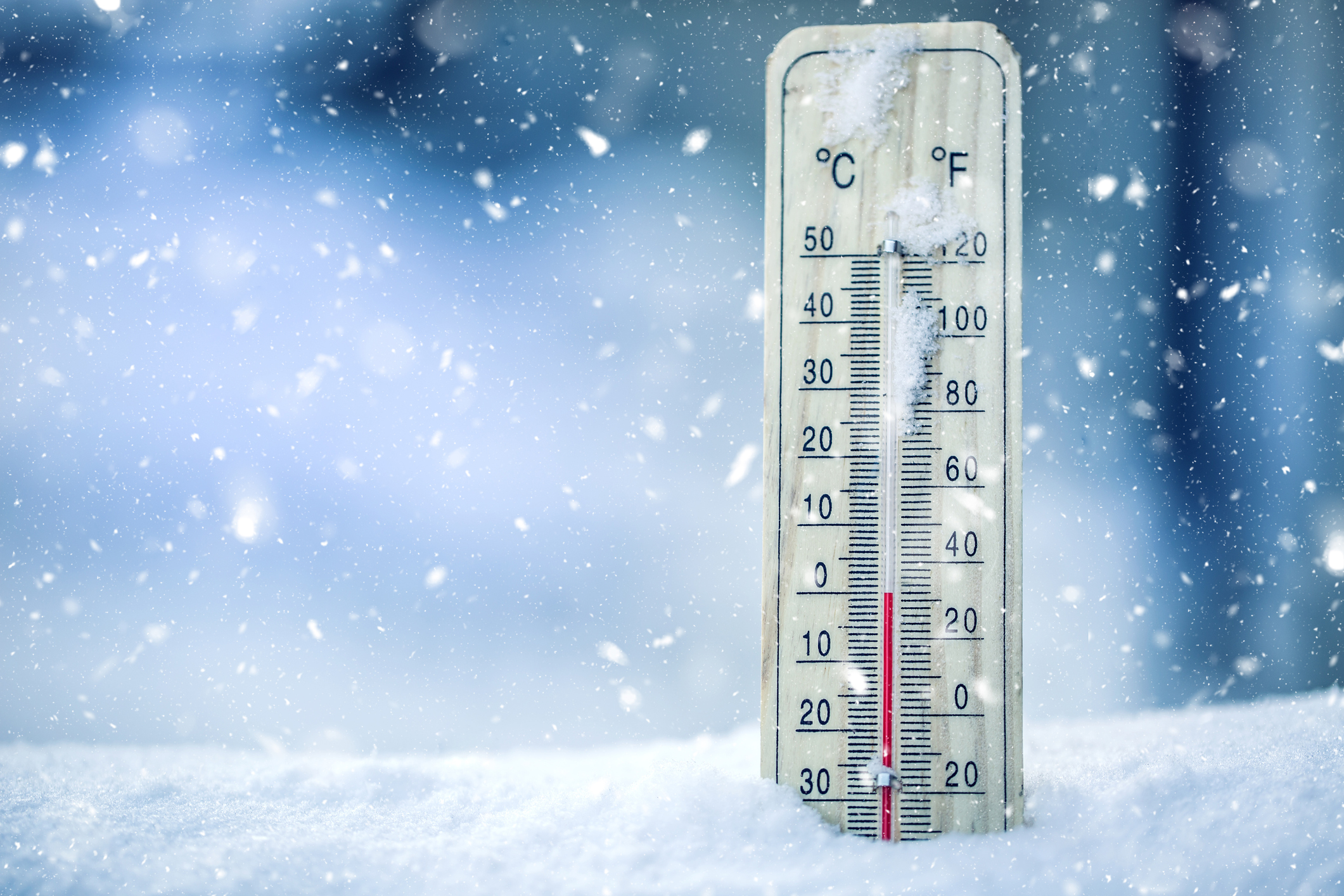 What Temperature Is Too Low For A Freezer at Lydia Christopher blog
Now, the weirdest part: the temperature for freezing outside isn’t just about water. It’s about you and your brain’s drama. If you’re wearing a parka, a thermal scarf, and a hat that looks like a fuzzy no, your perceived freezing point is about 20°F lower than someone in a T-shirt. That’s because your skin’s nerve endings are basically gossiping with your brain: “He’s fine, don’t panic yet.” But if you’re wearing jeans and a hoodie, your brain screams “FREEEZING!” at 40°F. It’s all relative, like arguing over the remote control.
And let’s not forget the frozen lake debate. A lake needs to be at 32°F to start freezing from the top down, but it takes days of that temperature for the ice to be thick enough to walk on. Eight inches of clear, black ice is safe for a car. One inch? You’re going swimming. So, “freezing” for a pond is very different from “freezing” for your poor, foolish uncle who thinks he’s a figure skater.
Here’s a final mind-bender: boiling water can freeze faster than cold water in certain conditions. It’s called the Mpemba effect, and it sounds like a magic trick. If you toss a pan of nearly boiling water into -20°F air, it can vaporize and turn to a snow cloud before it hits the ground. Meanwhile, your cold water just sits there, taking its time. Physics has a cruel sense of humor.
So, the next time you Google “what is the temperature for freezing outside,” remember: the answer is a choose-your-own-adventure novel. For water, it’s usually 32°F. For your car, it’s a betrayal at 15°F. For your skin, it’s a deadline at 20°F with wind. For your coffee, it's never—that stuff is sacred. And for your sanity? It’s whatever temperature makes you put on two pairs of socks and say, “I’m not going out there.” Stay warm, you beautiful, frozen popsicle of a human.