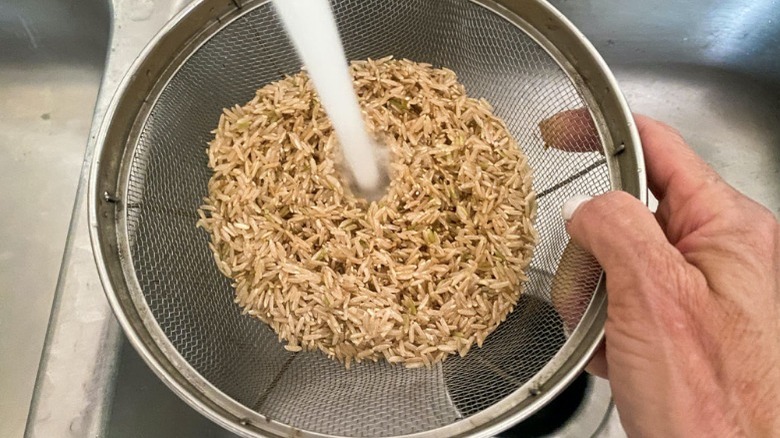
If you’re team Rinse, use a fine-mesh sieve (brown rice grains are tiny escape artists) and run cool water over them for about 30 seconds. Swish with your fingers until the water turns from milky to mostly clear. Pro tip: Soaking brown rice for an hour before rinsing can reduce cooking time and make it easier to digest. This trick is a staple in Ayurvedic cooking, where it’s believed to soothe the gut—and honestly, who doesn’t want a happier belly on a Tuesday night?
Not rinsing? That’s fine too, especially if you’re making a one-pot wonder like a chili or a rice pudding where starch thickens things beautifully. Just keep in mind that unrinsed rice holds more trace minerals, but also more potential arsenic. A good compromise: rinse for five seconds just to knock off any visible debris, then cook as usual. Your average sesame-crusted salmon bowl won’t know the difference, but your body might send a quiet thank-you note.
A Fun Little Fact That Will Impress No One at Dinner Parties
Did you know that brown rice can absorb up to 80 percent of its weight in water during cooking? That’s why a cup of dry rice becomes three cups of fluffy goodness. Rinsing slightly reduces this absorption, so if you’re a perfectionist, adjust your water ratio by a tablespoon or two. In Thailand, street vendors sometimes rinse jasmine brown rice with cold tea to add a subtle fragrance—definitely optional, but a vibe.
Also, there’s a myth that rinsing washes away B vitamins. False. Those vitamins are locked in the bran layer, not on the surface. So rinse with confidence, like you’re giving your rice a spa day. Just don’t over-rinse—three to four swishes is plenty. Any more, and you risk turning your grains into sad, waterlogged pebbles.