
Despite the mess, this amendment was the foundation for every civil rights victory that followed. Think of it like the starter dough for the bread of freedom. Without it, you can’t have the Civil Rights Act of 1964, the Voting Rights Act of 1965, or even the idea that “all men are created equal” actually means something.
It also inspired a global conversation. Other countries looked at the U.S. and said, “Hey, maybe we should do that too.” It was a big, sparkly moral example—even if the U.S. didn’t always live up to its own hype.
And on a personal level, it allowed for generations of Black artists, scientists, writers, and your neighbors to exist without a legal license to own them. That’s huge. It’s why we have figures like Maya Angelou, Barack Obama, and Chadwick Boseman—all products of a world where the Thirteenth Amendment said, “You are a person, not property.”
Fun Fact: The Ratification Race
Did you know it wasn’t a guarantee until the very end? President Lincoln pushed hard, but it squeaked through the House by just a few votes. Eight votes made the difference between freedom and continued bondage. Talk about a nail-biter!
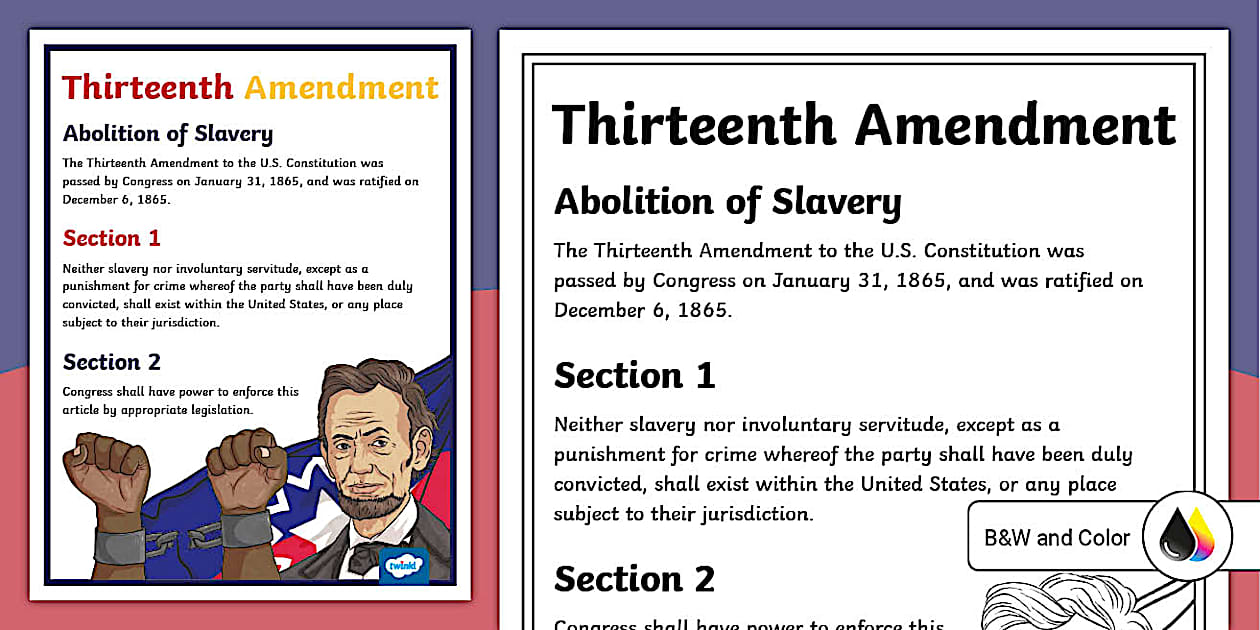 Thirteenth Amendment of the U.S. Constitution Poster
And get this: the first state to ratify it was Illinois, Lincoln’s home state. The last state to ratify it? Mississippi—in 1995. And they didn’t officially file the paperwork until 2013! So yes, the amendment was technically “unratified” in one state for 148 years. Procrastination at its most historical.

