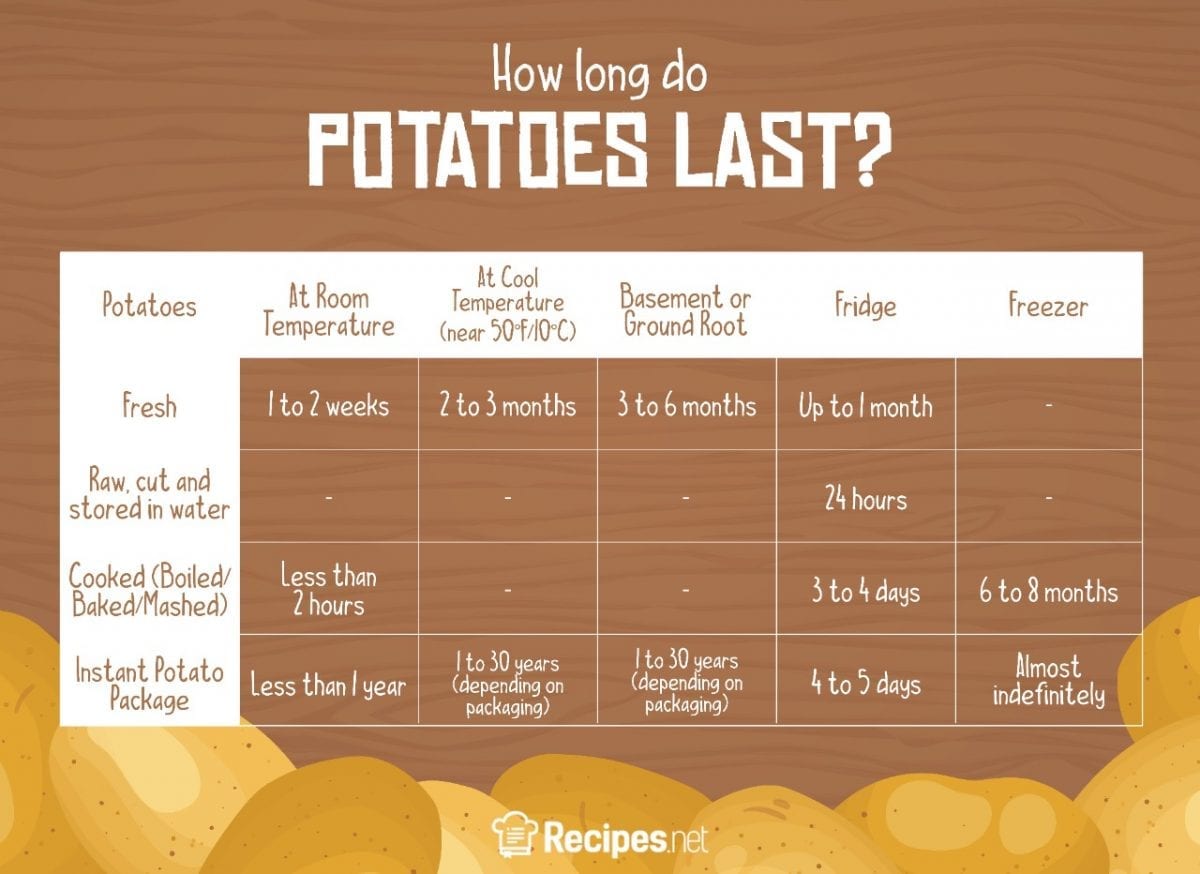
The best trick is portion control. Cook only as many potatoes as you’ll eat within two hours. It sounds like advice from a zen master, but your gut will thank you. If you must cook a mountain of potatoes, cool them down fast—spread them on a baking sheet so they don’t trap heat in the center.
Once they’re cool (within an hour), shove them into the fridge. Cooked potatoes will keep happily in the fridge for 3 to 5 days. They won’t taste as majestic as fresh ones, but they won’t try to kill you, either. That’s a fair trade.
And please, for the love of all things crispy, don’t store them in the same pan you cooked them in. That metal pan retains heat like a grumpy bear, keeping the potatoes in the “danger zone” (40°F–140°F) for hours. Use a shallow container. Your fridge will sigh with relief.
The Verdict: Eyes on the Clock, Not the Potato
Here’s a fun, slightly terrifying fact: botulism symptoms don’t show up for 12 to 36 hours. So you could eat a sketchy potato, wake up feeling fine, then collapse at work the next day. Your coworkers will think you caught a weird flu, but you’ll know the truth: you were betrayed by a tuber.
But let’s not end on a scary note. Most of the time, you’re fine. If your cooked potato has been out for 90 minutes, you can probably still eat it. If it’s been out for six hours, treat it like an ex—cut all contact. Bacteria don’t negotiate.
Pro tip: dump any leftover cooked potatoes in the trash outside, not the inside bin. If they’ve gone bad, they’ll smell like a demon’s gym socks by morning, and you don’t need that haunting your kitchen.
So go forth, potato lovers. Roast, boil, mash, or scallop them. Just remember: two hours on the counter, or one in the heat. Respect the timer, and you’ll never have to explain to your doctor why you ate a baked potato that looked “a bit fuzzy.” Your stomach will thank you, and you’ll live to eat another day. Probably.

