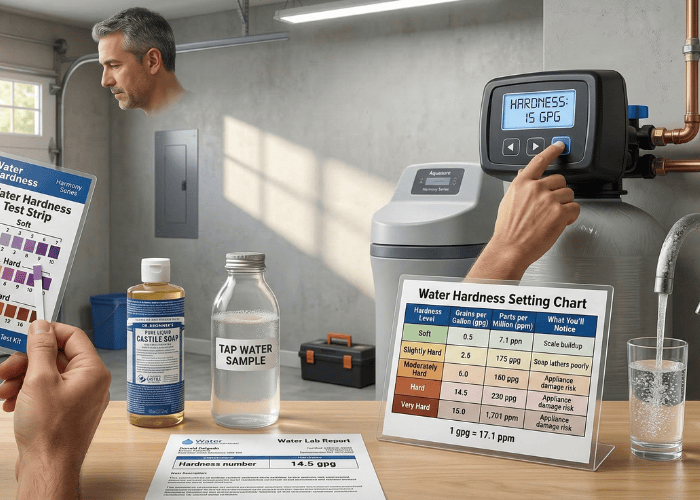
Imagine you’re baking a cake and you add too much sugar. It’s still edible, but it’s weird, right? That’s what an overly high hardness setting does. Your water becomes extra-soft—almost slippery—and your soap doesn’t rinse off well. You might feel a residue on your skin.
 How to Measure Hardness in Water: Simple Methods Explained
Now imagine too little sugar. Your cake is gritty, flat, and disappointing. That’s hard water sneaking back in. Your pipes get scale buildup over time, your water heater works harder, and your hair gets that "straw" texture. Not cute.
Fun comparison time: your softener is a bouncer
Think of your water softener as a nightclub bouncer. The hardness setting is the "guest list." Calcium and magnesium are the loud, rowdy partygoers you don’t want inside. The bouncer has a list of how many rowdy guests are allowed in—and swaps them for calm, quiet potassium guests.
If you set the list for 10 rowdy guests, but 15 show up, the bouncer gets overwhelmed. You get mineral chaos in your pipes. If you set it for 20, but only 5 show up, the bouncer wastes energy kicking out imaginary guests. Dial the number right, and your bouncer works efficiently, keeping your water smooth and your appliances happy.