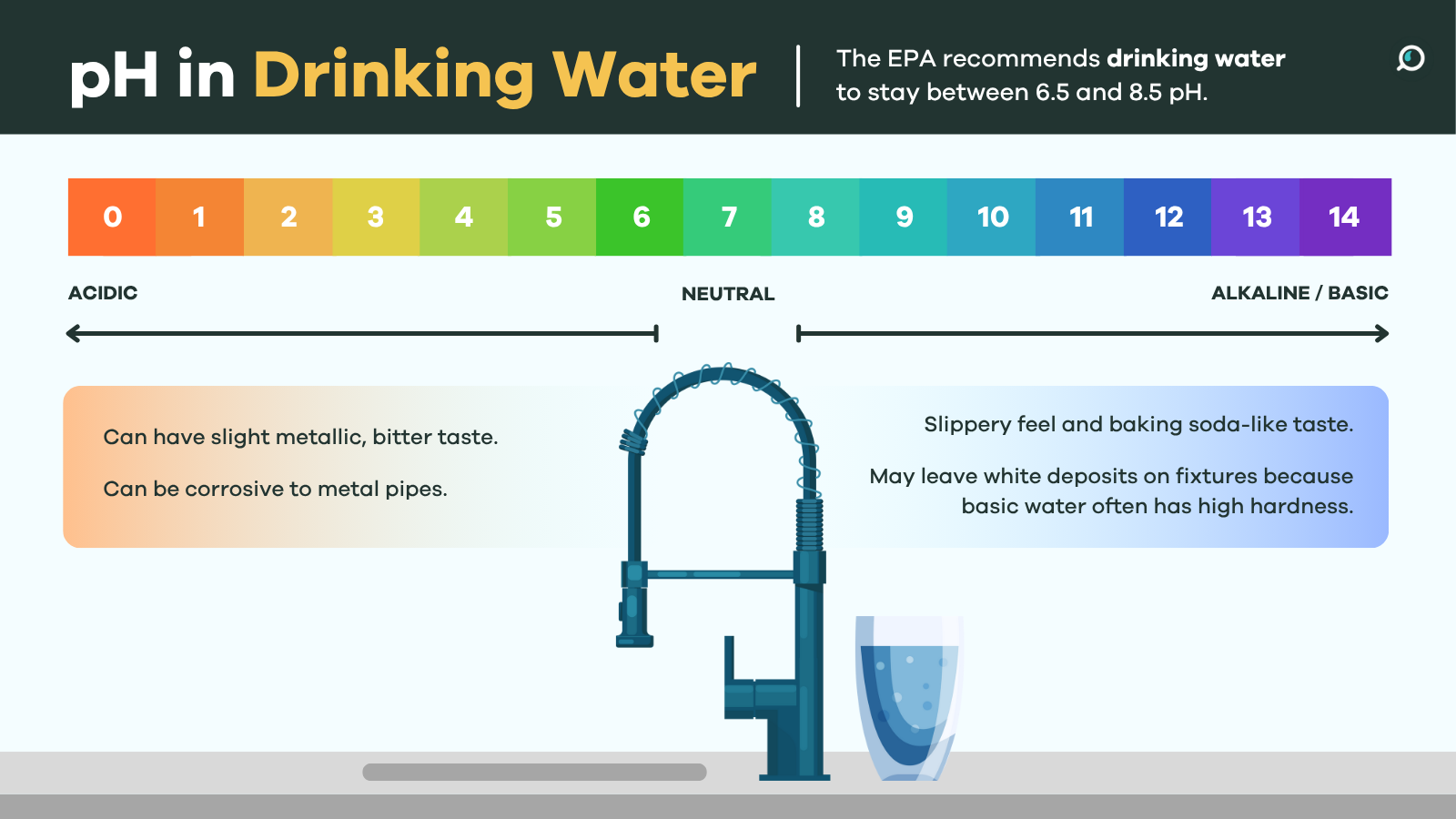
You don’t need a lab coat for this. You can buy a pH test kit at any hardware store for like ten bucks. Or grab some pH test strips from a pharmacy. Dip the paper in your glass, wait two seconds, and compare the color to the chart.
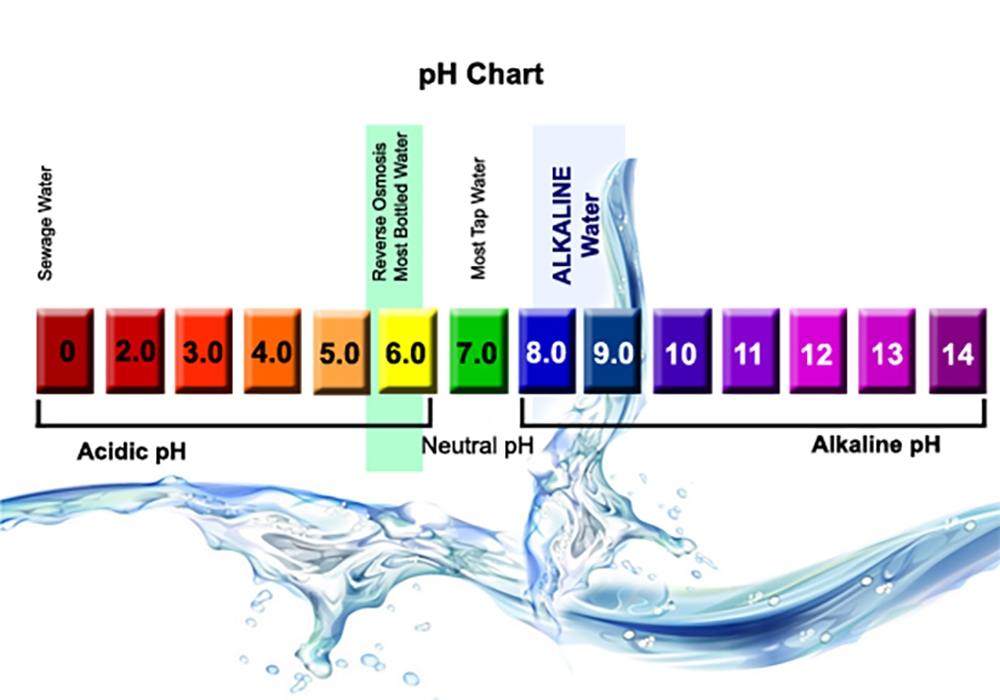 What Is PH In Water? How Much PH Is Good For Drinking Water?
If it’s yellow or orange (indicating acid), you might have a problem. If it’s dark blue or purple (basic), you probably live in a region with hard water. Green is the “boring is beautiful” sweet spot.
Or—and this is my favorite method—you can just call your local water utility. They test it every single day. They’ll tell you the exact number. “It’s 7.4,” they’ll say in a monotone voice. Then you can pretend to understand.
Should You Ever Worry?
Honestly? Rarely. Most municipal water is tested so often that the pH is boringly fine. If you’re on a well, you should check it once a year. But for the rest of us, it’s just another thing to overthink.
Here’s a dirty little secret: your coffee has a pH of about 5. Your orange juice is a 3.5. Even your tap water at pH 8.5 is less “extreme” than the soda you just drank. Perspective is everything.
So, next time you fill a glass, take a sip. Is it refreshing? Does it taste clean? Then stop worrying about the number. The pH of potable water is just a nerdy detail that keeps your pipes happy.
And let’s be honest: you drink water to stay alive, not to win a chemistry award. So unless it’s eating your plumbing or tasting like a rust bucket, you’re golden. Cheers to that.