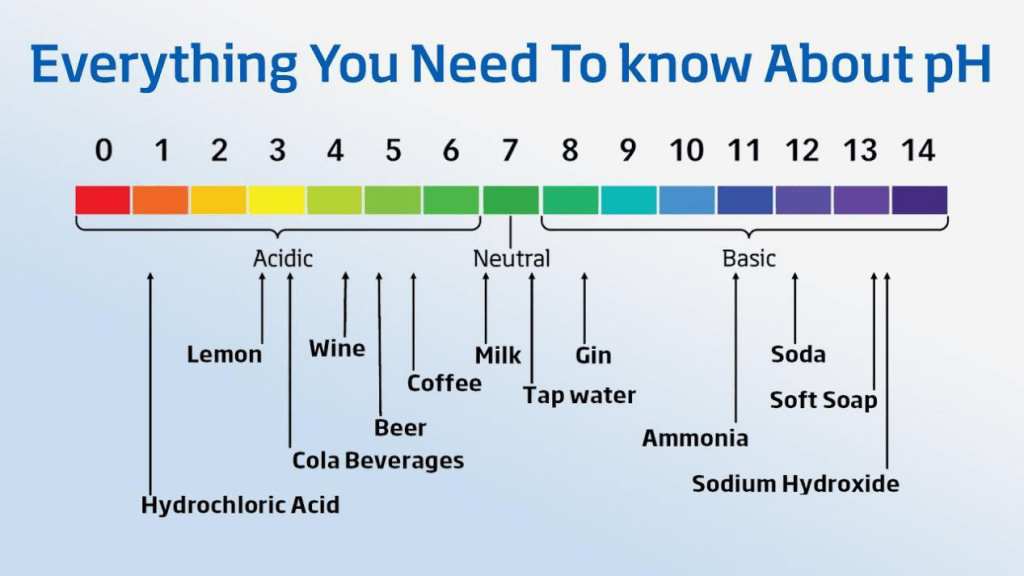
First, the official answer—because you know we have to start with the boring stuff to get to the good part. pH stands for “potentia hydrogenii,” which is Latin for “power of hydrogen.”
Fancy, right? But really, it’s just a measure of how many hydrogen ions are floating around in your water. The more hydrogen ions, the more acidic the water is. The fewer ions, the more basic (or alkaline) it is.
The scale runs from 0 to 14, with 7 being perfectly neutral. Think of it like a seesaw: below 7 is sour and sharp (like lemon juice), above 7 is bitter and slippery (like baking soda water). Your tap water usually sits somewhere between 6.5 and 8.5—unless your pipes are ancient, in which case, godspeed.
The “Fish Tank” Analogy (Because That’s How My Brain Works)
You know how a fish tank has a little gauge that tells you if the water is safe for your goldfish? That’s basically pH for your own body. If the water is too far off the scale, your internal systems have to work extra hard to balance things out.
Now, your stomach is a beast—it’s a super acidic environment (around pH 2) that can dissolve your dinner and a plastic spoon if you’re not careful. But your blood? It’s a control freak that demands a pH of exactly 7.35 to 7.45.
So when you drink water with a weird pH, your body doesn’t freak out—it just adjusts. But extreme levels can taste bad or feel harsh on your teeth. And if you’re a plant, or a goldfish, or a coffee maker? You definitely care about this number.
 PPT - Water Quality Testing PowerPoint Presentation, free download - ID