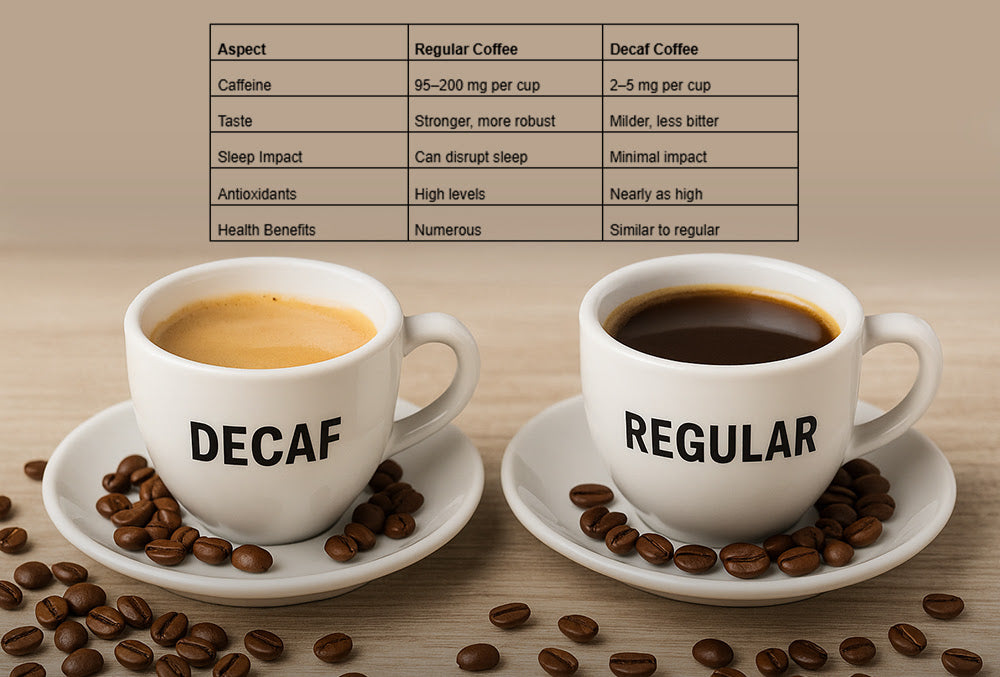
Here’s the elephant in the room: that buzz. Regular coffee gives you a jolt, speeds up your metabolism, and makes you feel like you can conquer a spreadsheet at 7 AM. Decaf? It’s more of a gentle nudge than a full-on shove.
Does that mean decaf is a health weakling? Not even close. One study found that decaf still reduces liver enzyme levels and lowers the risk of liver disease almost as well as regular coffee. Your liver doesn’t care about your jitters—it just wants those antioxidants.
Another win: decaf is easier on your sleep and anxiety. If regular coffee makes you feel like a hummingbird on a sugar high, decaf lets you enjoy the ritual without bouncing off the walls. That’s a health benefit, my friend.
The Brain Game: A Plot Twist
Now for the weird part. Some research suggests that decaf might even outperform regular for certain brain benefits. A 2016 study found that decaf consumption was linked to improved cognitive function in older adults—specifically in areas like memory and processing speed.
 How Much Caffeine is in Decaf Coffee? – Colipse
Why? Nobody knows for sure. Maybe the antioxidants work better without caffeine’s stimulant clutter. Or maybe the researchers just needed a fun headline. Either way, your brain still gets a treat.
But don’t go crazy. Decaf still has a tiny bit of caffeine—about 2 to 5 milligrams per cup versus regular’s 95. If you're super sensitive, that tiny zap might still keep you up. It’s like whispering “wake up” instead of shouting.