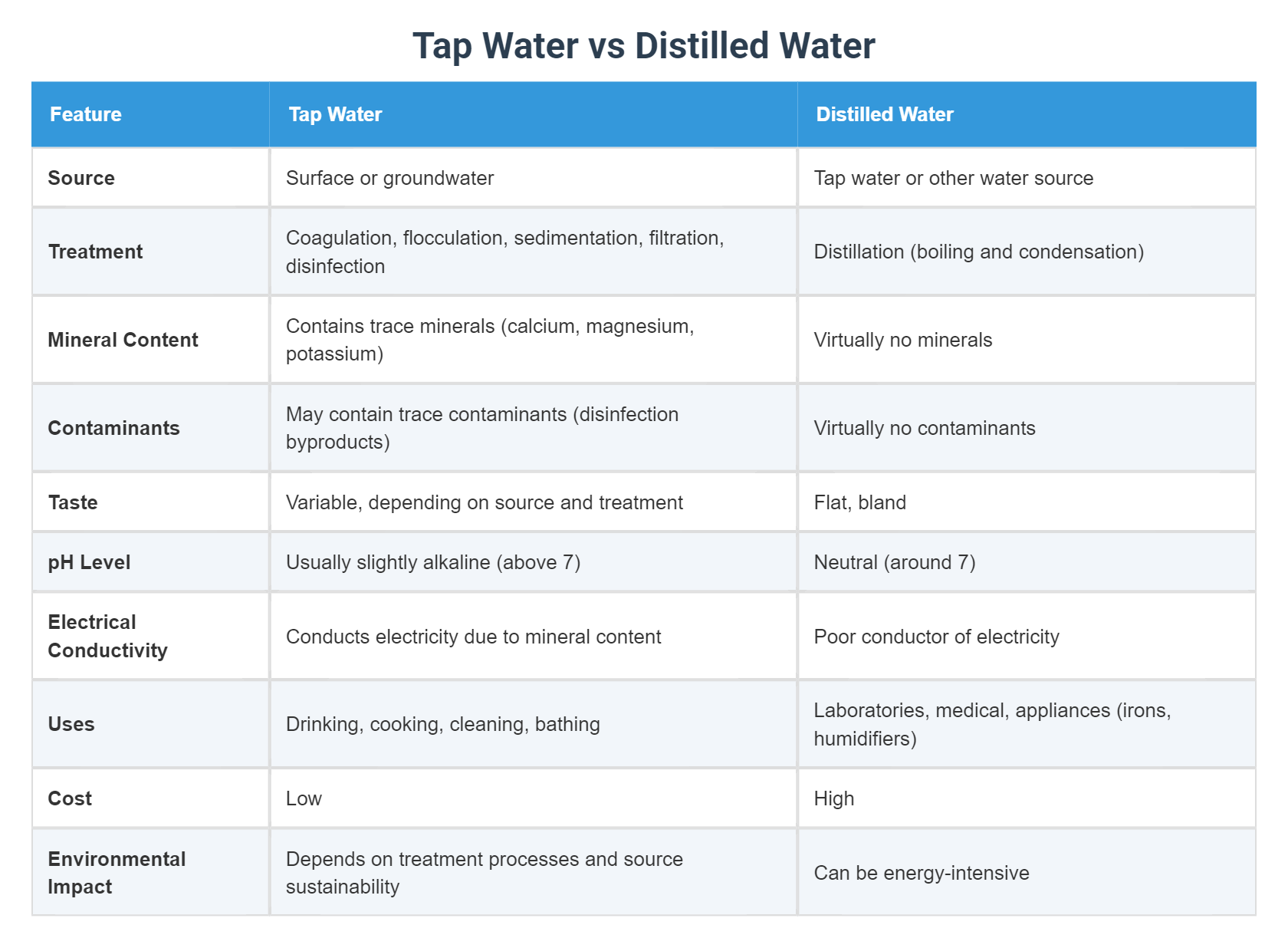
Have you ever tasted distilled water? It’s flat. The lack of minerals makes it feel thin on the tongue, like a whisper instead of a shout. Tap water, with its trace minerals, has mouthfeel—a subtle body that your palate registers. Some wine experts even argue that water quality affects how you taste your food. A sip of mineral-rich tap might enhance a sharp cheese, while distilled just… wets your mouth.
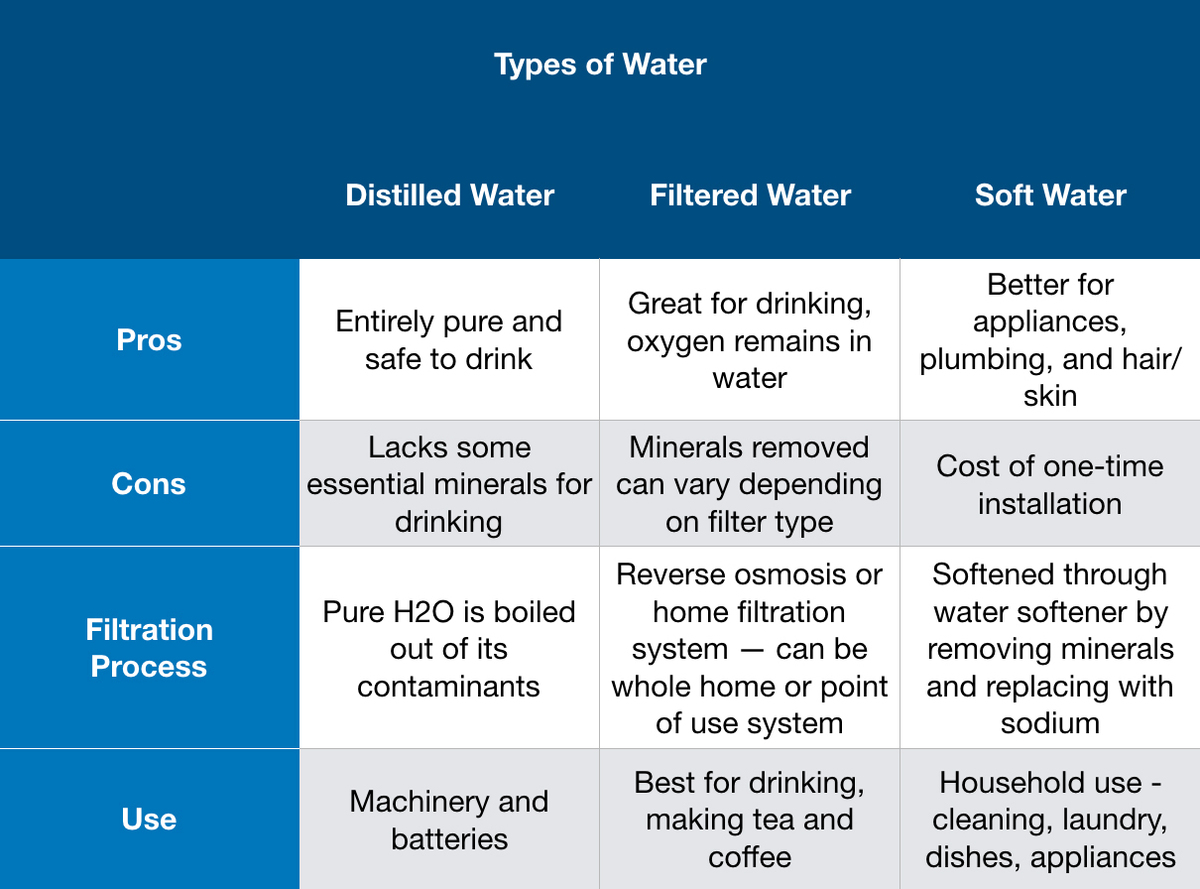 Distilled Water vs Tap Water: Is There a Difference? — WaterSmart
Another cultural reference: in Japan, high-end sushi chefs use filtered or bottled water specifically for washing rice, believing that localized tap water affects the flavor. It’s a reminder that water isn’t neutral—it’s a character in your kitchen. Distilled water is like a silent movie actor: functional, but lacking in personality.
Five Quick Facts to Drop at Your Next Dinner Party
1. Distillation was first documented by Greek alchemists in the 1st century AD to purify seawater. 2. Tap water in the U.S. is tested for over 90 contaminants; distilled water is tested for zero because there’s nothing left. 3. The process of distillation uses about three gallons of source water to make one gallon of distilled water—it’s not very efficient. 4. Some people claim drinking distilled water leaches minerals from your body—science says this is a myth, but it doesn’t replace them either. 5. Your local tap water’s mineral content varies by season—spring runoff often changes the flavor profile, like a tiny vintage for your glass.