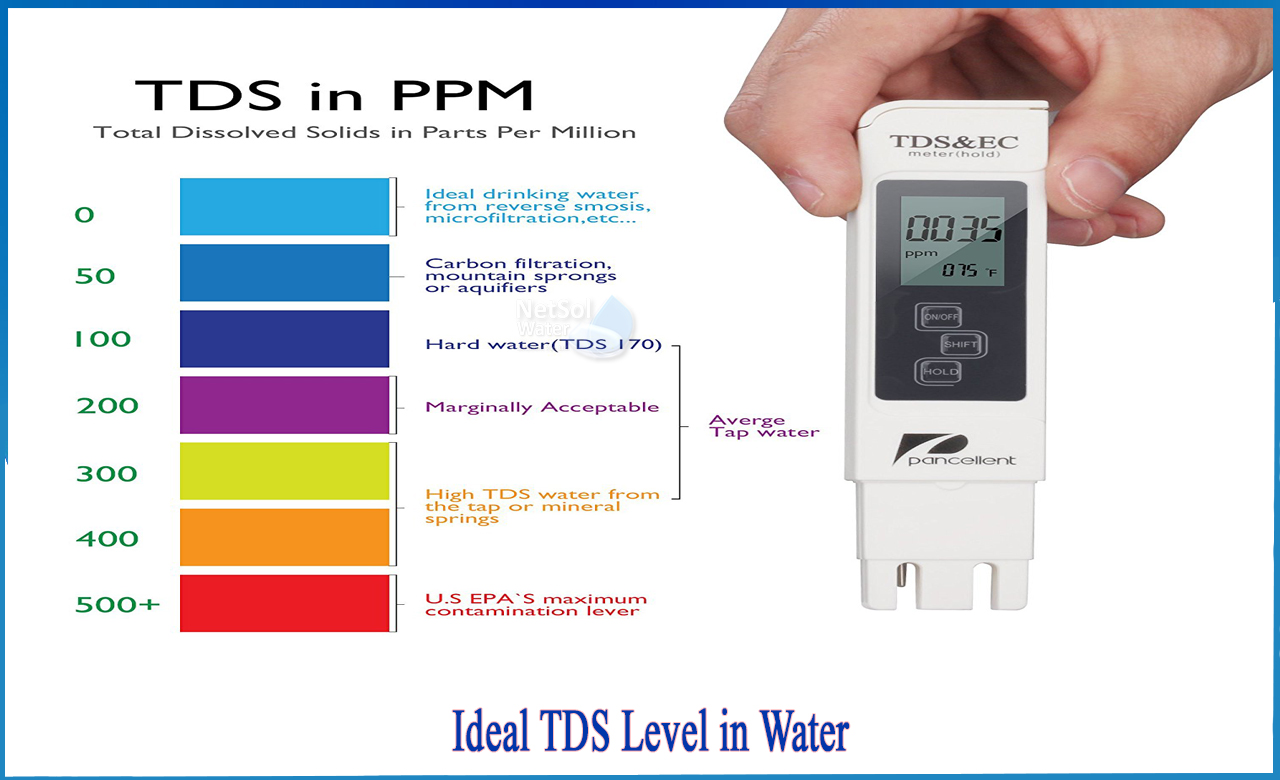
So what’s a good TDS number? For drinking water, the sweet spot is generally between 150 and 300 parts per million (ppm). Below 50 ppm, and you’re basically drinking nothing—like eating a flavorless cloud.
Above 500 ppm, and it starts to act like a bully: it tastes heavy, clogs your pipes, and makes your coffee machine cry. Above 1000 ppm? That’s not water anymore—that’s a mineral soup you wouldn’t wish on your worst enemy’s kettle.
Here’s the kicker: your body needs some of those minerals. But if your water has too much TDS, it can also contain unwanted stuff like lead, arsenic, or too much salt—especially if you get water from a well. That’s when filtering becomes your best friend.
 What Is TDS in Water and What Does it Indicate?
What Do You Do About It?
If your water tastes like a swimming pool or leaves scale on everything, get a reverse osmosis filter or a pitcher with a mineral-reducing cartridge. It’s like hiring a strict bouncer who only lets the good minerals stay.
But here’s a funny truth: we often overreact. One buddy of mine bought a fancy filter system because his water tasted "off." Turned out the TDS was perfectly fine—he just hadn’t rinsed his glass after making a kale smoothie. True story.
So before you panic, do a quick taste test. Or ask your local water company for their annual report. Most of the time, your water is just doing its job, being a little mineral-forward. It’s like that friend who talks too much but means well—annoying, but harmless.
In the end, TDS is just water's personality. Some water is shy and pure, some is bold and brassy. And you, my thirsty friend, get to decide who you invite for a drink. Just don’t forget to laugh when the bathtub ring shows up—it’s just the minerals having a little reunion.
Now go fill that glass. And if it tastes a little like a mountain stream or a rusty pipe, you’ll know exactly why. Cheers to good water—and knowing what’s swimming inside it.

