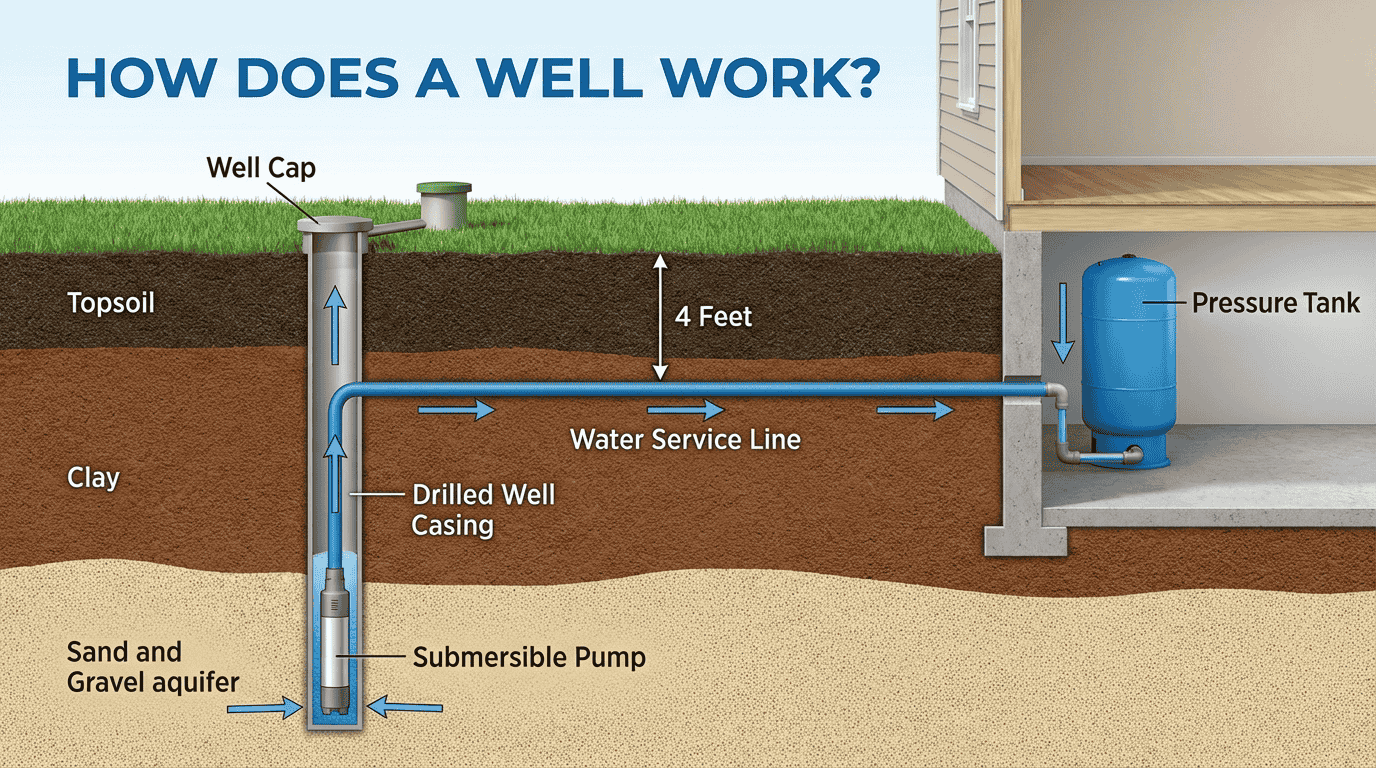
First, a crew with a massive drill shows up and makes an unholy racket for a day or two. They’re basically shoving a giant, industrial-strength straw into the earth until they hit water. Your neighbors will glare at you, but you’ll be the only one on the block with a private water source.
Once they hit the aquifer, they drop in a steel casing (the straw’s outer shell) to keep dirt and rocks from collapsing into your drinking water. It’s like putting a metal sleeve inside your coffee cup so the cardboard doesn’t get soggy. Then they seal the top with a watertight cap to keep bugs, frogs, and lawn fertilizer out.
The Pump: The Heart of the Operation
Down at the bottom of your well, attached to the casing, lives a submersible pump. It’s a motor that sits underwater and acts like a tiny, relentless tractor—pulling water up through the pipe and into your house. If you’ve ever tried to drink a thick milkshake through a skinny straw, you get the idea. The pump works hard.
This pump doesn’t run constantly, thank goodness. It’s triggered by a pressure switch inside your house, which sits in a big metal tank (usually in your basement or crawl space). When you flush the toilet, the pressure drops, and the switch yells, “Hey, pump! Get to work!”
Then the pump kicks on, refills the tank, and shuts off again. It’s like a silent, muscular bouncer—popping in only when the party gets too rowdy.

